
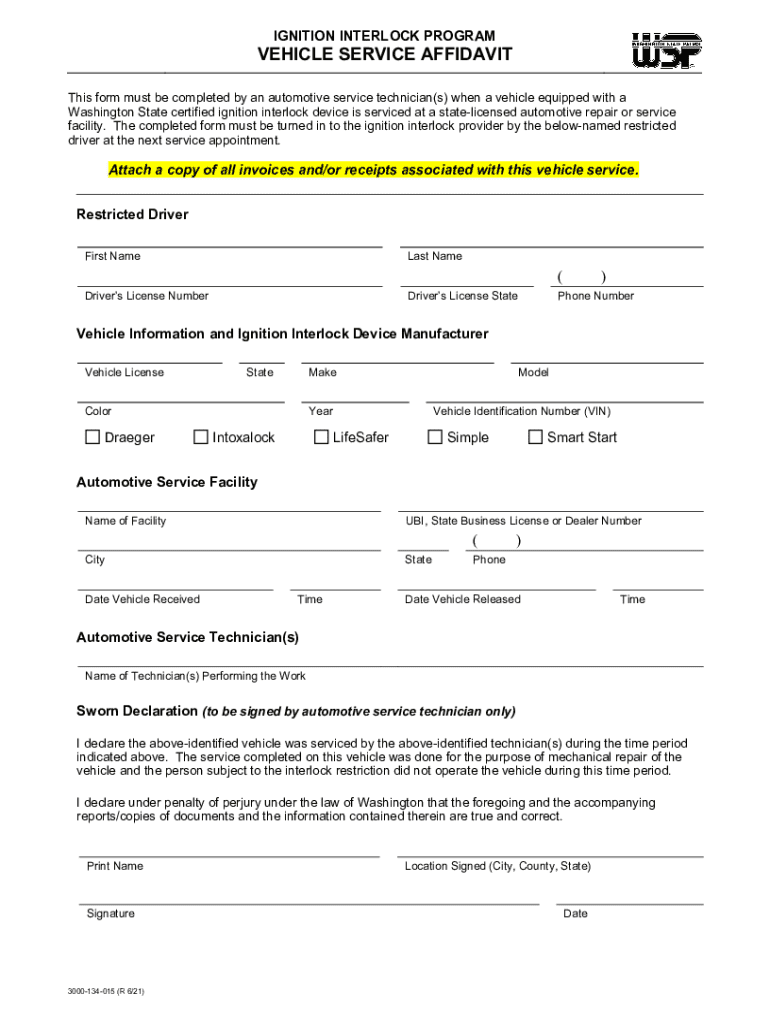







Definition & Purpose of the Ignition Interlock Program - Vehicle Service Affidavit
The Ignition Interlock Program - Vehicle Service Affidavit, identified by the form code (R 6 21), is a crucial document administered by the Washington State Patrol. It is an official affidavit that automotive service technicians are required to complete when servicing vehicles fitted with certified ignition interlock devices. This program is part of broader efforts to manage and monitor impaired driving, ensuring vehicles are not operated by restricted drivers during maintenance. The form includes essential sections for capturing driver and vehicle details, specifics of the service facility, and a sworn technician's declaration verifying that the vehicle was maintained without unauthorized driver operation.
How to Use the Ignition Interlock Program - Vehicle Service Affidavit
-
Preparation: Ensure you have all necessary information regarding the vehicle and the driver. This includes the vehicle identification number, the driver's details, and the service facility's contact information.
-
Documenting Service Details: Clearly write down the nature of the service provided. It is important to specify if any part of the ignition interlock device was adjusted, repaired, or otherwise accessed during the service.
-
Technician's Declaration: The form must include a signed statement from the technician confirming the vehicle was not driven by an individual with restricted driving privileges during the service session. This declaration serves as a legal attestation of compliance with the program requirements.
-
Submission and Storage: Once completed, ensure the affidavit is filed according to state regulations, either held at the service center or submitted to the pertinent authorities for record-keeping.
Steps to Complete the Ignition Interlock Program - Vehicle Service Affidavit
-
Access the Form: Obtain the R 6 21 form from the Washington State Patrol or the assigned website.
-
Fill Out Personal and Vehicle Information: Enter the full name, driver's license number, and contact details of the restricted driver, as well as the vehicle make, model, and license plate number.
-
Enter Service Facility Info: Fill in the name, address, and contact details of the service provider.
-
Documentation of Service Provided: Record the exact service details performed, focusing on the ignition interlock device's status before and after the service.
-
Technician's Signature: The technician performing the service must sign the affidavit, confirming all details are precise and accurate, especially regarding the non-operation of the vehicle by a restricted driver.
-
Form Submission: Depending on state requirements, either submit a copy of the completed affidavit digitally or via mail to the designated authorities.
Legal Significance of the Vehicle Service Affidavit
-
Compliance Assurance: The affidavit serves as a documented confirmation that the vehicle has been serviced according to state laws and regulations regarding ignition interlock devices, highlighting compliance with impaired driver restrictions.
-
Liability Protection: It mitigates service centers' liability by showing due diligence in preventing restricted drivers from operating the vehicle during servicing.
-
Legal Documentation: This affidavit can be presented as proof in court or during audits to demonstrate adherence to state-mandated protocols for ignition interlock-equipped vehicles.
Important Terms Related to the Affidavit
-
Ignition Interlock Device (IID): A mechanism installed in vehicles that prevents operation by individuals who fail a breath alcohol test.
-
Restricted Driver: An individual permitted to drive only vehicles equipped with an IID, typically due to past driving under the influence (DUI) infractions.
-
Service Technician: A certified individual responsible for maintaining and servicing vehicles equipped with ignition interlock devices.
State-Specific Rules for Completing Affidavits
-
Washington State Directives: It is important to adhere strictly to Washington's state laws governing the program. This includes following precise instructions on how the affidavit should be filled out, maintained, and submitted.
-
Variations Across Jurisdictions: While this document outlines Washington-specific procedures, similar programs might have differing requirements in other states. Always reference the relevant state patrol or vehicle authority guidelines as needed.
Key Elements of the Vehicle Service Affidavit
-
Accurate Information Recording: Every entry, from vehicle details to service documentation, must be thorough and correct, as inaccuracies can lead to legal challenges or non-compliance issues.
-
Signature Authority: Only authorized and certified technicians should complete and sign the affidavit. Certification ensures authenticity and credibility.
-
Non-operation Assurance: The formal declaration regarding the non-operation of the vehicle by restricted drivers is pivotal, safeguarding all parties involved from potential legal discord.
Examples of Document Use in Practice
-
Routine Maintenance: When a vehicle equipped with an IID goes for routine maintenance like oil changes, the affidavit records the service and ensures compliance with IID regulations.
-
Incident Resolution: In situations where IID malfunctions may lead to disputes, the affidavit serves as documented evidence showing maintenance steps taken, helping clarify responsibilities.
Penalties for Non-Compliance
-
Violation of Terms: Failure to complete and submit the affidavit correctly can implicate the service facility in legal non-compliance, leading to fines or licensure repercussions.
-
Driver Consequences: Restricted drivers might face license suspension, fines, or extended IID requirements if improper affidavit protocols are followed, highlighting the importance of precise completion and submission.
This detailed coverage ensures compliance and streamlines the process of maintaining a vehicle under the Ignition Interlock Program in Washington State.


