




01. Edit your form online
Type text, add images, blackout confidential details, add comments, highlights and more.

Type text, add images, blackout confidential details, add comments, highlights and more.

Draw your signature, type it, upload its image, or use your mobile device as a signature pad.

Send it via email, link, or fax. You can also download it, export it or print it out.
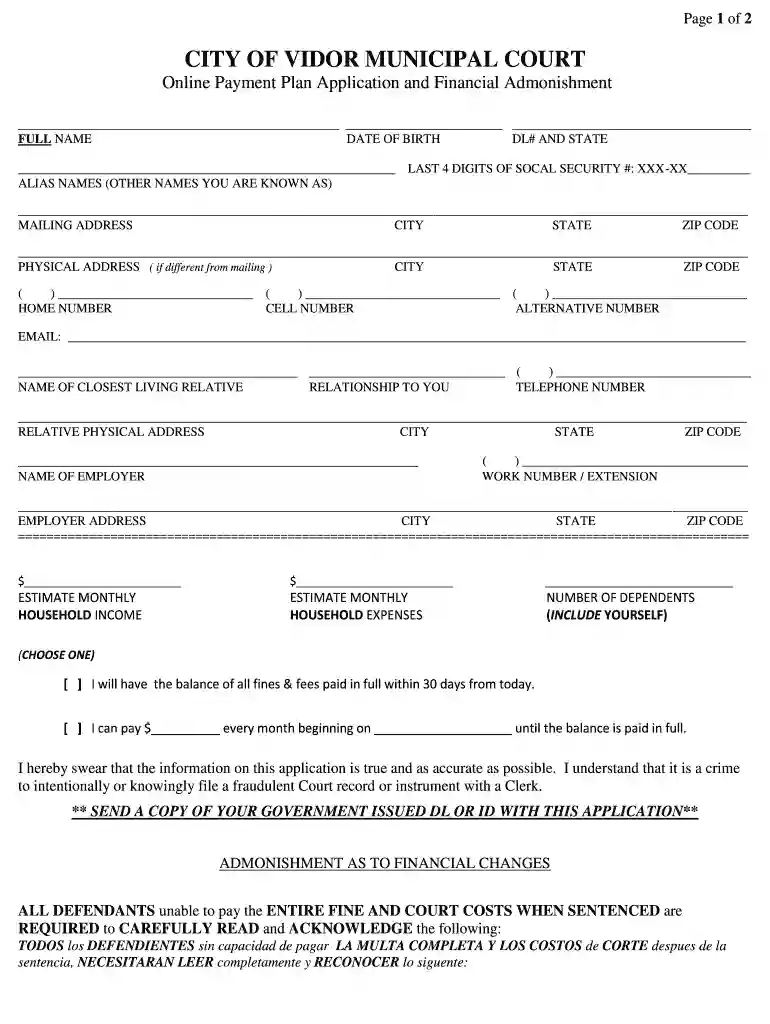
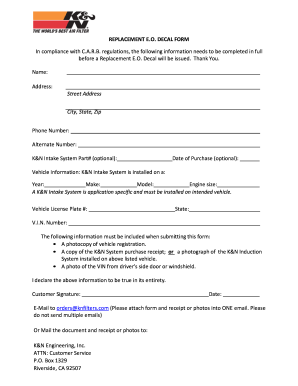
The term "DL# AND STATE" typically refers to a combination of a driver's license number and the issuing state. This identifier is crucial for various legal and administrative purposes, including identity verification, background checks, and compliance with state-specific regulations. Each state in the U.S. issues a unique driver's license number to its residents, which is often used alongside the state identifier to ensure accuracy in identifying an individual across different jurisdictions. Understanding the significance and application of the DL# AND STATE is essential for navigating numerous official processes.
To use the DL# AND STATE effectively, it is often required to authenticate personal identity documentation. This combination is essential when filling out forms related to employment, insurance applications, and government-related procedures. When prompted to provide your DL# AND STATE, ensure that you enter the correct alphanumeric sequence for the driver's license number and specify the issuing state to avoid discrepancies. In many contexts, this information helps streamline processes and facilitates secure and efficient data management.
Obtaining a driver's license, which includes the DL# AND STATE, involves contacting your local Department of Motor Vehicles (DMV). The procedures may vary slightly from state to state, but generally, the process involves specific steps, including identity verification and testing of driving knowledge.
Completing forms requiring DL# AND STATE demands careful attention to detail. Ensuring this information is accurate helps prevent processing delays and potential legal issues.
Providing your DL# AND STATE is crucial in several scenarios for ensuring legal compliance and operational efficiency. This data aids in personal identification, facilitates the verification of driving records, and ensures compliance with state-specific vehicle and personal identification regulations.
Understanding key terms associated with the DL# AND STATE can improve comprehension and communication across processes involving this information.
The legal use of the DL# AND STATE involves ensuring compliance with privacy laws and regulations governing the handling and dissemination of personal information. Various federal and state laws, such as the Driver's Privacy Protection Act (DPPA), provide guidelines on how this data should be managed.
Each state in the U.S. might have distinct rules and formats for issuing a driver's license and the associated DL# AND STATE. Understanding these variations is crucial for ensuring compliance across different jurisdictions.
Understanding these nuances ensures you remain compliant and current with state-specific identification requirements.
We've got more versions of the DL# AND STATE form. Select the right DL# AND STATE version from the list and start editing it straight away!
At DocHub, your data security is our priority. We follow HIPAA, SOC2, GDPR, and other standards, so you can work on your documents with confidence.



Generally, the following documents are required to apply for U.S. Drivers Licenses: Valid Passport, Valid signed I-20 or DS-2019, Most recent I-94, Proof of
Every state has its own knowledge test based on that states Driver Handbook. Tests typically cover traffic laws, road signs, and safe-driving practices.Read more


