
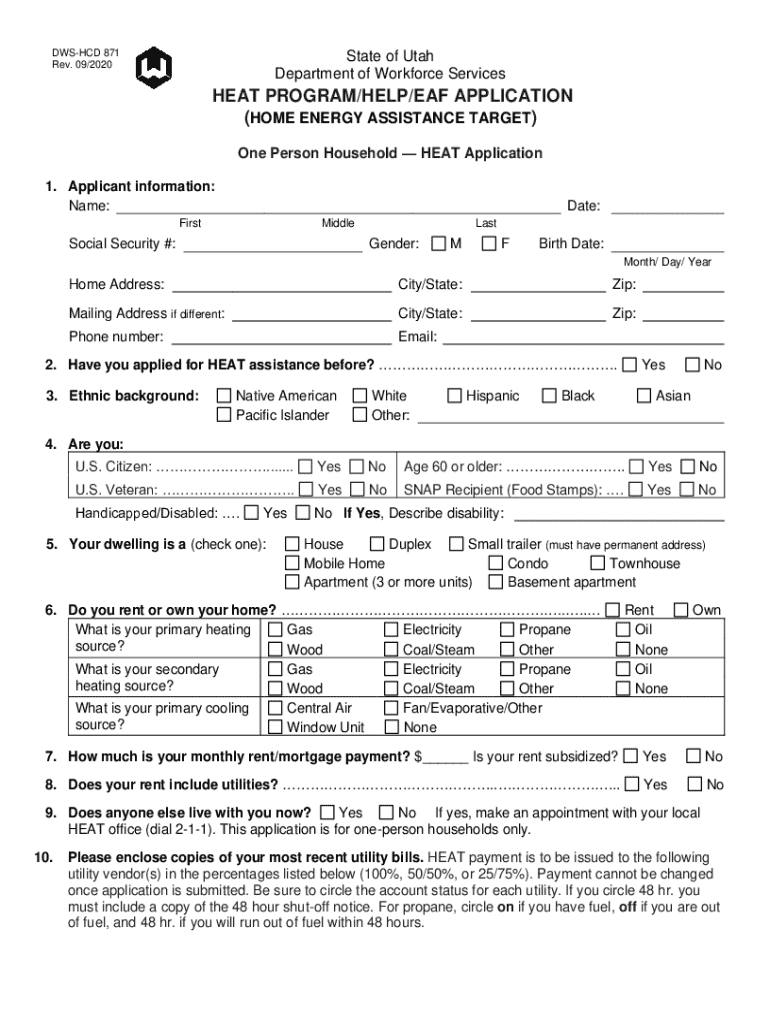







Definition & Meaning
The "State of Utah Department of Workforce Services HEAT" refers to the Home Energy Assistance Target (HEAT) Program, which provides financial assistance to Utah households struggling with energy bills. This initiative, overseen by the Utah Department of Workforce Services, is essential for helping low-income households manage energy costs during colder months. The program focuses on ensuring that energy is affordable for all residents, particularly those in need, thereby helping to maintain residential stability and comfort.
Purpose of HEAT Program
- Financial Assistance: Helps offset the cost of home energy, easing the financial burden on eligible households.
- Targeting Low-Income Households: Directly benefits households with limited income, ensuring they can maintain adequate heating.
- Energy Stability: Aims to prevent energy crises that might result from inability to pay utility bills.
How to Obtain the State of Utah Department of Workforce Services HEAT
To apply for the HEAT program, interested individuals can follow a structured process which involves the collection and submission of specific documents and information. Understanding eligibility and preparing the necessary paperwork are crucial steps in securing these energy benefits.
Application Process
- Eligibility Check: Verify that your household meets the income and residency criteria set by the program.
- Documentation: Gather required documents that typically include:
- Proof of residence in Utah
- Recent energy bills
- Household income verification
- Identification for all household members
- Submission: Applications can be submitted online, by mail, or in-person at local HEAT offices.
Assistance & Support
- Local Offices: Contact designated HEAT offices for guidance and to clarify any application-related queries.
- Online Resources: Access the Department of Workforce Services website for application forms and detailed instructions.
Steps to Complete the State of Utah Department of Workforce Services HEAT
Completing the HEAT application involves several steps aimed at capturing detailed household information and ensuring transparency in the allocation of aid.
Detailed Procedure
- Gather Information: Collect all necessary personal and household data before starting the application.
- Complete Application Form: Fill out the HEAT application form, ensuring all sections are accurately completed.
- Attach Documents: Include all required supporting documents to substantiate information provided in the application.
- Submit Form: Deliver the completed form and documents through the chosen submission method.
- Follow Up: After submission, actively monitor the application status through designated channels.
Tips for Accuracy
- Double Check Entries: Carefully review all entries for accuracy to avoid processing delays.
- Ensure Completeness: Every section of the form should be complete; incomplete forms may be returned.
Eligibility Criteria
To qualify for the HEAT program, applicants must meet certain predefined eligibility requirements. These criteria ensure that the aid reaches those who need it most, thereby maximizing the program's effectiveness.


Key Eligibility Requirements
- Income Limits: Household income must not exceed a specific percentage of the federal poverty level, often detailed in program guidelines.
- Residency: Applicants must be residents of Utah, with proof of residence required during the application process.
- Energy Burden: Preference is given to households that have high energy costs relative to income.
Household Considerations
- Family Size: Income thresholds may vary with household size, affecting eligibility.
- Special Circumstances: Certain groups, such as the elderly or disabled, may receive prioritization.
Required Documents
Preparing a comprehensive set of documents is vital when applying for the HEAT program. These documents provide proof of eligibility and help in processing applications efficiently.
Document Checklist
- Identification: Government-issued IDs for all household members.
- Income Verification: Recent pay stubs, tax returns, or letters from employers.
- Utility Bills: Most recent energy bills as proof of energy expenses.
- Proof of Residence: Documents such as rent agreements or mortgage statements.
Document Tips
- Originals vs. Copies: Always bring copies of originals, as originals may not be returned.
- Updated Information: Use the latest information to avoid discrepancies.
Application Process & Approval Time
Understanding the application process and expected timelines helps manage expectations and plan effectively for assistance needs.
Detailed Steps
- Form Submission: Complete and submit through the preferred method.
- Confirmation: Receive confirmation upon submission, noting any additional documentation required.
- Review Period: Applications undergo a review process which may take several weeks.
- Decision Communication: Receive official communication regarding application approval or denial.
Expected Timelines
- Processing Times: Average processing can take approximately four to six weeks, but this can vary.
- Follow-Up: It's advisable to follow up if a response is not received within the expected timeframe.
Legal Use of the State of Utah Department of Workforce Services HEAT
The HEAT program mandates compliance with legal requirements to ensure aid is used appropriately. Understanding these legal aspects can prevent misuse and support the program's integrity.
Key Legal Aspects
- Correct Usage of Funds: Assistance is strictly for energy-related expenses.
- Documentation Authenticity: All documents submitted must be genuine and verifiable.
- Compliance Accountability: Households are accountable for adhering to program rules; non-compliance could lead to a cessation of assistance and possible legal ramifications.
Importance of Adherence
- Protect Integrity: Observing legal usage ensures the program continues effectively for future applicants.
- Avoid Penalties: Compliance helps avoid penalties that could arise from fraudulent claims.
Key Elements of the State of Utah Department of Workforce Services HEAT
Several components define the structure and efficient functioning of the HEAT program. Identifying and understanding these key elements is crucial for applicants.
Core Components
- Financial Assistance: Direct monetary aid to pay utility bills.
- Application Assistance: Support services available to guide applicants through the process.
- Prioritization of Needs: Focus on households with the greatest energy burdens or specific vulnerabilities.
Ancillary Services
- Energy-Related Education: Workshops or information sessions on energy efficiency and reduction of energy bills.
- Collaborative Efforts: Partnerships with utility companies to ensure seamless support.
By following these extensive guidelines and understanding the comprehensive details of the HEAT program, applicants can increase their likelihood of receiving assistance and ensure they are adequately prepared throughout the process.




