







Definition and Purpose of a Lease Addendum
A lease addendum is a supplementary document that modifies an existing lease agreement between a landlord and tenant, clarifying specific terms or conditions. This document is crucial in ensuring that both parties have a clear understanding of any changes made to the original lease. By including details such as amendments, additional clauses, or changes in rental amount, a lease addendum serves to protect the rights and responsibilities of both landlords and tenants.
- Types of Changes: Common modifications in lease addendums can include adjustments to rent, rules regarding pets, or alterations to property maintenance responsibilities.
- Legal Binding: It is essential for both parties to sign the addendum to verify acceptance, making it legally binding and enforceable under the original lease terms.
How to Use Free Lease Addendum Templates in PDF and Word
Using free lease addendum templates in PDF or Word format can significantly streamline the process of modifying a lease agreement. These templates provide a structured format that ensures all necessary information is included while minimizing errors.
-
Step-by-Step Utilization:
- Download the Template: Access a suitable lease addendum template from a trusted source.
- Review the Content: Familiarize yourself with the document's sections, ensuring it meets your specific needs.
- Modify Relevant Sections: Fill in the details pertinent to your situation, such as the names of parties involved and specific amendments.
- Save and Share: After completion, save the document and share it with the involved parties for signatures.
-
Advantages of Templates:
- Streamlines documentation.
- Ensures all legal terms are covered.
- Helps prevent miscommunication between parties.
Key Elements of a Lease Addendum Template
A lease addendum template incorporates several essential elements to safeguard the interests of both the tenant and landlord. Understanding these key components is critical when drafting or using a template.
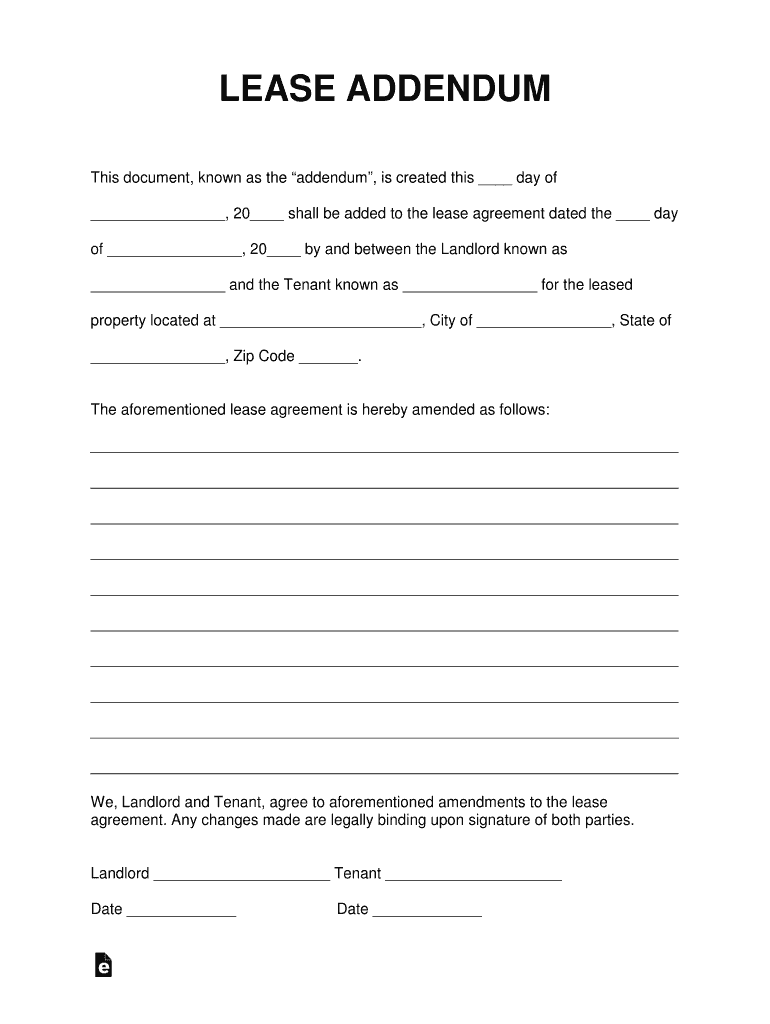
- Title and Date: Clearly state that it is a lease addendum and include the date of creation.
- Parties Involved: List the names and contact information of both the landlord and tenant.
- Property Details: Specify the address and any relevant property identification numbers.
- Amendments and Changes: Clearly articulate the changes being made to the original lease. Each modification should be listed in a structured format to prevent ambiguity.
- Signatures: Ensure spaces for both parties to sign and date the document, confirming their acceptance of the amendments.
Steps to Complete a Free Lease Addendum Template
Completing a lease addendum template requires careful attention to detail to ensure all necessary information is properly captured. Follow these steps for a successful execution:
- Choose the Right Template: Select a template that aligns with your specific requirements—consider factors like state regulations and the scope of the amendments.
- Fill in Basic Information: Start by entering all mandatory fields, including the date, names of the tenant and landlord, and property details.
- Detail Amendments: Clearly state each amendment in separate bullet points or numbered sections. Ensure everyone understands the nature and implications of each change.
- Review and Edit: Double-check for any inconsistencies or errors. This is crucial, as any oversight could lead to disputes later on.
- Signatures: Both parties should sign the document in the designated areas and retain copies for their records.
Important Terms Related to Lease Addendums
Understanding key terms associated with lease addendums is vital for effective communication between landlords and tenants. Familiarity with these terms fosters a more straightforward dialogue regarding lease modifications.
- Tenancy Agreement: The initial agreement between the landlord and tenant outlining the rights and obligations of both parties.
- Modification: An official change to the lease terms, typically outlined within the addendum.
- Enforcement: A lease addendum has legal standing and is enforceable as long as it is signed by all parties.
- Lease Term: Refers to the duration specified in the lease for which the tenant can occupy the property.
Examples of Using Lease Addendum Templates
Real-world examples illustrate how lease addendum templates can be effectively utilized in various scenarios:
- Adding a Co-Tenant: If a tenant wishes to add another occupant to the lease, a lease addendum can clarify the new tenant's responsibilities and stipulations regarding rent.
- Rent Increase: In cases where a landlord increases the rent, an addendum can document the new rent amount and the effective date for transparency.
- Rule Changes: If a landlord decides to implement new policies, such as pet restrictions, an addendum can outline these rules to ensure compliance by the tenant.
Legal Use of Lease Addendum Templates
Understanding the legal implications of lease addendum templates is essential for both parties involved in a lease agreement. When properly executed, these templates adhere to local and state laws governing rental agreements.
- Compliance with State Laws: Each state may have different requirements for lease agreements and addendums, such as notification periods for rent increases or specific clauses that need to be included.
- Documentation of Agreement: A signed lease addendum serves as a formal record of changes, which can be critical if disputes arise or legal action becomes necessary.
- Consideration: In legal terms, the changes made within an addendum often require 'consideration,' meaning both parties must understand and agree to the modifications for them to be valid.
State-Specific Rules for Lease Addendums
Local laws significantly influence how lease addendums are structured and utilized. Familiarity with state-specific rules can help ensure that your document is compliant and enforceable.
- Variances by State: Each state may have particular requirements regarding notice periods for rent increases, acceptable terms for lease terminations, or requirements for terminating a month-to-month lease.
- Security Deposit Changes: Certain states regulate how changes to security deposits must be documented, especially if an increase in the deposit is involved.
- Tenant Rights: Local statutes often outline tenant rights during modifications, such as the right to refuse unreasonable changes, which can impact how a lease addendum is drafted.
By utilizing free lease addendum templates effectively, landlords and tenants can navigate changes in their lease agreements with clarity and confidence, ensuring that all modifications are formally documented and legally sound.


