







Definition & Meaning
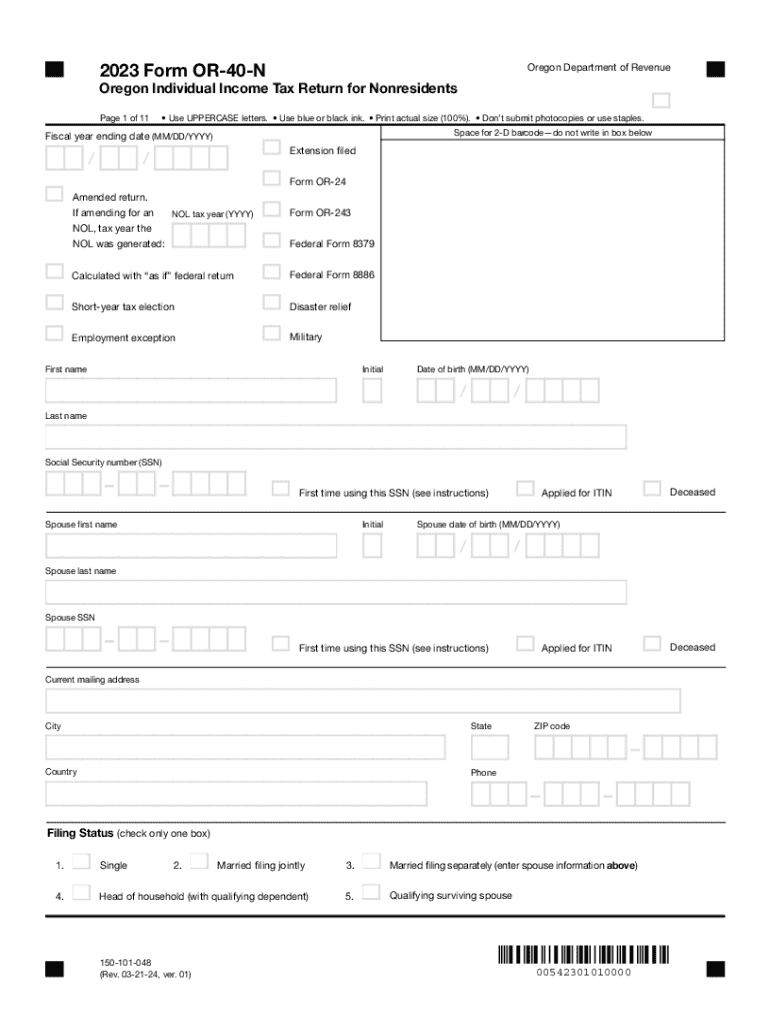
Oregon Tax Forms 2023 refer to the standardized documents required by the state of Oregon for reporting individual income. The primary form, OR-40, is used by residents to file their annual state income tax returns. It details personal information, income, deductions, credits, and tax calculations. These forms follow guidelines set by the Oregon Department of Revenue, aligning with both state and federal tax laws.
Key Elements of the Oregon Tax Forms 2023: Printable State Form OR-40
The OR-40 form comprises several essential sections:
- Personal Information: Includes taxpayer details such as name, social security number, and filing status.
- Income Reporting: Requires declarations of wages, salaries, interest, dividends, and other sources of income.
- Deductions and Exemptions: Offers sections to claim standard or itemized deductions and personal exemptions.
- Tax Calculation: Guides users through the process of determining their taxable income and the amount of tax due.
- Payments and Refunds: Details on how to calculate credits, payments made, and any refunds due.
How to Use the Oregon Tax Forms 2023: Printable State Form OR-40
- Gather Required Documents: Collect all necessary documentation, including W-2s, 1099s, and receipts for deductions.
- Fill Personal Information: Enter your and your spouse’s details in the specified sections.
- Declare Income: Accurately report all sources of income.
- Apply Deductions and Credits: Choose between standard and itemized deductions and apply eligible credits.
- Calculate Tax: Use the provided formulas to determine your tax liability or refund.
- Submit the Form: After double-checking for accuracy, submit your OR-40 form by mail or electronically.
Steps to Complete the Oregon Tax Forms 2023: Printable State Form OR-40
- Download the Form: Access the OR-40 form from the Oregon Department of Revenue website.
- Read Instructions Thoroughly: Review all accompanying instructions to ensure comprehension.
- Complete Each Section Carefully: Include precise information for personal data, income, and deductions.
- Review for Errors: Double-check the form for any omissions or inaccuracies.
- Sign and Date: Ensure the form is signed and dated by the taxpayer(s).
- Submit by Deadline: File by the prescribed deadline to avoid penalties.
Who Typically Uses the Oregon Tax Forms 2023: Printable State Form OR-40
Residents of Oregon who earned income during the fiscal year are required to use the OR-40 form. This includes:
- Salaried Employees: Individuals receiving wages from employment.
- Self-Employed Individuals: Entrepreneurs and freelancers operating within the state.
- Retirees: Those receiving pensions or social security.
- Students: Enrolled individuals with taxable scholarships or part-time jobs.


State-Specific Rules for the Oregon Tax Forms 2023: Printable State Form OR-40
- Filing Requirements: Residents must file if their income exceeds specific thresholds depicted by the state.
- Deductions Specific to Oregon: The state provides unique deductions, such as the Oregon Cultural Trust contribution.
- Tax Rate Schedules: Oregon utilizes a progressive tax rate based on income levels.
- Credits Unique to the State: Includes credits for residential energy efficiency and political contributions.
Important Terms Related to Oregon Tax Forms 2023: Printable State Form OR-40
- Adjusted Gross Income (AGI): Income after allowable adjustments are applied.
- Taxable Income: Income subject to tax after deductions.
- Tax Credit: A sum deducted from the total amount of taxes owed.
- Withholding: Employer-deducted tax amount from a paycheck.
- Exemption: A deduction that reduces taxable income.
Filing Deadlines / Important Dates
- Annual Filing Deadline: Typically April 15, aligning with federal tax deadlines.
- Extension Filing Date: Extensions may be requested, usually granting an additional six months.
- Estimated Tax Payment Due Dates: Quarterly payments for self-employed individuals and others with non-withheld income.
- State Holidays: Understand filing deadlines might adjust for holidays specific to Oregon.
Required Documents
To properly complete the OR-40, gather:
- W-2 Forms: Reflecting salaries and wages.
- 1099 Forms: For interest, dividends, and other non-employee income.
- Receipts and Records: Pertaining to deductible expenses and contributions.
- Previous Year's Tax Return: For reference and accuracy check.
- Social Security Numbers: For all individuals listed on the return.
Form Submission Methods (Online / Mail / In-Person)
- E-File: Recommended for faster processing. Use certified tax software compatible with Oregon forms.
- Mail: Send completed forms to the Oregon Department of Revenue.
- In-Person: Accepted at designated state offices, though less common.
Penalties for Non-Compliance
Failure to submit the OR-40 by the deadline or inaccurately reporting information can result in:
- Late Filing Penalties: A percentage of the tax due for each month the return is late.
- Interest Charges: Accrual on unpaid taxes from the due date until full payment.
- Filing a Fraudulent Return: Substantial fines and legal action if intentional misrepresentation is identified.
IRS Guidelines
While Oregon tax forms maintain unique regulations, they generally align with federal guidelines. Oregon uses the AGI as defined by the IRS, and as such, compliance with federal reporting standards ensures consistency across both jurisdictions. Cross-reference with federal tax returns to maintain accuracy and coherence.
Examples of Using the Oregon Tax Forms 2023: Printable State Form OR-40
- Case of a Self-Employed Consultant: Illustrates applicable deductions from business expenses and the need for quarterly tax payments.
- Scenario for a Retiree: Demonstrates how to report pension income alongside Social Security benefits.
- Student with Part-Time Employment: Highlights methods for declaring taxable scholarships and grants.
Through careful adherence to these steps and guidelines, users can efficiently navigate the complexities of the Oregon tax filing process, ensuring compliance and avoiding penalties.


