






Definition & Meaning
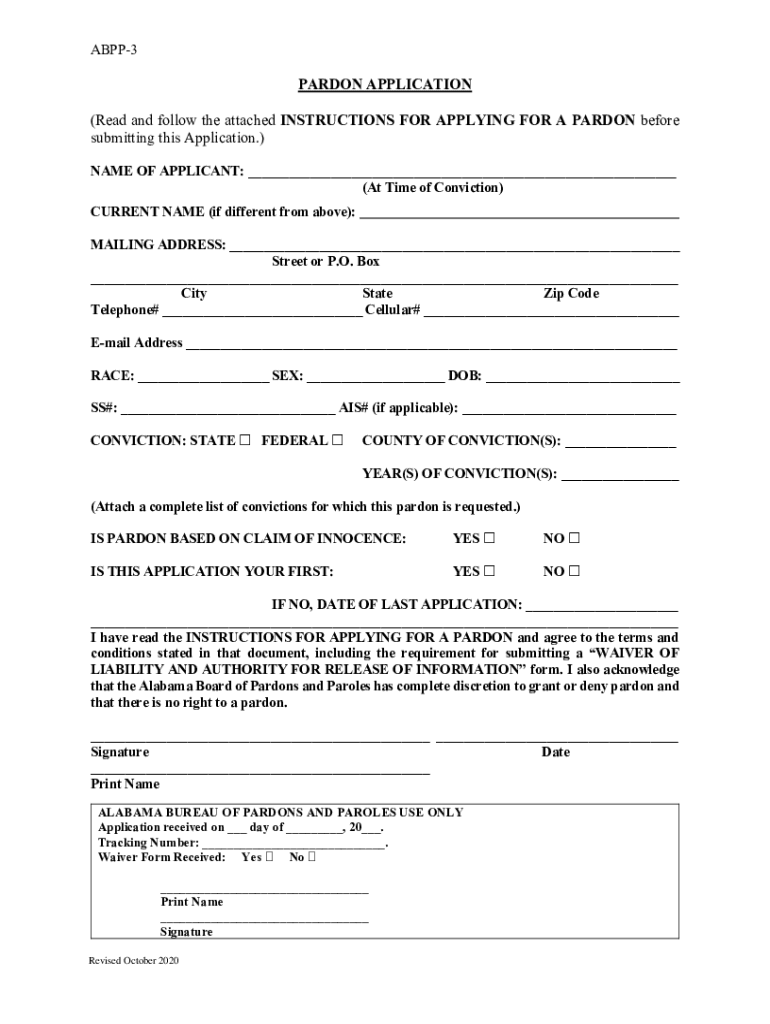
The ABPP-3 Pardon Application Form - Alabama Board of Pardons is a formal document used to request a pardon for certain legal infractions within the state of Alabama. This form allows individuals who have been convicted of a crime to seek forgiveness from the Alabama Board of Pardons and Paroles, potentially restoring their civil rights and reducing the impact of their criminal record. The form serves as an essential step in the pardon process, ensuring that applicants present their case comprehensively for consideration by the board.
Components of the Pardon Application
- Personal Details: The form typically requires applicants to provide personal information such as their full name, date of birth, and contact details.
- Offense Details: Applicants must detail their criminal convictions, including dates, locations, and descriptions of the offenses.
- Reasons for Request: It’s crucial for applicants to explain why they are seeking a pardon, including how a pardon would positively impact their lives.
- Supporting Documentation: Attachments such as letters of recommendation, proof of rehabilitation, or employment records may be required to support the application.
Practical Implications
Understanding the nuances of this form is vital for those looking to mitigate the long-term effects of their criminal record. A successful pardon can help individuals regain opportunities such as employment, education, and voting rights.
Steps to Complete the ABPP-3 Pardon Application Form - Alabama Board of Pardons
Filling out the ABPP-3 Pardon Application Form requires careful attention to detail and adherence to the guidelines set by the Alabama Board of Pardons and Paroles.
- Gather Personal Information: Before starting the application, collect all necessary personal and criminal history documents.
- Complete Personal Details Section: Enter your full name, date of birth, and current address.
- Detail Criminal Convictions: Provide comprehensive information about each offense, including dates and jurisdictions.
- Articulate Reasons for Pardon: Clearly explain the motivations behind your request and how receiving a pardon will aid your reintegration into society.
- Compile Supporting Documentation: Collect letters of support, employment records, and any other materials that can substantiate your application.
- Review and Submit: Double-check all information for accuracy and completeness before submitting the form. Incomplete applications may delay the process.
Importance of Submitting a Complete Form
Failing to provide complete or accurate information can result in delays or denial of your pardon request. It is critical to ensure that every section is filled out correctly and all required documents are included.
Eligibility Criteria
Eligibility for submitting the ABPP-3 Pardon Application Form hinges on several criteria determined by the Alabama Board of Pardons and Paroles.
- Time Elapsed Since Conviction: A certain period must have passed since the completion of the sentence, probation, or parole.
- Nature of the Offense: Certain offenses may not qualify for pardon. It is essential to verify that your conviction is eligible.
- Evidence of Rehabilitation: Demonstrating rehabilitation and lawful behavior post-conviction is crucial.
- State Residency: Some requirements may stipulate that the applicant maintains residence in Alabama or a specific duration of such residency.


Legal Use of the ABPP-3 Pardon Application Form - Alabama Board of Pardons
The ABPP-3 Pardon Application Form is a legal tool within Alabama, providing applicants with the opportunity to request forgiveness for past infractions. The form plays an integral role in the legal process, ensuring the board evaluates each application based on merit and potential benefits for the individual and the community.
Legal Implications
- Restoration of Rights: A successful application may result in the restoration of voting rights, eligibility for certain professional licenses, and the ability to serve on a jury.
- Not an Expungement: A pardon does not expunge or seal a criminal record but can help mitigate the stigma associated with a criminal conviction.
Considerations for Legal Guidance
Applicants may benefit from legal guidance to navigate the complex process of pardon applications. Legal professionals can provide insights into eligibility, assist in form preparation, and offer strategies for strengthening an application.
Key Elements of the ABPP-3 Pardon Application Form - Alabama Board of Pardons
Understanding the core elements of the ABPP-3 Pardon Application Form is essential for proper completion and submission.
- Identification Information: Including Social Security numbers and aliases.
- Eligibility Verification: Ensuring all criteria, such as time served and rehabilitation, are demonstrated.
- Declaration of Intent: A personal statement reflecting the applicant's acknowledgment of the form's purpose and intent.
- Applicant’s Signature: An essential part of the submission, confirming that all information is accurate and truthful.
Required Documents
Submitting the ABPP-3 Pardon Application Form involves attaching several vital documents that verify and support the application.
Documentation Checklist
- Criminal History Report: A full report detailing the offenses for which the pardon is sought.
- Character References: Letters from reputable individuals attesting to the applicant's character and rehabilitation.
- Employment Records: Documentation proving steady employment or community engagement post-conviction.
- Educational Certificates: If applicable, educational achievements that demonstrate personal improvement.
Application Process & Approval Time
The process for applying and waiting for a decision on a pardon from the Alabama Board of Pardons involves several key steps and a potentially lengthy timeframe.
Application Stages
- Initial Submission: The completed form and accompanying documents are submitted to the Alabama Board of Pardons and Paroles.
- Board Review: The board conducts a preliminary review to verify all information and documentation.
- Investigation: An investigation may be undertaken to gather further evidence or confirm the applicant’s claims.
- Hearing Scheduled: If the application passes initial stages, a hearing may be scheduled where the applicant can present their case.
Timeline Considerations
- Approval Time: Responses can take several months, as each application is subject to detailed examination.
- Expedited Process: Some cases may qualify for expedited review if compelling circumstances are present.
Form Submission Methods (Online / Mail / In-Person)
There are several options for submitting the ABPP-3 Pardon Application Form, each with varying degrees of convenience and reliability.
Submission Options
- Online Submission: Utilizing platforms like DocHub for digital filling and submission can expedite the process.
- Mail Submission: Traditional mail submission requires ensuring the form and all documents are complete, signed, and reproduced in multiple copies.
- In-Person Submission: Hand-delivery to the designated office can provide immediate confirmation of receipt and is often recommended for crucial deadlines.
Pros and Cons
- Online Submission: Quick and immediate but requires digital literacy.
- Mail Submission: More traditional but slower; provides physical record-keeping.
- In-Person Submission: Confirmed receipt; possible interaction with staff for additional guidance.
Each method warrants careful consideration to ensure the application is received and processed efficiently by the Alabama Board of Pardons and Paroles.