PERINATAL MENTAL HEALTH REFERRAL FORM 2026

Get Form
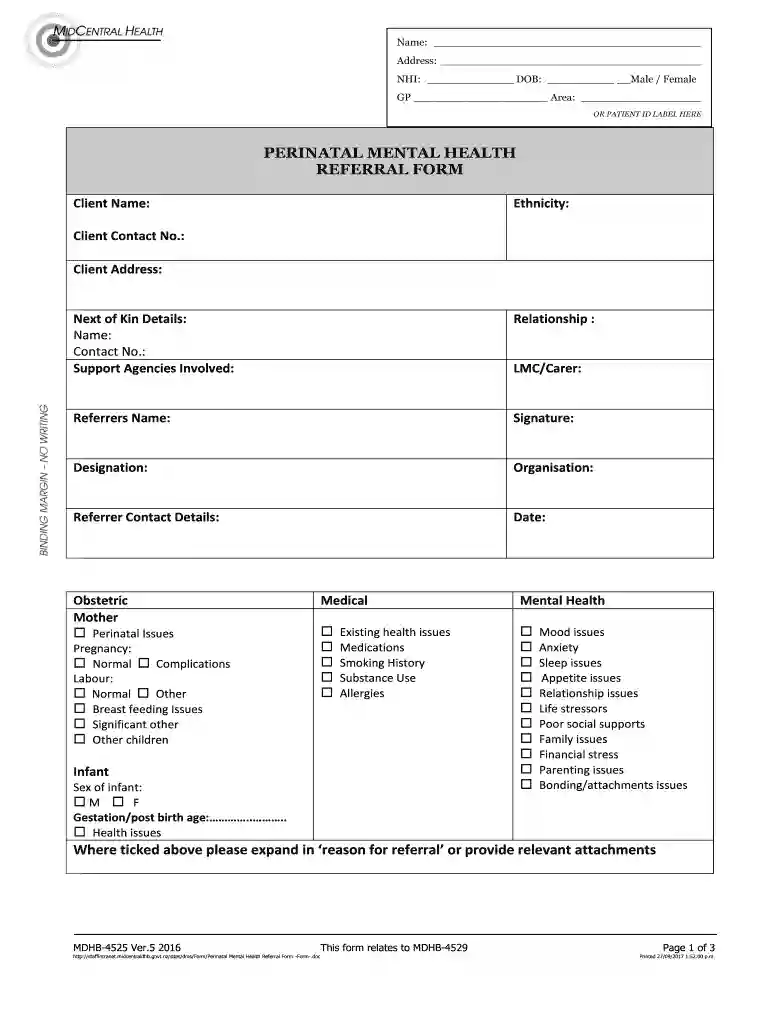
PERINATAL MENTAL HEALTH REFERRAL FORM Preview on Page 1

Here's how it works

01. Edit your form online
Type text, add images, blackout confidential details, add comments, highlights and more.

02. Sign it in a few clicks
Draw your signature, type it, upload its image, or use your mobile device as a signature pad.

03. Share your form with others
Send it via email, link, or fax. You can also download it, export it or print it out.

Definition and Meaning of the Perinatal Mental Health Referral Form

The Perinatal Mental Health Referral Form is a critical tool used by healthcare professionals to refer clients who are experiencing mental health challenges related to pregnancy and the postpartum period. This form serves the dual purpose of ensuring that relevant and comprehensive information about the client's mental health status is conveyed to the Perinatal Mental Health Service. It includes critical sections such as client information, reasons for referral, highlighted risk factors, and an assessment using the Edinburgh Postnatal Depression Scale (EPDS). Its primary function is to facilitate effective communication between the referring party and the professionals responsible for providing specialized mental health care.

How to Use the Perinatal Mental Health Referral Form

  • Collect Patient Information: Begin by filling in the basic client information, including name, contact details, and medical history. This ensures that the receiving mental health professional has a clear understanding of the client's background.
  • Referral Justification: Clearly state the reasons for referral, detailing any observed symptoms that warrant specialized mental health evaluation. This helps prioritize care based on urgency and specific needs.
  • Risk Assessment: Include any identified risk factors, such as previous mental health issues or familial factors, which could affect the patient's current mental health status.
  • EPDS Assessment: Utilize the Edinburgh Postnatal Depression Scale to quantitatively assess the client's mental health condition. This standardized measure assists in evaluating the severity of depression and mood issues.

Steps to Complete the Perinatal Mental Health Referral Form

  1. Patient Information Section: Collect and enter comprehensive personal and contact details of the client to ensure accurate identification and future correspondence.
  2. Referral Section: Accurately document the specific mental health concerns and symptoms observed. Consider using structured notes to enhance clarity.
  3. Risk Factors Identification: Enumerate any known or potential risk factors such as family history of mental health disorders, recent stressors, or other health concerns.
  4. EPDS Execution: Administer the Edinburgh Postnatal Depression Scale to gather quantitative data on the client's mental state. Carefully record scores and interpret results according to established guidelines.
  5. Professional Information: Include details of the referring professional, like name, designation, and contact information, for ease of follow-up.
  6. Authorization Section: Secure necessary consents from the client to share their health information with the receiving mental health service.

Key Elements of the Perinatal Mental Health Referral Form

  • Client Information: Name, address, contact, and medical ID numbers for accurate tracking and communication.
  • Symptoms and Diagnosis: Detailed descriptions of symptoms, observed behaviors, and preliminary diagnosis to assist the mental health team in crafting an appropriate care plan.
  • Consent and Authorization: A section for the client to provide informed consent for their information to be used by and shared with relevant healthcare providers.

Important Terms Related to the Perinatal Mental Health Referral Form

  • EPDS (Edinburgh Postnatal Depression Scale): A questionnaire used worldwide in clinical practice to identify postpartum depression.
  • Risk Factors: Elements like previous psychiatric history, substance abuse, or domestic violence that may affect mental health.
  • Referral: The process of directing a client to a specialized service for thorough evaluation and treatment.

Legal Use of the Perinatal Mental Health Referral Form

The form must comply with U.S. healthcare regulations such as HIPAA (Health Insurance Portability and Accountability Act), which safeguards personal health information. Consent sections within the form are a legal necessity to ensure that client data can be lawfully shared with involved healthcare providers. This ensures that both the referring and receiving parties are operating within regulatory guidelines and the privacy of the client is maintained.

Who Typically Uses the Perinatal Mental Health Referral Form

This form is commonly used by:

  • Obstetricians and Gynecologists: These specialists initiate a referral when they suspect perinatal mental health issues during prenatal visits.
  • Primary Care Physicians: They might refer patients when mental health concerns are identified during routine check-ups.
  • Mental Health Professionals: Psychologists, counselors, and social workers use this form to communicate with perinatal mental health services for specialized interventions.
  • Midwives and Nurses: These professionals often identify mental health concerns during prenatal or postnatal care and facilitate early interventions through this form.
decoration image ratings of Dochub

Examples of Using the Perinatal Mental Health Referral Form

  • Case Study 1: A 28-year-old first-time mom exhibits signs of depression two months postpartum. Her primary care physician uses the form to refer her to a perinatal psychiatrist, ensuring a seamless transition for additional mental health evaluation.
  • Case Study 2: A mother with a history of postpartum psychosis is closely monitored during her subsequent pregnancy. Her obstetrician uses the form to coordinate with mental health services for preventive care and support.

These case studies illustrate the form's flexibility in addressing diverse perinatal mental health concerns and its role in fostering a collaborative approach to maternal healthcare.

be ready to get more

Complete this form in 5 minutes or less

Get form

Got questions?

We have answers to the most popular questions from our customers. If you can't find an answer to your question, please contact us.
Contact us
Perinatal mental health and psychosocial screening involves asking women a series of questions about their current and past emotional and social wellbeing, to detect signs, symptoms and risk factors for having or developing a mental health condition.
Example mental health referral template Client Information: Name: Reason for referral: Presenting concerns and clinical observations: Treatment history and outcomes: Current medications and medical notes: Referring provider information. Name:
Talk to a midwife, health visitor or GP Theyll be able to refer you to a specialist community perinatal mental health team, or a mother and baby mental health unit (MBU) if you need it. Perinatal means the time you are pregnant and up to 12 months after giving birth.

Security and compliance

At DocHub, your data security is our priority. We follow HIPAA, SOC2, GDPR, and other standards, so you can work on your documents with confidence.

Learn more
ccpa2
pci-dss
gdpr-compliance
hipaa
soc-compliance