







Definition and Purpose of the Certification of Inspection by a Duly Constituted
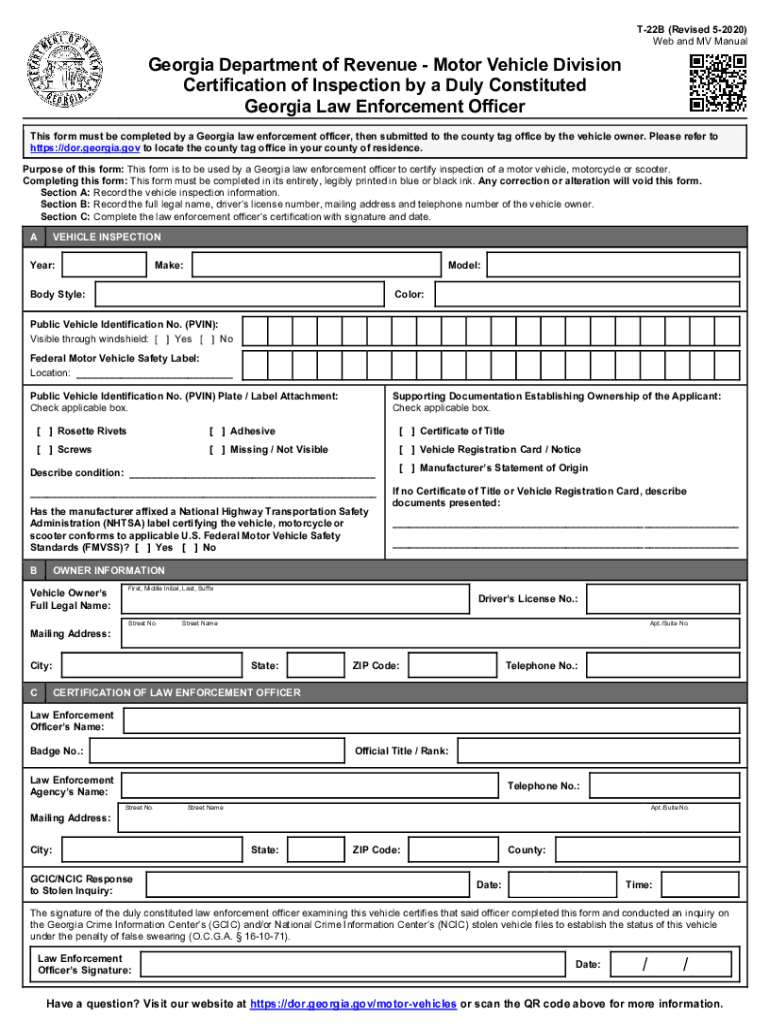
The "Certification of Inspection by a Duly Constituted" is a formal document primarily used to verify that a motor vehicle, motorcycle, or scooter has been inspected by an authorized law enforcement officer. The certification is crucial in ensuring that the vehicle meets all regulatory requirements set by the state's Department of Revenue, typically through its Motor Vehicle Division. This document contains detailed information regarding the vehicle, such as its make, model, vehicle identification number (VIN), and owner details, which are critical for maintaining consumer safety and security standards.
- Purpose: To confirm that the inspected vehicle complies with all state safety regulations.
- Components: Includes vehicle and owner information, inspection results, and certifying officer's details.
How to Use the Certification of Inspection by a Duly Constituted
Using this form involves several steps. First, the vehicle owner must arrange for an inspection by a law enforcement officer authorized by the Georgia Department of Revenue or an equivalent entity in other states. After inspection:
- Filling the Form: The authorized officer completes the inspection section, providing detailed observations and certification.
- Owner's Section: The vehicle owner fills out personal and vehicle-related sections.
- Submission: Submit the completed form to the local county tag office for further processing.
This step-by-step process is critical to ensure that the vehicle is legally compliant and registered correctly with appropriate state authorities.
Steps to Complete the Certification of Inspection by a Duly Constituted
Completing this certificate requires attention to detail to avoid resubmission and potential delays. Here are guided steps:
- Schedule Inspection: Contact the local law enforcement agency to arrange an inspection appointment.
- Perform Inspection: The officer conducts a thorough examination, focusing on statutory compliance areas like safety standards and emissions.
- Complete Officer’s Section: The officer fills out their portion of the form, including any notes on anomalies and certifies the vehicle’s compliance status.
- Owner Details: Accurately fill out vehicle and personal information, ensuring all fields are completed.
- Final Review: Double-check all entries for accuracy and completeness before proceeding to the submission stage.
These steps, when followed systematically, ensure that the certification process is smooth and efficient.
Key Elements of the Certification of Inspection by a Duly Constituted
This form comprises several key elements necessary for a complete inspection certificate:
- Vehicle Information: Includes make, model, VIN, and registration details.
- Owner Information: Lists the full name, address, and contact information of the vehicle owner.
- Inspection Details: Document the findings and notes from the physical inspection carried out by the officer.
- Certification Statement: A section where the inspecting officer asserts that the vehicle complies with regional standards.
- Officer’s Identification: Name, badge number, and signature of the inspecting officer.
Each section is essential to provide a complete overview of the vehicle's compliance status.
Who Typically Uses the Certification of Inspection by a Duly Constituted
This form is primarily used by vehicle owners and law enforcement agencies responsible for ensuring vehicle compliance.
- Vehicle Owners: Required for owners looking to register or renew their vehicle registration.
- Law Enforcement Officers: Conduct inspections and certify that vehicles meet necessary regulations.
- Motor Vehicle Departments: Use the document for official record-keeping and validation.
Understanding who utilizes this form highlights its regulatory significance in vehicle management and compliance.


State-Specific Rules for the Certification of Inspection by a Duly Constituted
Each state may have its unique rules and criteria that govern the use of this certificate, reflecting different local statutory requirements.
- Georgia Requirements: Includes mandatory safety checks specific to Georgia’s motor vehicle laws.
- Difference from Other States: Some states may include additional checks, such as emissions testing or seasonal inspection requirements.
- Compliance Variations: Depending on the state, there might be differences in how the form is filled or who qualifies as an inspecting authority.
Knowledge of state-specific guidelines is crucial for legal adherence and to avoid bureaucratic hurdles.
Legal Use of the Certification of Inspection by a Duly Constituted
The form plays a vital role in legal compliance, serving multiple legal purposes:
- Registration Compliance: Required for registering or transferring vehicle titles legally.
- Proof of Inspection: Acts as evidence during legal proceedings where a vehicle's safety compliance is contested.
- Enforcement and Penalties: Failure to use this form appropriately can lead to fines or vehicle registration delays.
The legal significance of this certification underscores its importance in lawful vehicle operation and ownership.
Examples of Using the Certification of Inspection by a Duly Constituted
Real-world applications illustrate how this form functions in everyday scenarios:
- New Vehicle Registration: Necessary for registering newly purchased vehicles to establish legal roadworthiness.
- Post-Repair Verification: Used after significant repairs or modifications to ensure the vehicle still meets safety standards.
- Resale Point of Sale: Essential during the sale of a vehicle to assure the buyer of the vehicle’s inspection status.
These examples demonstrate the form's practical utility in maintaining vehicle compliance across different situations.
By structuring content in this detailed format, the Certification of Inspection by a Duly Constituted is extensively covered, offering maximum value to readers requiring precise information about this document.


