
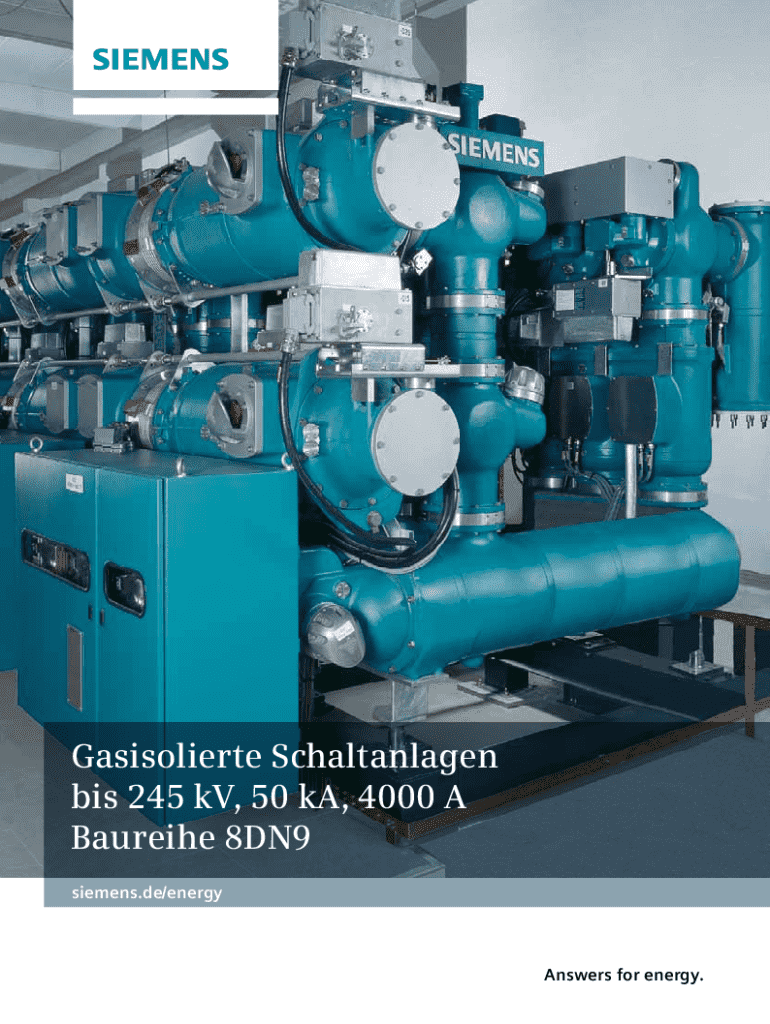







Definition and Purpose of the 8DN9 Siemens GIS Manual
The 8DN9 Siemens GIS manual serves as a comprehensive guide to the Siemens 8DN9 gas-insulated switchgear system. It details the system's features, benefits, and technical specifications, focusing on economic efficiency, reliability, and compact design. The guide outlines the components such as circuit breakers, disconnecting switches, transformers, and monitoring systems. It supports users in understanding the system's installation, operation, and maintenance processes, ensuring they can effectively manage and utilize the switchgear's advanced technological capabilities.
Obtaining the 8DN9 Siemens GIS Manual
To acquire the 8DN9 Siemens GIS manual, stakeholders can access Siemens' official website, contact authorized Siemens distributors, or directly consult with Siemens representatives. In some cases, it may also be available through official Siemens training programs or through partners involved in the installation and maintenance of Siemens switchgear systems. Always ensure you acquire the manual from reputable sources to guarantee the accuracy and reliability of the information.
Using the 8DN9 Siemens GIS Manual
The manual serves as a critical resource for engineers and technicians working with the 8DN9 gas-insulated switchgear. It includes step-by-step instructions for installation, operational guidelines, and best practices for maintaining the equipment. Additionally, it provides troubleshooting tips for common issues, helping users navigate potential challenges efficiently. Following the manual’s detailed instructions helps ensure safety, operational efficiency, and prolonged equipment lifespan.
Key Components and Elements
Understanding the key components of the 8DN9 system is essential for effective use and maintenance. It includes:
- Circuit Breakers: Assure quick isolation of faults.
- Disconnecting Switches: Facilitate safe maintenance by ensuring sections are de-energized.
- Transformers: Adapt voltage levels to meet operational requirements.
- Monitoring Systems: Provide real-time data to help with predictive maintenance.
Each element is integral to the overall functionality and reliability of the switchgear system, and the manual provides in-depth explanations for their roles and interactions.
Compliance and Legal Use
The 8DN9 Siemens GIS manual also covers compliance aspects. It includes guidelines on safety standards and regulatory requirements specific to the United States, ensuring the system's usage aligns with legal expectations. Organizations using the 8DN9 must adhere to these standards to avoid legal and operational repercussions. The manual outlines certifications and compliance markers needed for legal operation within specific domains.
Important Terms and Concepts
For users to effectively utilize the manual, it’s vital they comprehend key terms related to GIS systems:
- Gas-Insulated Switchgear (GIS): This refers to systems that use gas as an insulating medium to increase efficiency and reduce space requirements.
- Modular Configuration: A flexible design approach that allows customization based on specific operational needs.
- ESIGN Act Compliance: Ensures that the electronic handling of documents associated with the 8DN9 switchgear is legally binding.
Highlighting and understanding these concepts enable users to maximize the utility of the system.
Examples of Use Cases
Real-world scenarios provided in the manual illustrate the diverse applications of the 8DN9 GIS:
- Industrial Plants: Utilize the compact design for space-saving in congested electrical rooms.
- Urban Environments: Benefit from reduced sound emissions and enhanced security through GIS systems.
- Renewable Energy Integration: Use high efficiency and reliability to manage new energy inputs effectively.
These examples help demystify the operational context of the 8DN9, allowing for practical applications and planning.
Software Compatibility and Integration
The manual outlines software integration, ensuring seamless operation and monitoring of the 8DN9 system. It details compatibility with monitoring and automation software, allowing for remote diagnostics and predictive maintenance. This integration assists technicians in maintaining optimal system performance and making data-driven decisions for maintenance and upgrades.
Updates and Alternative Versions
Regular updates and any alternative versions of the 8DN9 system are crucial for users to note. The manual provides information on system enhancements and technological advancements. Staying informed about newer versions ensures users can leverage the latest capabilities for improved performance and efficiency. Additionally, it helps in understanding transitional processes between different system generations.




