Definition and Purpose of a Bowel Movement Tracker
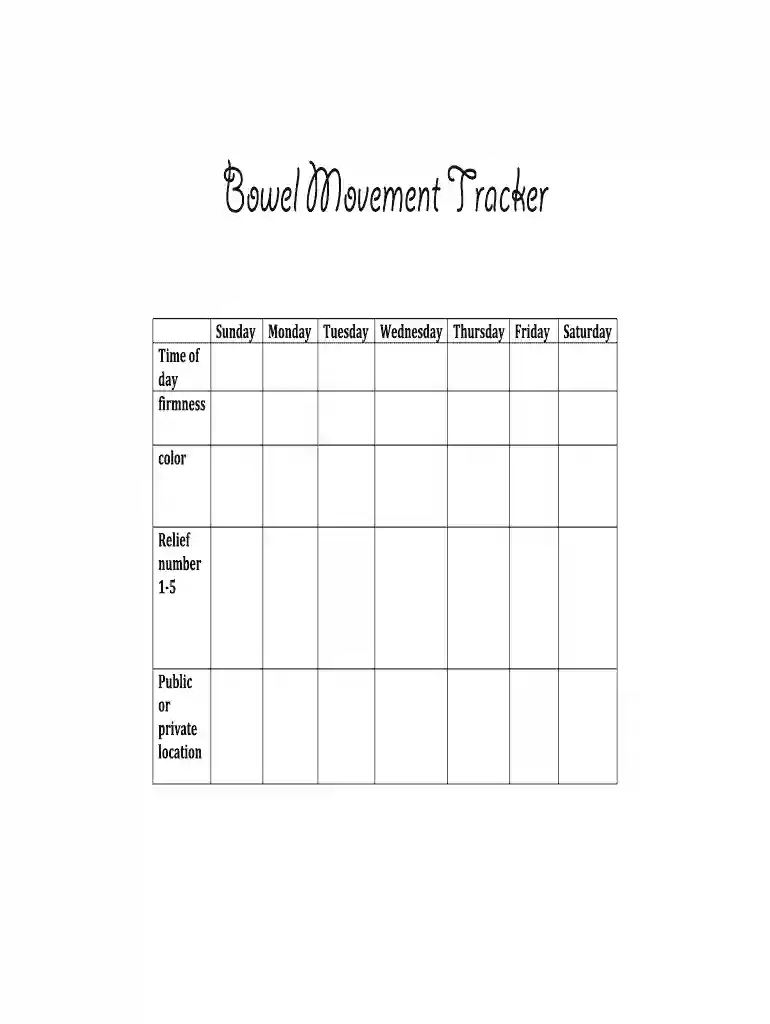
A bowel movement tracker is a tool designed to record and monitor daily bowel habits. It captures detailed information about each bowel movement, such as the time, firmness, color, relief level (rated on a scale from one to five), and the location (public or private). This tracker assists individuals in gaining insights into their digestive health and recognizing patterns or irregularities. It's invaluable for healthcare professionals to understand a patient's bowel habits, facilitating accurate diagnosis and effective treatment plans.
Key Features of the Bowel Movement Tracker
The bowel movement tracker typically includes features that make recording easy and comprehensive:
- Time and Date: Allows users to log the exact time and date of each bowel movement.
- Firmness and Color: Offers options to classify the stool’s consistency and color, crucial for identifying symptoms linked to dietary changes or illnesses.
- Relief Level: Lets users rate the relief felt after a bowel movement, which can indicate digestive comfort or issues.
- Location Specification: Enables users to record whether the bowel movement occurred in a public or private setting, which may affect frequency or comfort.
Using the Bowel Movement Tracker
Effectively using a bowel movement tracker involves understanding its layout and entering accurate information.
- Begin Daily Entry: Start each day by preparing to note the required details for entries that will occur later.
- Log Details Promptly: As soon as a bowel movement occurs, record the time, firmness, color, relief level, and location. Immediate logging ensures accuracy and completeness of data.
- Review Patterns: Regularly review your entries to identify any patterns or changes that may require medical attention.
Common Mistakes and Solutions
- Incomplete Entries: Ensure every detail is filled out to maintain comprehensive data.
- Inconsistency: Set reminders to fill out the tracker after each bowel movement to prevent missing entries.
Obtaining a Bowel Movement Tracker
Bowel movement trackers can be obtained through various means, each suited to different preferences and needs.
- Downloadable Templates: Many healthcare websites and apps offer free templates that can be printed or used digitally.
- Mobile Applications: Numerous applications are available that offer interactive and user-friendly interfaces for tracking bowel movements on smartphones.
- Healthcare Providers: Doctors and dietitians often provide customized trackers for their patients to suit specific health conditions or objectives.
Completing the Bowel Movement Tracker
The process of completing a bowel movement tracker is straightforward but requires consistency and attention to detail.
- Gather Information: Collect the necessary information about your bowel movement immediately after it occurs.
- Input Data Accurately: Make sure to correctly enter the information into each field of the tracker.
- Review Regularly: Regularly go through your entries to ensure completeness and to be aware of any changes over time.
Tips for Accuracy
- Be Honest and Detailed: Personal health information should be recorded as accurately and meticulously as possible to ensure reliability.
- Regular Updates: Updating the tracker regularly prevents the forgetting of important details and patterns.
Who Uses Bowel Movement Trackers
Various individuals and professionals find bowel movement trackers essential.
- Patients with Digestive Issues: Individuals dealing with conditions like IBS or Crohn’s disease use these trackers to monitor symptoms and manage their condition effectively.
- Healthcare Providers: Doctors and nutritionists often use these records to understand patients' dietary habits and digestive health.
- Individuals Monitoring Dietary Changes: People implementing new diets may use trackers to observe the effects of dietary changes on their digestion.
Variations of the Bowel Movement Tracker
Bowel movement trackers come in several variations to meet different needs:
- Digital Versions: These include mobile apps with added functionalities like reminders and data analysis.
- Paper Versions: Printable templates for those who prefer a physical representation of their records.
Choosing the Right Version
- Digital for Convenience: Best suited for those comfortable with technology and who appreciate features like automatic reminders.
- Paper for Simplicity: Ideal for individuals who prefer straightforward logging without the need of digital devices.
Legal and Ethical Considerations
Privacy and consent are critical when using a bowel movement tracker, especially when sharing data with healthcare providers.
- Data Privacy: Ensure any digital application used complies with privacy laws like HIPAA, which protect health information.
- Consent for Sharing: Obtain explicit consent before sharing personal health data with healthcare professionals or third parties.
Importance of Compliance
- Regulated Sharing: Sharing without proper authorization can lead to privacy breaches and legal complications.
- Secure Storage: Digital data must be stored securely to prevent unauthorized access.
Key Elements Integrated in the Tracker
Essential components of the tracker ensure comprehensive and useful data collection.
- Personal Information Section: Helps identify patterns related to specific individuals.
- Symptom and Relief Log: Records other symptoms like abdominal pain, aiding in a wider health analysis.
- Dietary Impact Section: Offers a space to note recent dietary habits, assisting in correlation analysis between diet and digestion.