
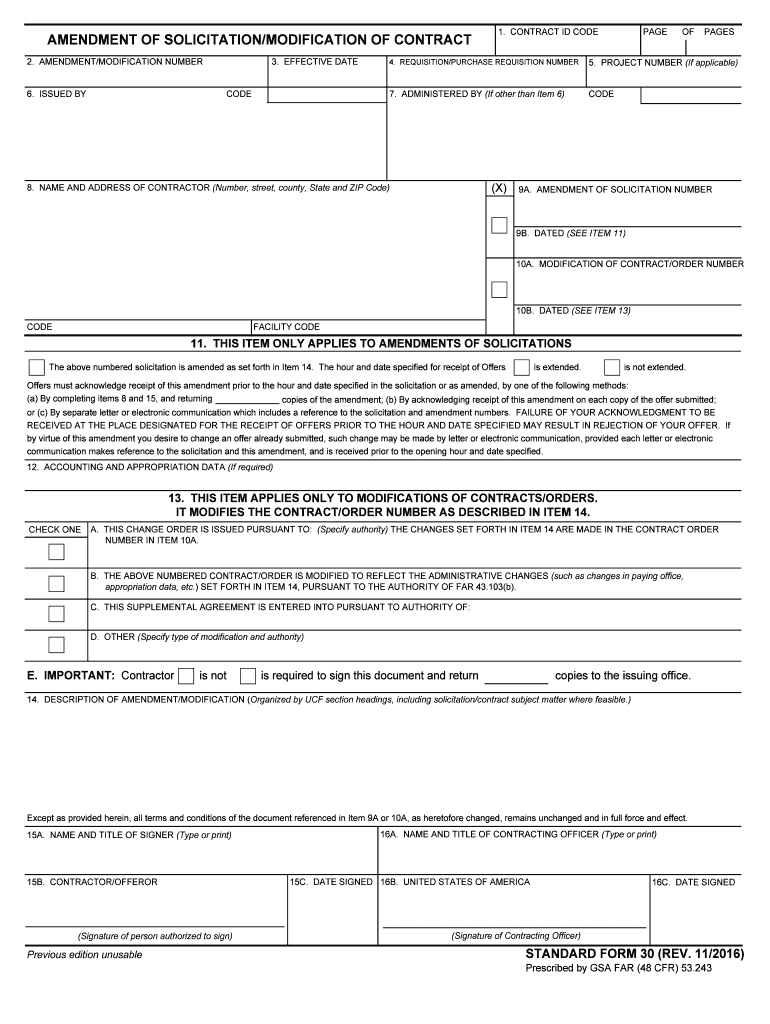







Definition and Meaning of SF 30 Form
The SF 30 form, officially known as Standard Form 30, is utilized for modifying existing contracts or solicitations in a formal and standardized manner. It is commonly used within governmental and contractual settings to ensure that all changes to agreements are accurately documented and acknowledged by the involved parties. This form serves an essential role in maintaining transparency and clarity in contractual relationships by detailing modifications, acknowledgments, and necessary approvals.
Purpose and Functionality
- Amending Solicitations: The SF 30 is primarily used to amend solicitations. Modifications might include changes to bid deadlines, specifications, or contract terms.
- Modifying Contracts: It can also be used to adjust terms, pricing, or conditions of already established contracts.
- Acknowledgment Receipts: Ensures that all changes are acknowledged by both parties, keeping the transaction transparent and legally enforceable.
- Clarity in Terms: By using a standardized form, both parties can easily understand and follow the changes being made.
How to Use the SF 30 Form - OnlyOneSearch Results
Utilizing the SF 30 form correctly is crucial for ensuring legal and administrative compliance. Here's a step-by-step guide on how to effectively fill and process this form:
- Identify the Need for Modification: Determine the specific reasons why a modification or amendment is necessary.
- Complete the Form: Fill in the relevant fields with detailed information regarding the contract or solicitation changes. This includes providing contract numbers, details of the modification, and effective dates.
- Acknowledge Amendments: Ensure that both parties review and acknowledge the changes.
- Authorize the Form: Required parties must sign the form to validate the modifications officially.
- Distribute Copies: Once completed and signed, distribute copies to involved parties to ensure all stakeholders are informed.
Practical Example
- Scenario: A government agency issues a solicitation with specified deadlines. Later, due to unforeseen circumstances, they need to extend the deadline.
- Application: The agency would use an SF 30 to formally document this change, ensuring all potential bidders are informed and in agreement.
Steps to Complete the SF 30 Form - OnlyOneSearch Results
Completing the SF 30 form involves a series of organized steps to ensure accuracy and compliance:
- Access the Form: Obtain the SF 30 form from the appropriate agency or online portal.
- Fill in Basic Details: Include the original contract number, amendment number, and the current date.
- Detail the Modifications: Clearly describe the specific changes being made to the existing contract or solicitation.
- List All Affected Terms: Provide a comprehensive list of all terms and conditions affected by the modifications.
- Signatures and Approval: Ensure all necessary parties sign the document to validate the changes.
- Recordkeeping: Keep a copy of the completed form for future reference and compliance audits.
Modifications and Terms
- Modification Details: This section is crucial for outlining exactly what changes are being made.
- Effective Date: Include when the changes are to take effect, ensuring both parties are synchronized moving forward.
Who Typically Uses the SF 30 Form - OnlyOneSearch Results
The SF 30 form is a staple document for various entities involved in contractual agreements, especially in the U.S. government and business sectors:
- Government Agencies: Regularly used by federal and state agencies for modifying contracts and solicitations.
- Contractors and Vendors: Contractors working with government bodies often use this form to officially acknowledge changes.
- Legal and Compliance Departments: In-house teams may employ this form to ensure all modifications are properly documented and compliant with regulations.


Key Elements of the SF 30 Form - OnlyOneSearch Results
Understanding the key components of the SF 30 form is essential for correct and effective usage:
- Contract Number: Essential for identifying the specific contract being amended.
- Modification Number: Each amendment has a unique number for tracking purposes.
- Amendment Description: A detailed explanation of what changes are being made and why.
- Authority: Specifies under which authority or regulation the amendment is issued.
Legal Use of the SF 30 Form - OnlyOneSearch Results
Legal compliance is paramount when using the SF 30 form:
- ESIGN Act: If used digitally, must comply with electronic signature laws, ensuring modifications are legally binding.
- Contract Compliance: Helps maintain ongoing adherence to original contractual expectations when changes are implemented.
- Audit Trail: Provides a clear audit trail to verify that changes were made legally and transparently.
Example
- Case: A contract amendment for a construction project that revises the project deadline due to weather delays. The SF 30 is used to document and obtain approval for this extension.
Important Terms Related to SF 30 Form - OnlyOneSearch Results
Familiarity with common terms associated with the SF 30 form can simplify the amendment process:
- Solicitation: The process of requesting bids or proposals from potential vendors.
- Modification: Any change or adjustment made to the original contract terms.
- Amendment: An official change to a previously issued solicitation, involving updates to terms, conditions, or deadlines.
- Acknowledgment: Formal acceptance of changes by all parties involved.
Form Submission Methods
The SF 30 form can be submitted through various methods, each of which might be required or preferred depending on the context:
- Online Submission: Electronic submission through government or organizational platforms.
- Postal Mail: Physical copies sent through the mail system for official filing.
- In-Person Delivery: Submission directly to a government or organizational office for immediate processing and receipt confirmation.




