




01. Edit your form online
Type text, add images, blackout confidential details, add comments, highlights and more.

Type text, add images, blackout confidential details, add comments, highlights and more.

Draw your signature, type it, upload its image, or use your mobile device as a signature pad.

Send it via email, link, or fax. You can also download it, export it or print it out.
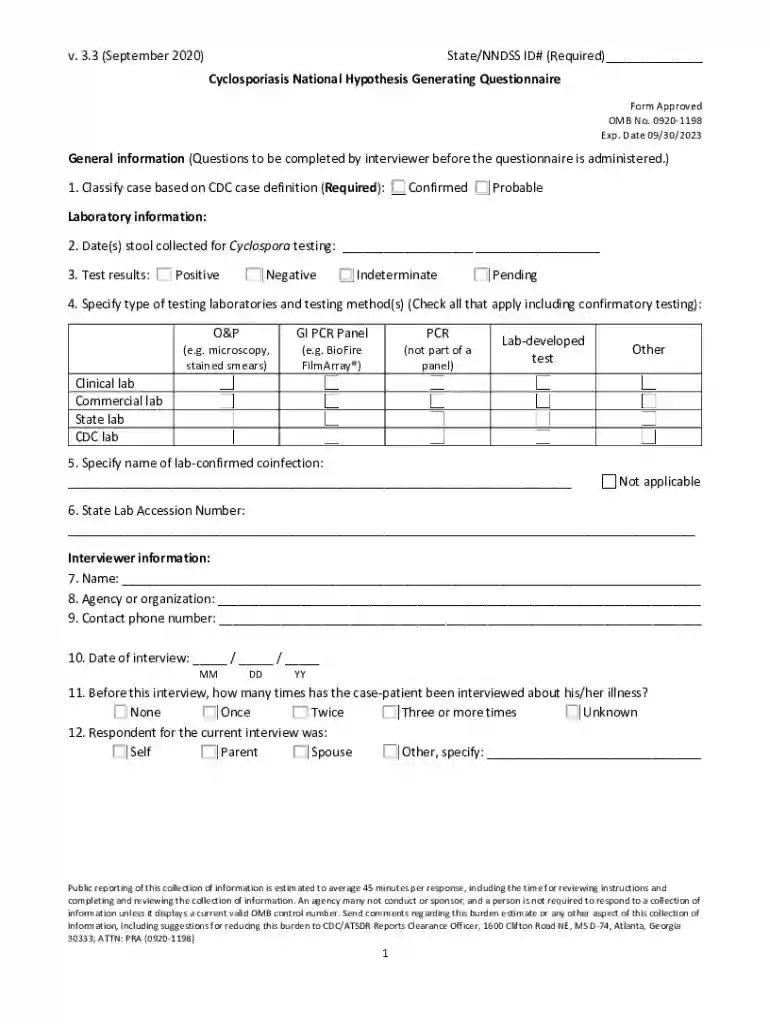
The identifier "v 3 September 2020) State NNDSS ID# (Required)" refers to a specific version of identification required in the context of data reporting to the National Notifiable Diseases Surveillance System (NNDSS) in the United States. This identifier is a crucial component of data management processes in public health, ensuring that reported cases of notifiable diseases are accurately tracked and managed. The ID# is essential for maintaining the integrity of disease surveillance data nationwide, enhancing public health responses to outbreaks, and promoting data consistency across state health departments.
To effectively use the State NNDSS ID#, it's important to integrate it into your public health reporting processes. This identifier is used throughout various stages of data reporting, from initial case identification to final submission. Here’s a brief overview of how you would incorporate it:
Obtaining the State NNDSS ID# generally involves collaborating with state health departments. Here’s how you can acquire it:
Completing the State NNDSS ID# section accurately involves several steps:
Using the State NNDSS ID# is essential for multiple reasons:
Typically, the State NNDSS ID# is used by:


Understanding the key components of the ID# ensures its effective use:
Each state may have unique rules regarding the issuance and use of the NNDSS ID#:
This multifaceted approach to understanding and using the "v 3 September 2020) State NNDSS ID# (Required)" ensures comprehensive knowledge and compliance within public health documentation practices.
We've got more versions of the v 3 September 2020) State NNDSS ID# (Required) form. Select the right v 3 September 2020) State NNDSS ID# (Required) version from the list and start editing it straight away!
At DocHub, your data security is our priority. We follow HIPAA, SOC2, GDPR, and other standards, so you can work on your documents with confidence.
CDC WONDER is a system for disseminating Public Health data and information. analysis of public health data. -September numerical data available. NNDSS Annual
NNDSS receives and shares case data from state, local, and territorial health departments to help public health monitor, control, and prevent serious diseases.


