




01. Edit your form online
Type text, add images, blackout confidential details, add comments, highlights and more.

Type text, add images, blackout confidential details, add comments, highlights and more.

Draw your signature, type it, upload its image, or use your mobile device as a signature pad.

Send it via email, link, or fax. You can also download it, export it or print it out.
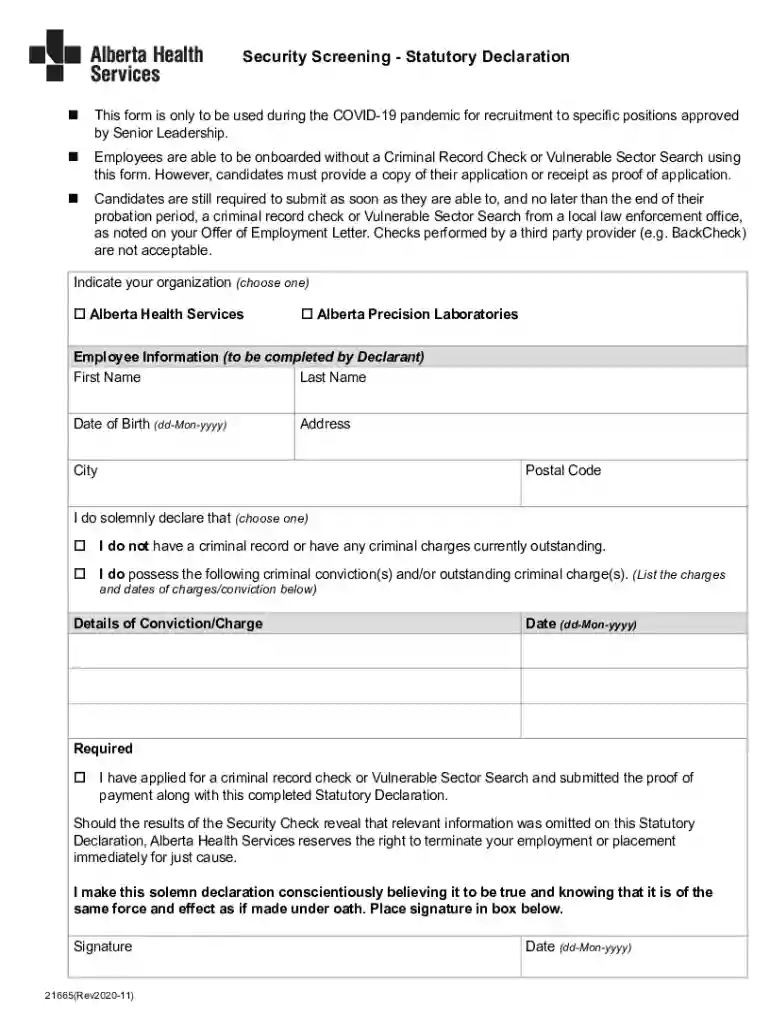
The Security Screening - Statutory Declaration is a formal document used primarily to attest to an individual's background information relevant for security screening purposes. This is especially critical for roles requiring a high level of trust and integrity. The declaration typically includes personal information and responses to criminal record inquiries, enabling organizations to assess the suitability of individuals for particular positions. In a U.S. context, this form is widely used in sectors like government and finance, where security checks are paramount.
A comprehensive Security Screening - Statutory Declaration includes several critical components:
Using a Security Screening - Statutory Declaration ensures a secure and transparent hiring process. For employers, it mitigates risks by verifying an individual's background. For candidates, it provides an opportunity to disclose any relevant information upfront, fostering a trustworthy relationship with potential employers. This form is essential for positions that require access to sensitive information or high levels of responsibility.
The Security Screening - Statutory Declaration must adhere to legal standards to be valid. In the U.S., it often aligns with federal and state privacy laws, ensuring the protection of personal information. Employers are required to maintain confidentiality and use the information solely for its intended purpose. Misuse of this data can result in legal repercussions, making it vital for organizations to establish clear data handling policies.
The primary users of this declaration are organizations and candidates involved in sectors where security clearance is essential. This includes:


The Security Screening - Statutory Declaration can usually be obtained from the organization requesting the screening or via their official website. For standardized forms, a governmental or regulatory body may provide a downloadable version online. Ensure that you acquire the correct version of the form, specific to your state or organization, to meet all compliance requirements.
Failure to properly complete or submit the Security Screening - Statutory Declaration can result in various penalties. These might include disqualification from the hiring process or disciplinary actions for current employees. Providing false information or omitting required disclosures can lead to termination of employment and legal consequences. Ensuring complete and honest disclosure protects both the individual and the organization from potential liabilities.
We've got more versions of the Security Screening - Statutory Declaration form. Select the right Security Screening - Statutory Declaration version from the list and start editing it straight away!
| Versions | Form popularity | Fillable & printable |
|---|---|---|
| 2020 | 4.9 Satisfied (29 Votes) |
At DocHub, your data security is our priority. We follow HIPAA, SOC2, GDPR, and other standards, so you can work on your documents with confidence.
These FAQs generally apply to transactions involving digital assets completed before Jan. 1, 2025. You must report income, gain, or loss from all taxable
The process for obtaining a security clearance begins, after a provisional offer has been made and accepted, with the submission of the applicants completed SFRead more
The background and security checks include collecting fingerprints and requesting a name check from the Federal Bureau of Investigations (FBI).


