




01. Edit your wa pet addendum online
Type text, add images, blackout confidential details, add comments, highlights and more.

Type text, add images, blackout confidential details, add comments, highlights and more.

Draw your signature, type it, upload its image, or use your mobile device as a signature pad.

Send it via email, link, or fax. You can also download it, export it or print it out.
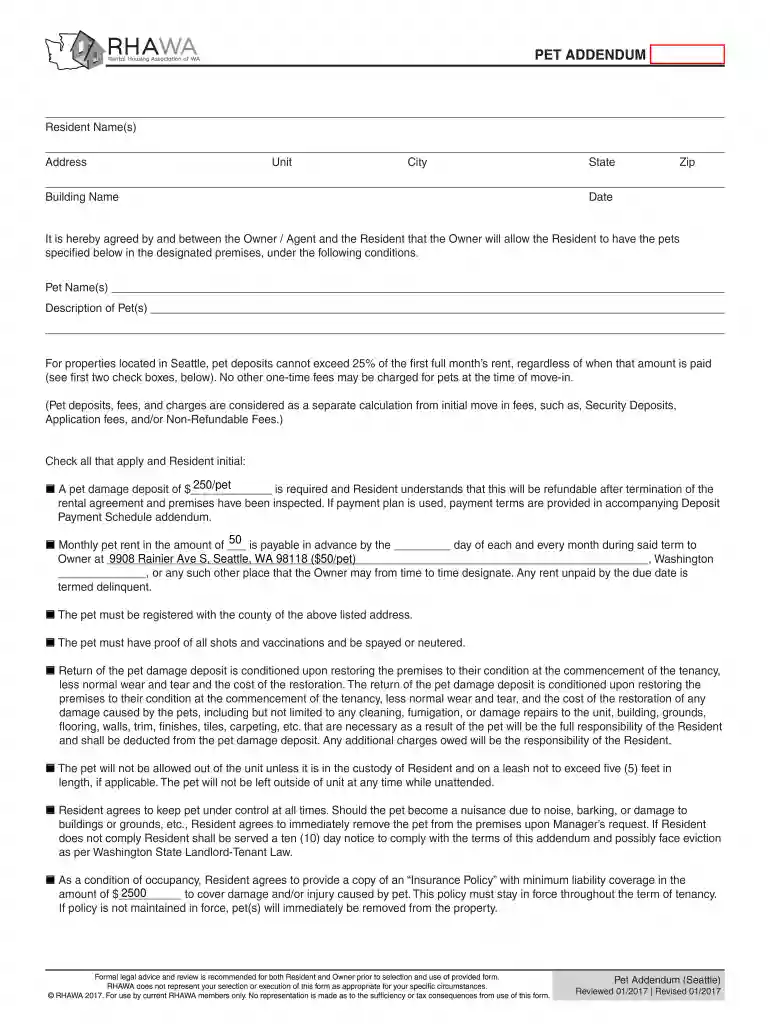
The Pet Addendum (Seattle) is a legal document that outlines the conditions under which pets are permitted in rental properties within Seattle, Washington. This addendum is part of a lease agreement, serving to clarify both the rights and responsibilities of tenants and landlords when it comes to pet ownership. It specifically addresses topics such as required pet deposits, monthly pet rent, registration, and behavior expectations for pets. The document aims to prevent misunderstandings and disputes by clearly detailing what is allowed and expected from all parties involved.
Various examples illustrate its purpose. For instance, if a tenant wishes to bring a pet into their rented apartment, the addendum specifies the upfront pet deposit they must pay to cover potential damage. Moreover, it ensures that tenants understand their role in maintaining the pet's behavior to prevent disturbances, stressing the importance of adhering to local animal control laws.
Using the Pet Addendum in Seattle involves several practical steps to ensure that both landlords and tenants are aware of their obligations. Initially, the landlord must provide the addendum alongside the lease agreement. Tenants should thoroughly review the document to understand requirements like pet deposits, monthly fees, and behavior standards.
In practice, tenants are required to:
Landlords must ensure the addendum aligns with Seattle's local ordinances, helping safeguard tenants' rights and promoting healthy landlord-tenant relationships by setting clear boundaries and expectations.
Completing the Pet Addendum involves a systematic approach:
An example of this process might involve a landlord authorizing a tenant’s pet only after confirming it meets all breed and size restrictions stated in the addendum.
Several critical components form the foundation of the Pet Addendum in Seattle:
These elements collectively ensure that both landlords and tenants manage and respect the responsibilities associated with keeping pets in rental units.
Understanding key terms within the Pet Addendum helps clarify expectations:
Knowledge of these terms ensures tenants comprehend their financial and behavioral commitments when including a pet in their household.
The legal use of the Pet Addendum is governed by local Seattle housing laws. Both landlords and tenants must follow these regulations to ensure compliance and avoid legal repercussions:
Maintaining adherence to these legal guidelines is crucial for both landlords and tenants to sustain a legally sound leasing environment.
Washington state law, and more specifically Seattle ordinances, impose distinct rules on pet ownership in rental properties:
Understanding these state-specific rules aids landlords and tenants in crafting addendums that are fully compliant with both state and local laws.
Real-world scenarios demonstrate the Pet Addendum’s application:
Through these examples, the addendum ensures that all parties have a clear understanding of the rules, mitigating potential conflicts effectively.
We've got more versions of the wa pet addendum form. Select the right wa pet addendum version from the list and start editing it straight away!
| Versions | Form popularity | Fillable & printable |
|---|---|---|
| 2017 | 4.3 Satisfied (25 Votes) |
At DocHub, your data security is our priority. We follow HIPAA, SOC2, GDPR, and other standards, so you can work on your documents with confidence.
The pet damage deposit cannot exceed 25 percent of the first full months rent. Only one pet deposit may be held per household, no matter how many pets are keptRead more
This document is intended to assist AFCEE ・ evaluating and applying edible oil ・ remediation of chlorinated solvents in groundwater. Attenuation of
Pets or animals are not permitted in campus housing facilities at any time except for: An animal certified or otherwise documented as having been trained forRead more


