







Definition & Meaning
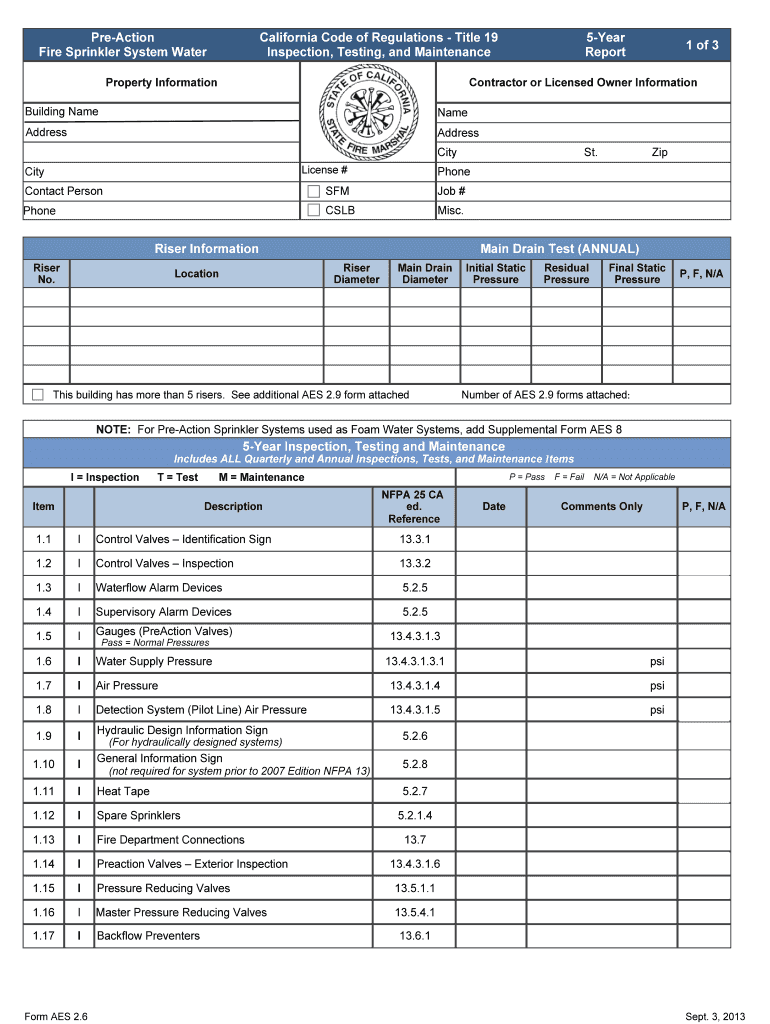
The NFPA 25 Form AES 2 6 5-Yr Preaction Water - City of El is a critical document used for the inspection, testing, and maintenance of Pre-Action Fire Sprinkler Systems. This form is designed to ensure compliance with fire safety standards set by the National Fire Protection Association (NFPA), particularly focusing on the guidelines required by the California Code of Regulations - Title 19. Pre-Action systems are utilized in environments where accidental water discharge could lead to damage, and thus periodic evaluations are essential for preventing failures.
Key Elements of the NFPA 25 Form
The form comprises several key elements necessary for a detailed evaluation. It includes:
- Inspection Checklist: To ensure all components of the system are routinely checked.
- Testing Procedures: Detailed steps required for verifying the operational readiness of each part.
- Maintenance Records: Logs that document any repair or service action performed, aiding in historical data tracking.
Each of these elements plays a vital role in maintaining system integrity and functional reliability.
Steps to Complete the NFPA 25 Form
-
Initial System Assessment: Begin by evaluating the current state of the Pre-Action Fire Sprinkler System, noting any visible issues.
-
Conduct Inspections: Use the provided checklist to systematically inspect each component, from sprinkler heads to control valves.
-
Perform Required Tests: Follow the testing procedures outlined in the form to confirm the functionality of alarms, water flow, and pressure systems.
-
Update Maintenance Logs: Record all findings, maintenance actions, and replacements in the maintenance section of the form.
-
Review and Sign Off: Ensure all parts of the form are thoroughly completed and obtain necessary approvals from authorized personnel.
Important Terms Related to NFPA 25 Form
Understanding specific terminology is essential when dealing with the NFPA 25 Form:
- Pre-Action System: A type of fire sprinkler system that requires an additional action before water is released.
- Inspection: A thorough examination of each component for potential problems.
- Testing: Functional verification to ensure all system parts are operational.
- Maintenance: Routine measures taken to keep systems in a working condition.
These terms help clarify the processes and objectives when dealing with the form.
Legal Use of the NFPA 25 Form
The legal use of the NFPA 25 Form is rooted in compliance with federal and state regulations. The form ensures that fire protection systems meet safety standards, potentially reducing liability in the event of a fire-related incident. Adhering to this form can help businesses avoid legal repercussions and fines related to non-compliance with fire safety laws.
State-Specific Rules for the NFPA 25 Form
While the NFPA 25 Form is a national standard, certain state-specific rules, especially in California, can affect how the form is completed:
- California Code of Regulations - Title 19: Adds additional compliance requirements that must be met, specific to California's unique environmental and regulatory landscape.
It is crucial for businesses operating in different states to be aware of local amendments to the NFPA standards.
Who Typically Uses the NFPA 25 Form
This form is commonly used by:
- Fire Safety Inspectors: Conducting official assessments.
- Building Maintenance Teams: Responsible for on-premises system upkeep.
- Business Owners: Ensuring compliance with safety standards.
- Insurance Inspectors: Evaluating risk for policy adjustments.
These users play strategic roles in fire prevention and system maintenance, using the NFPA 25 Form as a guide.


Examples of Using the NFPA 25 Form
Consider a corporate office employing the form to test a Pre-Action System before the annual safety inspection:
- Scenario: A building manager and a safety officer conduct a walkthrough, using the form to checklist each system part.
- Outcome: Compliance is achieved, with the NFPA 25 Form serving as documentation.
Such practical applications demonstrate the form's importance in real-world settings.
Penalties for Non-Compliance
Non-compliance with the regulations associated with the NFPA 25 Form can lead to severe consequences, including:
- Fines: Financial penalties imposed by regulatory bodies.
- Increased Insurance Premiums: Due to heightened risk.
- Operational Shutdowns: In extreme cases, businesses may be deemed unsafe for operation.
Understanding these penalties emphasizes the importance of adhering to the prescribed guidelines.




