







Definition & Meaning
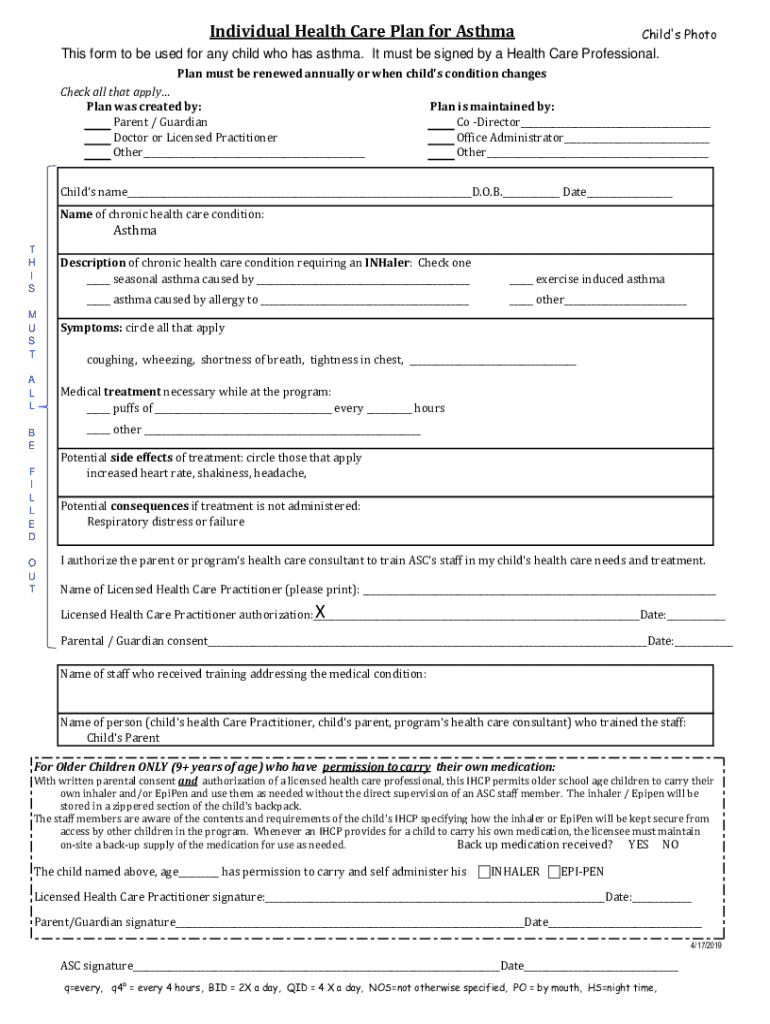
The OCFS-LDSS-7006 Individual Health Care Plan for A Child is a medical document specifically designed to outline the health care needs of children, particularly those with conditions such as asthma. This form, often referred to simply as OCFS-LDSS-7006, serves as a comprehensive plan that includes important medical information, authorizations, and strategic treatment guidelines to ensure the child's well-being in educational or caregiving environments.
Core Components
- Child’s Medical Information: Details about the child's specific health condition, such as asthma, including symptoms and triggers.
- Treatment Protocols: Specific medical treatments required, potential side effects, and the possible consequences of not administering treatment.
- Authorization: Signatures from health care professionals and parental consent are mandatory for validation.
How to Use the OCFS-LDSS-7006 Individual Health Care Plan for A Child
This form is a tool for parents, guardians, and caregivers to collaborate with health care providers and educational institutions to ensure the child receives appropriate medical attention as needed.
Steps to Use the Form
- Collaborate with Health Care Providers: Consult with the child’s healthcare provider to fill out medical details accurately.
- Discuss with Caregivers: Share the completed form with educators and caregivers to inform them about the child's specific needs.
- Regular Updates: Amend the form yearly or when the child's medical needs change to maintain accuracy.
Practical Example
- School Scenario: In a school setting, teachers and nurses use the OCFS-LDSS-7006 to understand the steps to take during an asthmatic episode, ensuring timely and effective intervention.
Steps to Complete the OCFS-LDSS-7006 Individual Health Care Plan for A Child
Filling out the OCFS-LDSS-7006 form involves several essential steps to ensure all necessary information is accurately recorded.
Detailed Instructions
- Gather Personal Information: Include the child’s full name, date of birth, and contact details of parents or guardians.
- Medical History: Document the child’s medical history, focusing on specific conditions like asthma.
- Treatment Plan: Clearly outline the treatment strategy, including medications, dosages, and administration instructions.
- Emergency Procedures: Specify actions to take in case of emergencies, including contact information for emergency services.
- Signatures: Obtain the necessary signatures from medical professionals and parents/guardians.
Critical Considerations
- Ensure each field is thoroughly completed to avoid misinterpretations.
- Regular updates aligned with any changes in the child’s health status are crucial.
Key Elements of the OCFS-LDSS-7006 Individual Health Care Plan for A Child
Certain components of the OCFS-LDSS-7006 are critical for its effective implementation and utility.
Core Elements
- Health Care Signatures: Document requires signatures from authorized health care professionals.
- Parental Consent: Ensures parental involvement and authorization for the child's treatment plan.
- Annual Review: Must be re-evaluated and updated on a yearly basis or as necessary.
Example of Key Element Usage
- Authorization: Legal implications and responsibilities are established through signed consent, allowing school staff to administer medication.
Legal Use of the OCFS-LDSS-7006 Individual Health Care Plan for A Child
This document has legal significance as it allows caregivers in schools and other settings to administer prescribed medical treatments to children.
Legal Compliance
- Authorized Treatments: Use of the document enables authorized individuals to carry out specific medical actions legally.
- Documentation: Acts as a legal record of medical needs and authorizations for treatment.
Implications
- Provides a safeguard for schools to follow due diligence in attending to children's health care needs.
Who Typically Uses the OCFS-LDSS-7006 Individual Health Care Plan for A Child
Various stakeholders in a child's life use the OCFS-LDSS-7006 form to ensure coordinated care and safety.


Primary Users
- Parents/Guardians: Initiate and manage the form’s details and updates.
- Medical Professionals: Provide the necessary medical information and signatures.
- Educational Institutions: Implement the guidelines outlined to safely manage children’s health needs.
Real-World Scenario
- Nursing Staff: School nurses use the document to administer medications and monitor the child's health-related requirements.
How to Obtain the OCFS-LDSS-7006 Individual Health Care Plan for A Child
Acquiring the OCFS-LDSS-7006 form involves a straightforward process that ensures it's available for those who need it.
Acquisition Steps
- Visit Authorized Institutions: Obtain it from pediatric offices or local child and family services offices.
- Online Resources: Some local healthcare websites might offer downloadable versions if electronic means are necessary.
Example
- School Enrollment Packets: Often included within enrollment forms for educational institutions requiring medical documentation.
State-Specific Rules for the OCFS-LDSS-7006 Individual Health Care Plan for A Child
While the OCFS-LDSS-7006 form is standardized, certain states might have specific mandates or additional requirements that need attention.
Considerations
- State Legislation: Variances in legal or procedural requirements depending on state laws.
- Additional Documentation: Some states may require complementary forms for specific medical conditions.
Real-World Example
- Variations in Asthma Management: Procedures for managing asthma might differ slightly based on state regulations controlling medical practices in schools.
By following these guidelines, users can effectively navigate the OCFS-LDSS-7006 Individual Health Care Plan for A Child, ensuring a structured approach toward a child's health management in educational and caregiving settings.




