




01. Edit your moving box inventory online
Type text, add images, blackout confidential details, add comments, highlights and more.

Type text, add images, blackout confidential details, add comments, highlights and more.

Draw your signature, type it, upload its image, or use your mobile device as a signature pad.

Send moving inventory template via email, link, or fax. You can also download it, export it or print it out.
A moving inventory list is a detailed document that catalogs all items being transported during a move. This list serves several crucial purposes:
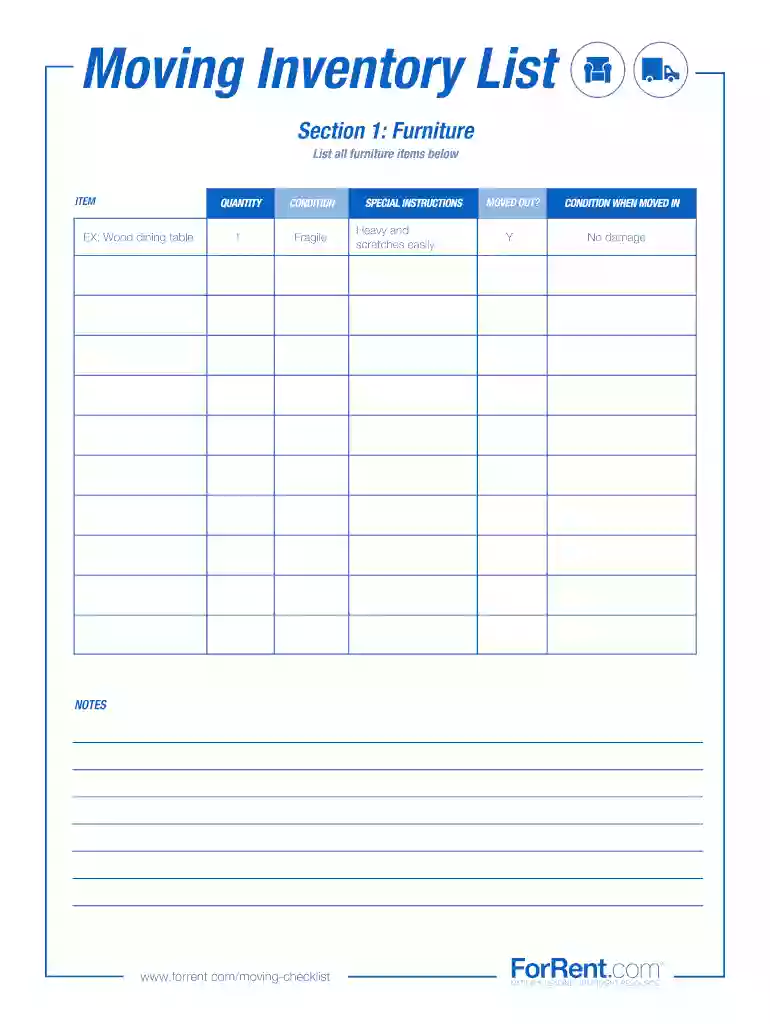
Moving inventory lists often include item names, quantities, conditions, special instructions, and a status update on whether items have been moved out and their condition upon arrival.
Creating an effective moving inventory list involves including several key components to ensure thorough documentation. These components generally encompass:
These elements collectively enhance the inventory list's utility, making processes smoother and reducing stress during a move.
Utilizing a moving inventory list effectively involves several critical steps:
Preparation: Begin by organizing your items into categories. This can help streamline your moving efforts. For example, sort items into furniture, boxes, personal items, and appliances.
Documentation: As you pack each category, document all items on the inventory list. Be detailed in descriptions and include quantities to avoid confusion later. Consider labeling boxes with the category and box number.
Conducting a Final Check: Before moving day, conduct a final walkthrough using your inventory list to ensure everything is accounted for. This proactive check can prevent items from being inadvertently left behind.
Post-Move Review: Upon arrival at the new location, use the inventory list to verify that all items have been received and check their conditions. Any discrepancies can be quickly addressed if noted on the inventory.
Storage of Records: Keep a copy of the final moving inventory list in a secure place. This can be vital for future reference, whether for claims, storage decisions, or later moves.
By following these steps, individuals can maximize the utility of their moving inventory lists.
Various groups benefit significantly from using a moving inventory list:
Homeowners: Individuals relocating to a new residence can maintain comprehensive control over their belongings, ensuring everything is accounted for and making claims easier if items are lost or damaged.
Businesses: Companies that relocate offices or require the transport of equipment can efficiently manage their assets, which is essential for operational continuity.
Moving Companies: By utilizing inventory lists, movers can provide better service to customers through organized logistical operations, enhancing their professionalism and customer satisfaction.
Insurance Adjusters: In cases of claims, adjusters benefit from the detailed records provided by the inventory lists, streamlining the assessment process for damages or losses incurred during moving.
Overall, the moving inventory list supports multiple stakeholders involved in the moving process.
Creating a moving inventory list template can facilitate the organization of items during a move. Follow these steps:
Design the Template: Use a spreadsheet or document creation tool to set up columns for item names, descriptions, quantities, conditions, special instructions, and status.
Categorize Items: Create sections within the template based on item types (furniture, boxes, personal items). This arrangement can expedite the organization during packing.
Input Data: As items are packed, fill in the template with accurate information. Regular updates will ensure that the list remains current and helpful.
Save and Share: Keep the template stored on a cloud service for easy access during the move. This can also allow for sharing with family members or the moving crew.
Printable Version: Save a copy as a PDF for easy printing, ensuring that physical copies are available if needed for quick reference on moving day.
This systematic approach not only simplifies the creation of an inventory list but also ensures that it remains an effective tool throughout the moving process.
We've got more versions of the moving box inventory form. Select the right moving box inventory version from the list and start editing it straight away!
| Versions | Form popularity | Fillable & printable |
|---|---|---|
| 2017 | 4.4 Satisfied (41 Votes) |
At DocHub, your data security is our priority. We follow HIPAA, SOC2, GDPR, and other standards, so you can work on your documents with confidence.
o Begin to inventory and evaluate your possessions. What can be sold or donated to a charitable organization? What havent you used within the last year? o MakeRead more
This included moving inventory tool repair to the grindstone, banner modification to the loom, and map modification to the cartography table. However


