Definition & Meaning
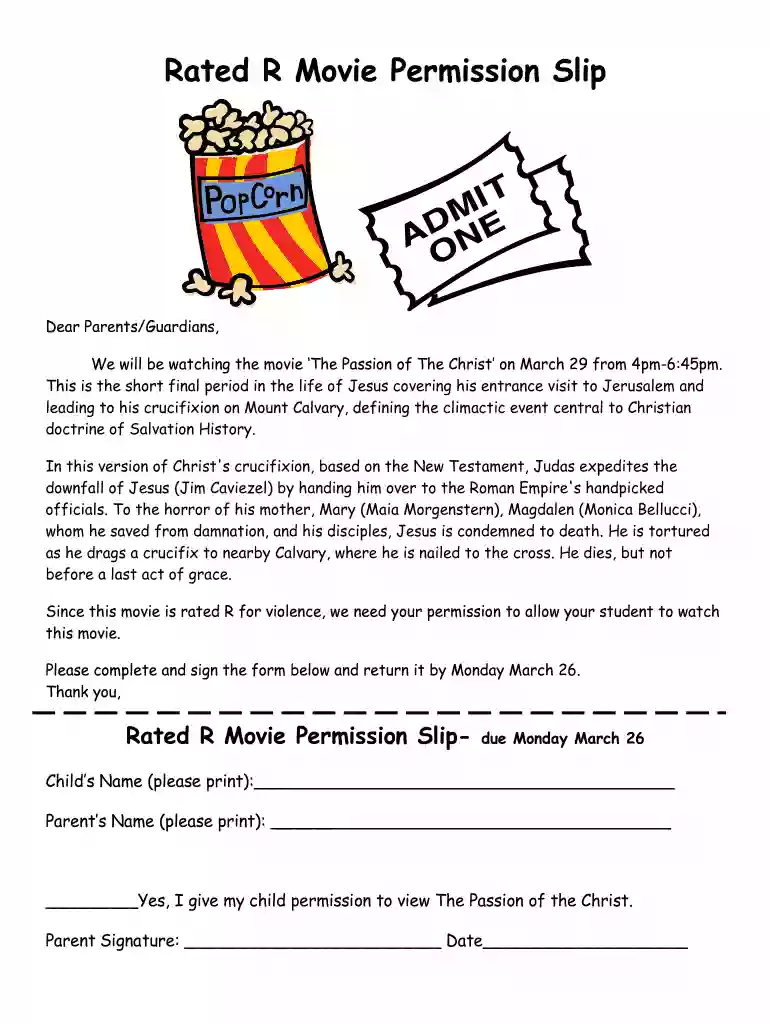
The "Passion of the Christ Permission Slip - Young Life St Mary's" is a document designed to obtain parental or guardian consent for a student's participation in viewing the film "The Passion of the Christ." This form specifically caters to parents or guardians of students involved in activities organized by Young Life at St Mary's. The permission slip explains the content and themes of the movie, which depict the final events in the life of Jesus Christ, including his crucifixion. The film carries a rated R status due to its violent themes, making the consent form a critical step for ensuring that parents are informed and agree to their child's participation in viewing the film. This is particularly important in the educational or religious setting of Young Life St Mary's, where such screenings might be part of a broader lesson or discussion group.
Key Elements of the Permission Slip
Several key elements are essential to the "Passion of the Christ Permission Slip - Young Life St Mary's" to ensure its effectiveness and legality.
- Personal Information: The form requires specific details about the student, including name, age, and grade, to correctly identify who the permission is for.
- Parental/Guardian Consent: There is a designated section for signature from the parent or legal guardian, which is required to confirm the consent.
- Film Details: Information regarding the movie, its rating, and its themes are included to fully inform the parents about what they are consenting to.
- Contact Information: Details for reaching Young Life St Mary's organizers are provided for any questions or further discussion regarding the event or the film's content.
- Event Details: The time, date, and location of the screening are stated, allowing parents or guardians to address any logistical concerns directly with the organizers.
How to Use the Permission Slip
To effectively use the "Passion of the Christ Permission Slip - Young Life St Mary's," one must follow a step-by-step process:
- Read the Entire Form: Parents or guardians should carefully read all the information on the form to understand what they are consenting to, including film content and thematic elements.
- Discuss with the Student: It may be helpful to discuss the film's content with the student to ensure they also understand what the film involves and if they feel comfortable viewing it.
- Complete Required Fields: Fill out all mandatory sections with the student's information, the parent's contact details, and any other necessary information.
- Sign the Form: Ensure the form is signed by the legal guardian or parent to indicate consent, as unsigned forms will not be accepted.
- Return the Form: Submit the completed permission slip back to Young Life St Mary's by the specified deadline to ensure the student can participate in the viewing.
Important Terms Related to the Permission Slip
Understanding several terms is crucial when dealing with the permission slip:
- Rated R: This indicates that the movie "The Passion of the Christ" is restricted and intended for adults due to its explicit content.
- Consent: A formal agreement by the parent or guardian for the student to participate in the event.
- Guardian: An adult legally responsible for the student, allowing them to make decisions on behalf of the minor.
- Screening: The event where the film will be shown, requiring the student's participation and parental consent.
Legal Use of the Permission Slip
The permission slip serves a legal purpose by:
- Providing Documentation: Acts as a legal record indicating that parents have been informed and consented to their child's participation.
- Ensuring Compliance: Fulfills the requirement under regulations that minors require parental consent to view rated R films.
- Protecting Young Life: Shields the organization from potential liability by securing documented consent from parents prior to the event.
Steps to Complete the Permission Slip
Completing the "Passion of the Christ Permission Slip - Young Life St Mary's" involves:
- Verify Student Details: Begin by verifying and entering the student's details in the allocated spaces.
- Read Film Synopsis: Ensure you understand the nature of the film and the reason for its R rating.
- Fill Out Consent Section: Provide a signature in the designated area for legal guardianship consent.
- Provide Emergency Contact: Include a contact number if the organizers need to reach you during the event.
- Review and Submit: Double-check for completeness, sign, and return by the due date.
State-Specific Rules for the Permission Slip
Rules may vary based on the state where St Mary's is located:
- Age Restrictions: Some states have stricter rules about what age a minor can view rated R films even with parental consent.
- Signature Requirements: The validity might be contingent on specific legal language or additional notaries in certain states.
- Educational Exemptions: There might be allowances if the film is considered part of a larger educational or religious curriculum.
Examples of Using the Permission Slip
Examples of how the form might be used in different scenarios:
- Educational Context: Used as part of a history or religious studies course to provide a visual representation of events studied in class.
- Discussion Group Preparation: The film can act as a conversation starter in a youth group setting, where themes are later discussed in guided sessions.
- Parental Engagement: Encourages parents to engage with religious or moral themes alongside their children, fostering family discussion on complex topics.