
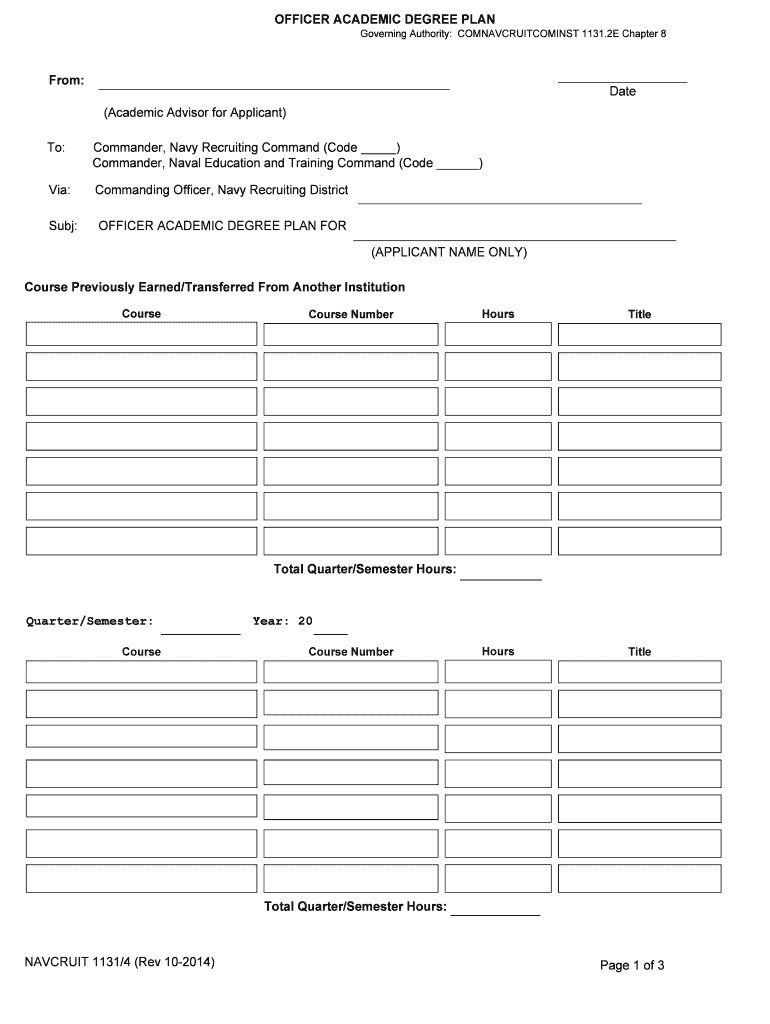







Definition and Purpose of the Officer Academic Degree Plan Governing Authority
The Officer Academic Degree Plan, governed by COMNAVCRUITCOMINST 1131.2E Chapter 8, is a formalized structure detailing the academic requirements necessary for attaining a specific Bachelor of Arts or Science degree. It serves as a roadmap for applicants seeking to fulfill educational commitments as part of their career progression. The document outlines necessary courses and credit hours, providing transparency and structure to academic advancement within the program.
Components of the Plan
- Mandatory Courses: Lists required courses that form a foundational basis for the degree.
- Elective Options: Suggests elective courses that complement core requirements.
- Credit Hours: Details the total credit hours necessary for degree completion.
Significance of the Plan
This plan is crucial not only for meeting academic prerequisites but also for aligning career goals with educational objectives. It fosters accountability and precision in academic planning.
How to Use the Officer Academic Degree Plan Governing Authority
Using the Officer Academic Degree Plan involves a systematic approach to ensure all educational requirements are met efficiently. Below are steps to effectively utilize this document.
Steps to Follow
-
Review the Document: Begin by thoroughly examining the degree plan document to understand its structure and requirements.
-
Determine Applicable Courses: Identify which courses you have completed and which ones remain.
-
Plan Future Coursework: Strategically schedule future courses, ensuring prerequisites are met.
-
Consult with an Academic Advisor: Engage with an advisor to confirm choices and schedules align with academic and career goals.
Additional Tips
- Documentation: Keep meticulous records of completed courses and credit hours.
- Regular Updates: Periodically review and update your plan to reflect changes or new developments in academic offerings.
Steps to Complete the Officer Academic Degree Plan
Successfully completing this academic degree plan requires adherence to specific steps, ensuring that all necessary components are accurately addressed.
Detailed Process
-
Verify Prior Learning: Collect transcripts and documents that validate previous coursework.
-
Consultations: Schedule meetings with academic counselors to refine your degree plan according to military and academic standards.
-
Course Selection: Register for courses as outlined in the degree plan, focusing on completion requirements.
-
Maintain Full-Time Status: Ensure your schedule meets the requirement for full-time student status.
-
Secure Approvals: Obtain necessary signatures from academic advisors to verify your plan’s compliance with regulations.
Common Pitfalls
- Incomplete Documentation: Ensure all previous credits and courses are correctly documented and approved.
- Scheduling Conflicts: Avoid overlapping courses by planning early and confirming availability.
Key Elements of the Officer Academic Degree Plan
Understanding the essential components of the academic degree plan will help applicants navigate and complete their requirements successfully.
Major Components
- Degree Requirements: Specific coursework and credit hours needed to obtain the degree.
- Previous Coursework: Sections dedicated to courses already completed and applicable to the degree.
- Future Coursework: Planned courses that will be taken to fulfill remaining degree requirements.
Documentation and Signatures
- Authenticity Verifications: Requires signatures from authorized academic personnel to validate the planned courses.
- Regular Auditing: Periodic reviews by advisors to ensure alignment with educational objectives.
Why the Officer Academic Degree Plan Is Important
The importance of the Officer Academic Degree Plan lies in its ability to provide structure and accountability for military personnel pursuing higher education.
Benefits
- Structured Progression: Provides a clear and organized pathway toward degree completion.
- Career Advancement: Completion can significantly enhance career prospects within the military.
- Goal Alignment: Helps align academic pursuits with long-term professional goals.
Case Studies
- Career Promotion: Officers using the plan have reported smoother transitions into higher roles due to the structured academic achievements it facilitates.
- Skill Development: Through diverse coursework, officers develop broader skill sets applicable in various military and civilian roles.
Legal Use and Compliance
The Officer Academic Degree Plan must be used in compliance with legal and institutional regulations, ensuring all educational endeavors meet required standards.
Legal Considerations
- Regulatory Compliance: Must align with COMNAVCRUITCOMINST 1131.2E and other relevant directives.
- Institutional Approval: Requires endorsements from accredited educational institutions and military bodies.
Consequences of Non-Compliance
- Academic Penalties: Failure to adhere to requirements can result in academic probation or incomplete degree status.
- Military Consequences: Non-compliance can affect career progression and eligibility for promotions.
Eligibility Criteria for the Officer Academic Degree Plan
Eligibility to pursue education under this plan is determined by a set of criteria that align with military and academic standards.


Basic Requirements
- Military Status: Active duty officers and select reservists are typically eligible.
- Academic Standing: Applicants must meet minimum grade point average (GPA) requirements.
Special Considerations
- Existing Credits: Previous college credits must be transferable and applicable to the proposed degree.
- Advisory Approval: All submissions must include approval from designated advisors to proceed.
Examples of Using the Officer Academic Degree Plan
To understand the practical application of the Officer Academic Degree Plan, consider the following scenarios.
Scenario One: Mid-Career Officer
- Situation: An officer with substantial field experience seeks to transition into an administrative role, using academic credentials to facilitate this shift.
- Plan Utilization: The officer develops a tailored degree plan focusing on management and administrative courses aligned with future goals.
Scenario Two: New Recruit
- Situation: A new recruit aims to leverage educational opportunities to build a foundation for a long-term military career.
- Plan Utilization: The individual initiates an academic plan early, integrating both core and elective courses to accelerate career advancement.
Benefits Observed
- Increased Opportunities: Both scenarios demonstrate how the degree plan can open new pathways for career development and leadership positions within the military.




