




01. Edit your form online
Type text, add images, blackout confidential details, add comments, highlights and more.

Type text, add images, blackout confidential details, add comments, highlights and more.

Draw your signature, type it, upload its image, or use your mobile device as a signature pad.

Send it via email, link, or fax. You can also download it, export it or print it out.
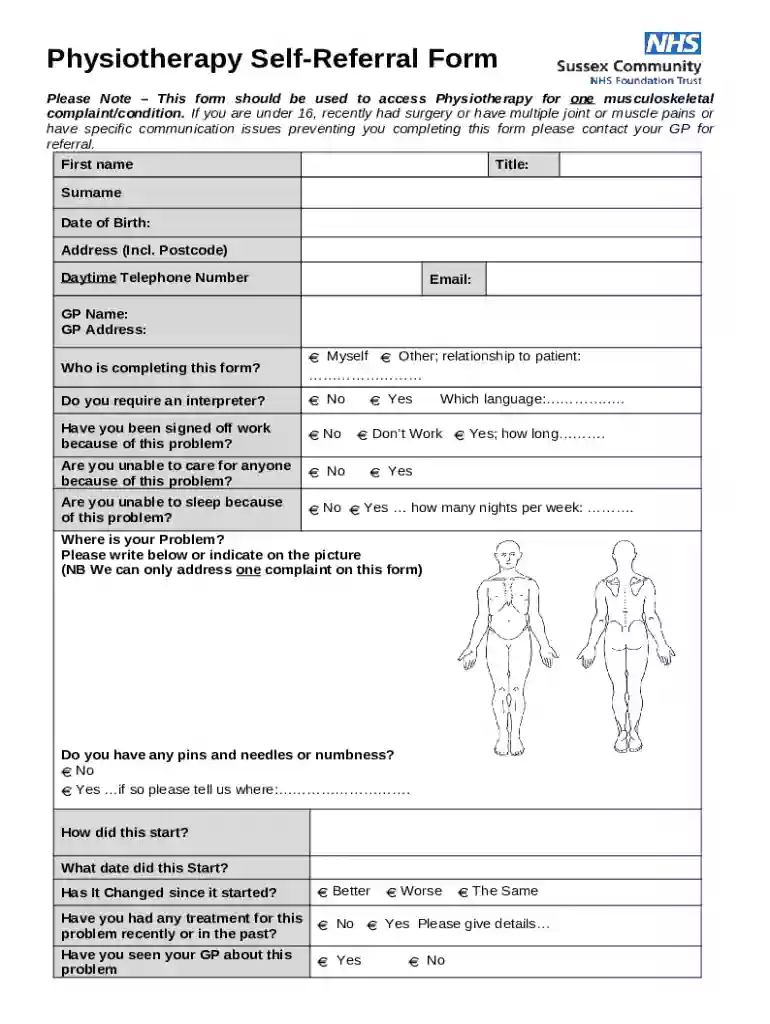
The Physiotherapy Self-Referral Form is a document designed for individuals seeking access to physiotherapy services without needing a prior referral from a general practitioner (GP). This form allows users to directly request physiotherapy for a single musculoskeletal complaint, such as joint or muscle pain. It serves as a streamlined method for patients to communicate their need for physical therapy services, reducing the time to treatment by bypassing initial GP consultations. The form is integral in scenarios where the healthcare structure permits direct access to specialized care, facilitating timely intervention.
Utilizing the Physiotherapy Self-Referral Form involves several critical steps:
Accurate Completion: Begin by entering personal details, including full name, address, and contact information, to ensure accurate identification and contact by healthcare providers.
Medical History: Complete the medical history section by marking any pre-existing conditions, ongoing medications, and prior treatments. This information aids physiotherapists in understanding the patient's background and tailoring the treatment plan.
Current Symptoms: Document the primary complaint needing physiotherapy. Describe the nature, location, duration, and intensity of the symptoms, alongside any triggers or alleviating factors.
Submission: Follow the instructions provided for submission. This may involve mailing the form, dropping it off at a clinic, or submitting it electronically, depending on the provider's preferred intake method.
Completing the form with precision ensures that healthcare providers have all necessary information to initiate treatment promptly.
Filling out the Physiotherapy Self-Referral Form requires attention to detail and careful consideration of the following elements:
Personal Identification: Begin by filling in basic personal identification fields, ensuring that all details such as name and date of birth match those on official identification documents.
Detailed Medical Profile: Elaborate on previous medical conditions, allergies, or surgeries that might affect physiotherapy treatment.
Symptom Description: Provide an exhaustive description of the issue for which physiotherapy is required. Include background on the onset of symptoms, any worsening trends, and any previous management strategies.
Auxiliary Questions: Answer additional questions regarding lifestyle factors, such as exercise habits and occupational demands, which could influence treatment plans and outcomes.
Form Check and Dispatch: Finally, review all sections for accuracy before submission. Depending on the guidelines of the physiotherapy center, decide on the form submission method, be it online or through traditional means.
Accurately completing the form expedites the referral process and minimizes delays in receiving care.
Several core components characterize the Physiotherapy Self-Referral Form:
These elements are essential in ensuring comprehensive data collection for effective patient management.
The form offers several advantages:
Streamlined Access: Facilitates direct access to physiotherapy services, particularly beneficial in healthcare contexts that support self-referral.
Time-Saving: Eliminates the step of obtaining a GP referral, reducing wait times for patients needing urgent care.
Empowerment and Convenience: Empowers patients to take charge of their healthcare journey by allowing them to initiate treatment based on perceived needs.
The form is crucial in environments striving to enhance care delivery efficiency and patient autonomy.
This form is typically utilized by:
Adults with Musculoskeletal Complaints: Those with single, specific areas of concern looking to address issues like joint pain, backaches, or sports injuries without needing initial GP evaluation.
Healthcare Facilities: Clinics and hospitals that operate in jurisdictions or under policies allowing physiotherapist-led care access through self-referral.
Physiotherapists: Practitioners who utilize this information to streamline initial assessments and tailor therapy safely and effectively.
Self-referral is more common in systems where physiotherapists are empowered to take on first-contact care roles.


Understanding specific terminology is crucial:
Musculoskeletal: Refers to the system of muscles and bones; complaints in this context may involve pain, discomfort, or dysfunction impacting movement.
Self-Referral: The process by which a patient independently seeks specialist services, without needing prior consultation with another healthcare provider like a GP.
Consent: Legal agreement by the patient or guardian for the usage of provided information, ensuring adherence to data protection regulations.
Familiarity with these terms ensures proper comprehension and completion of the form.
Consider these real-world scenarios:
Athlete with a New Injury: A young athlete experiencing shoulder pain from recent training sessions uses the form to access physiotherapy quickly, mitigating downtime.
Office Worker with Back Issues: An individual facing chronic lower back pain related to long hours of sitting opts to self-refer after workplace ergonomics adjustments prove insufficient.
Post-Surgery Recovery: A post-operative patient self-refers to begin timely physical rehabilitation, expediting return to normal activities.
These examples illustrate the form's versatility and importance in varied healthcare settings.
We've got more versions of the Physiotherapy Self-Referral Form form. Select the right Physiotherapy Self-Referral Form version from the list and start editing it straight away!
At DocHub, your data security is our priority. We follow HIPAA, SOC2, GDPR, and other standards, so you can work on your documents with confidence.


