







Definition & Meaning
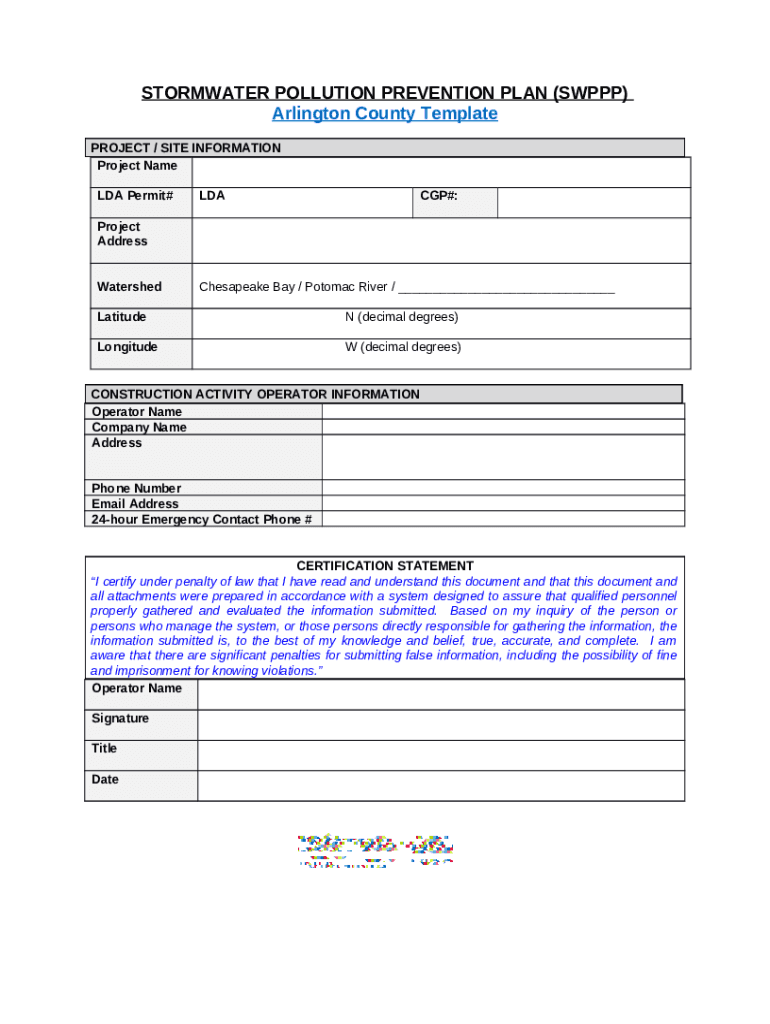
The DES-Stormwater-Pollution-Prevention-Plan-Template, often abbreviated as SWPPP template, is a critical document used in the United States to outline strategies and procedures for managing stormwater pollution prevention during construction activities. This template is designed to ensure compliance with environmental regulations by detailing the necessary measures to minimize pollutants such as sediment, nutrients, and bacteria from entering local water bodies. It serves as a comprehensive guide for operators and contractors to implement effective pollution control practices throughout the construction phase.
How to Use the DES-Stormwater-Pollution-Prevention-Plan-Template docx
To effectively use the DES-Stormwater-Pollution-Prevention-Plan-Template, start by gathering all relevant project details, including site location, construction timelines, and the scope of work. The template provides sections for inputting operator information and certifying statements necessary for regulatory compliance. Follow these steps to utilize the template:
- Open the DES-Stormwater-Pollution-Prevention-Plan-Template document in a compatible word processing software.
- Enter project-specific information in the designated fields, ensuring accuracy and completeness.
- Detail the pollution prevention practices and erosion control measures tailored to the site’s characteristics.
- Regularly update the document with inspection records and modifications to pollution control strategies as the project progresses.
- Review and finalize the document, ensuring it aligns with state and federal regulations.
Key Elements of the DES-Stormwater-Pollution-Prevention-Plan-Template docx
The SWPPP template includes several key elements that are essential for maintaining compliance and effective management of stormwater pollution:
- Project Details: Information about the project’s scope, location, and timeline.
- Operator Information: Contact information and credentials of the individuals responsible for implementing the SWPPP.
- Pollution Control Measures: Detailed strategies to prevent sediment and pollutant discharge.
- Site Inspections: Protocols for conducting regular inspections to identify and mitigate potential sources of pollution.
- Waste Management Protocols: Guidelines for managing construction waste to prevent contamination of stormwater.
Steps to Complete the DES-Stormwater-Pollution-Prevention-Plan-Template docx
Completing the SWPPP template requires a systematic approach to ensure all relevant information is accurately documented. Follow these steps for completion:
- Gather Project Information: Collect detailed data about the construction site and project specifications.
- Fill in Operator Details: Input the names, roles, and contact information of the responsible parties.
- Outline Pollution Control Measures: List specific measures, such as erosion barriers and sediment traps, tailored to the site’s needs.
- Establish Inspection Procedures: Develop a schedule for site inspections and assign responsibilities to team members.
- Document Waste Management Strategies: Record procedures for handling and disposing of construction waste.
Who Typically Uses the DES-Stormwater-Pollution-Prevention-Plan-Template docx
The DES-Stormwater-Pollution-Prevention-Plan-Template is primarily used by contractors, construction project managers, and environmental compliance officers. These professionals are responsible for developing and implementing stormwater management practices to ensure that construction activities do not lead to unauthorized pollutant discharges into surrounding water bodies. The template also assists regulatory bodies in evaluating project compliance with environmental protection standards.


Legal Use of the DES-Stormwater-Pollution-Prevention-Plan-Template docx
The legal use of the SWPPP template involves adhering to state and federal environmental laws that mandate the reduction of stormwater pollution from construction sites. The SWPPP is legally binding and must be compliant with regulations set by the Environmental Protection Agency (EPA) and other state-level environmental agencies. The document outlines preventive measures that are legally required to mitigate the impact of construction activities on local watersheds.
State-Specific Rules for the DES-Stormwater-Pollution-Prevention-Plan-Template docx
While the core elements of the SWPPP remain consistent across various jurisdictions, certain state-specific rules and requirements may apply. These can include:
- Specific regulations on the types of erosion control practices allowed.
- Variations in inspection frequencies and reporting requirements.
- Unique certification statements required by state environmental agencies.
For example, in California, the SWPPP must comply with the California State Water Resources Control Board guidelines, which may differ from those in other states.
Important Terms Related to DES-Stormwater-Pollution-Prevention-Plan-Template docx
Understanding key terms is crucial when working with the DES-Stormwater-Pollution-Prevention-Plan-Template:
- Best Management Practices (BMPs): Strategies and practices implemented to control pollution and reduce stormwater runoff.
- Erosion Control Measures: Techniques used to prevent soil erosion and sediment transport during construction.
- Pollutant Discharge: The release of pollutants into water bodies, which the SWPPP aims to minimize.
- Nonpoint Source Pollution: Pollution that originates from diffuse sources, commonly addressed in the SWPPP.
Each term is integral to executing effective stormwater management strategies and ensuring compliance with environmental regulations.


