




01. Edit your form online
Type text, add images, blackout confidential details, add comments, highlights and more.

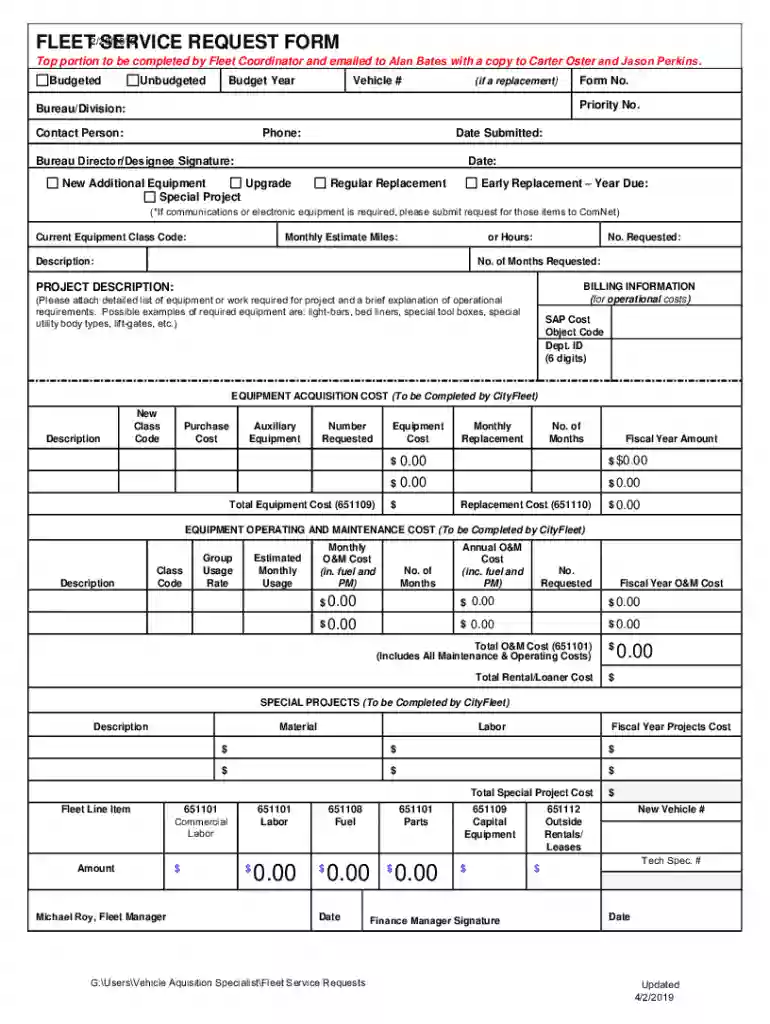
Type text, add images, blackout confidential details, add comments, highlights and more.

Draw your signature, type it, upload its image, or use your mobile device as a signature pad.

Send it via email, link, or fax. You can also download it, export it or print it out.
The "Fleet Service Request Form" is an essential document used for managing and streamlining requests related to fleet operations. It is typically employed to propose new equipment acquisitions, request vehicle replacements, or seek upgrades for existing fleet assets. This form ensures that all pertinent information, such as budget constraints and project descriptions, is systematically gathered to facilitate decision-making processes. By utilizing such a form, organizations can maintain a structured approach to fleet management, minimizing the likelihood of errors or omissions in data collection.
Fleet managers and other personnel involved in managing vehicle and equipment inventories primarily use this form. Departments such as logistics, operations, and finance may also rely on it to initiate organized processes for fleet modification and expansion. Additionally, project managers coordinate with various stakeholders to ensure comprehensive submission and advocacy for needed resources.


The fleet service request form includes sections requiring signatures for legal accountability, making each submitted request a binding document within the organization. It is crucial for maintaining transparency and compliance with internal and possibly external regulatory standards. Organizations might need to adhere to specific legal guidelines when procuring equipment funded through public or company resources.
Consider a municipal transportation department needing new buses to enhance local transit services. By filling out a fleet service request form, they provide detailed vehicle specifications, justify the necessity based on increased public demand, and present a budgetary analysis for approval. Another example could involve a delivery company seeking additional trucks to expand capacity during peak season, detailing routes efficiency, projected ROI, and logistical improvements.
Fleet service request forms can often be submitted through various channels, depending on organizational structure:
Integrating the fleet service request process with management software enhances functionality. Platforms like QuickBooks may assist in budgeting while specialized fleet management applications track submissions, approvals, and implementations. Ensuring compatibility efforts optimize operational efficiency and data flow.
Certain businesses see increased value from efficiently managing fleet services. Delivery services, ride-sharing companies, and government transportation sectors rely heavily on fleet flexibility to meet evolving demands. A structured request system like the fleet service request form elevates their operational capabilities.
We've got more versions of the Fleet Service Request Form form. Select the right Fleet Service Request Form version from the list and start editing it straight away!
| Versions | Form popularity | Fillable & printable |
|---|---|---|
| 2019 | 4.3 Satisfied (27 Votes) |
At DocHub, your data security is our priority. We follow HIPAA, SOC2, GDPR, and other standards, so you can work on your documents with confidence.
FLEET SERVICES VEHICLE REQUEST FORM Page. Purpose for Use of Vehicle COA. The transponder may be used on all expressways in LA, Orange County, San Diego and
Fleet Maintenance Minor Repair Request Form Work Requested By Contact Phone Number Department Vehicle Name Number Vehicle Mileage Description ofRead more
We have prebuilt inspection forms for you. Simplified Repair Order and Estimates. This includes Fleet Maintenance Management for Governmental Agencies and


