
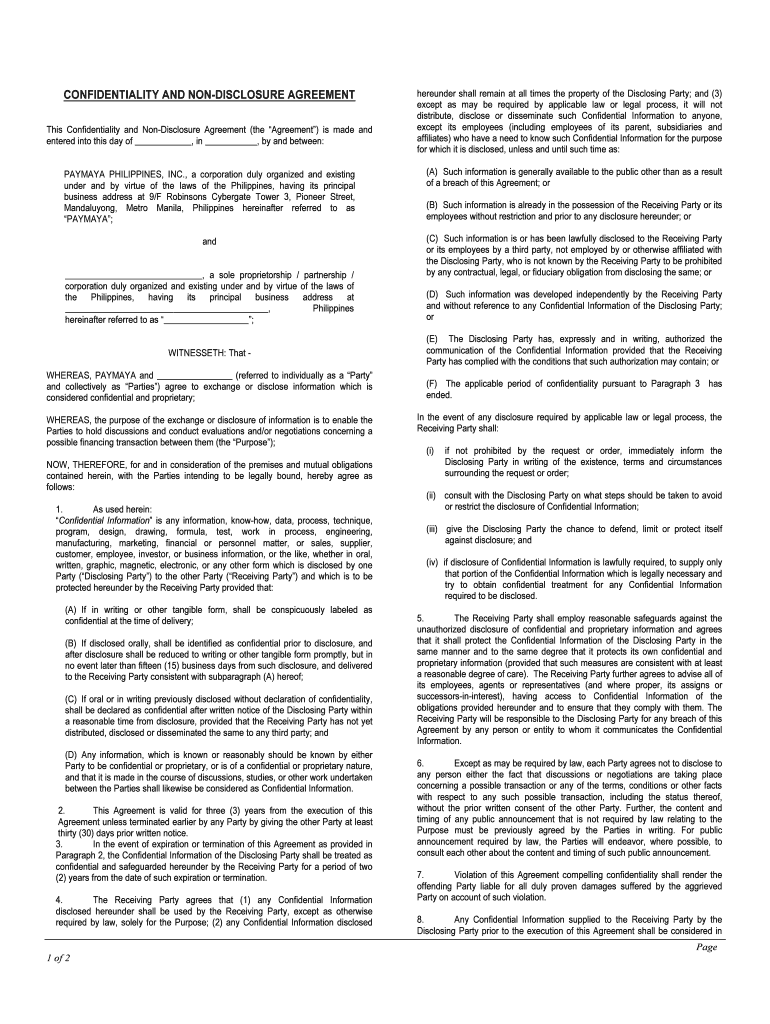







Definition & Purpose of the PAYMAYA CNDA TEMPLATE
The PAYMAYA CNDA TEMPLATE Jul 2017(1) docx is a Confidentiality and Non-Disclosure Agreement (CNDA) utilized primarily for securing the exchange of confidential information during preliminary discussions of business transactions, especially those involving financing. The template serves as a legal safeguard for PAYMAYA PHILIPPINES, INC. by setting clear guidelines on identifying, sharing, and protecting sensitive information disclosed between two parties.
Key Elements of the Template
- Confidential Information Definition: Specifies what constitutes confidential material, often including financial data, proprietary technology, or trade secrets.
- Obligations of Parties: Clarifies the responsibilities of each party for maintaining the confidentiality of shared information.
- Duration of Confidentiality: Indicates the period during which the information must remain confidential, even after discussions are concluded.
- Breach Consequences: Outlines possible repercussions should either party fail to uphold the terms, providing legal recourse and penalties.
- Dispute Resolution: Highlights measures for resolving conflicts, emphasizing legal adjudication in Makati City, Philippines.
How to Use the PAYMAYA CNDA TEMPLATE
Step-by-Step Guide
- Download the Template: Access the PAYMAYA CNDA TEMPLATE Jul 2017(1) docx via authorized platforms or directly from PAYMAYA PHILIPPINES, INC.
- Fill in Required Information: Carefully input the names and details of the parties involved, ensuring accuracy in representation.
- Define Confidential Information: Specify what information is considered confidential to avoid future disputes.
- Establish Terms: Agree on the duration of confidentiality and the obligations expected from each party.
- Include Additional Clauses: Tailor the document to include any additional clauses necessary for your specific situation, such as specific remedies for breaches.
- Review and Sign: Thoroughly review the document with all involved parties before signing to confirm understanding and agreement.
Practical Tips
- Collaborate with Legal Counsel: Involve legal experts in drafting and reviewing the document to ensure all legal bases are covered.
- Consistent Terminology: Use clear and consistent language throughout to avoid any ambiguity.
Legal Use and Restrictions
Compliance and Restrictions
- U.S. Legal Framework: The PAYMAYA CNDA TEMPLATE must align with U.S.-centric legal standards, ensuring it adheres to federal and state laws regarding confidentiality agreements.
- Non-Binding Agreement: The template does not necessitate further agreements or transactions beyond preliminary discussions.
Authorization and Enforcement
- Enforcement: The CNDA is legally enforceable, providing both parties with assurance that shared information is protected under U.S. law.
- Authorization: Ensure all signatories have the authority to enter into a legal agreement on behalf of their respective organizations.
Importance of PAYMAYA CNDA TEMPLATE
Benefits for Businesses
- Protect Intellectual Property: Safeguards sensitive information vital for maintaining competitive advantages.
- Facilitate Trust: Establishes a foundation of trust, encouraging openness during negotiations.
Risks of Non-Use
- Potential Data Breaches: Without a CNDA, companies risk unauthorized disclosure of sensitive information, which could lead to financial and reputational damage.
- Legal Vulnerabilities: Absence of formal agreements can leave businesses exposed to legal disagreements or breaches.
Important Terms and Concepts
Terminology Simplified
- "Confidential Information": Typically includes any non-public information considered proprietary or sensitive.
- "Breach": Any act that contravenes the agreed confidentiality obligations.
Contractual Nuances
- "Effective Date": Specifies when the agreement becomes legally binding.
- "Term and Termination": Defines the time frame of enforceability and conditions for ending the agreement.
Examples of Use in Business Contexts
Case Studies
- Startup Collaborations: When startups collaborate on joint ventures, using the template ensures both parties can freely share technology details without fear of misappropriation.
- Mergers and Acquisitions: During due diligence phases, a CNDA is pivotal for securely exchanging financial and operational insights.
Real-World Scenarios
- Vendor Partnerships: Engaging new suppliers often requires sharing detailed production plans. A CNDA protects these exchanges.
- R&D Projects: Agreements are crucial when organizations collaborate on research to safeguard intellectual property.
State-Specific Considerations
U.S. Regional Differences
- Variability in Enforcement: State laws may affect the enforceability of CNDA terms, like non-compete clauses, which must comply with local statutes.
- Jurisdictional Nuances: While the primary legal framework remains consistent, state-specific regulations can impact how terms are interpreted or executed.
Software Compatibility and Digital Use
Integration with Document Workflows
- Cloud Storage Accessibility: The template's format allows easy integration with cloud services like Google Drive and OneDrive.
- DocHub Integration: Utilizing platforms like DocHub enhances functionality, enabling editing, signing, and form sharing directly within a digital framework.
Digital vs. Paper Formats
- Advantages of Digital Formats: Increased efficiency in distribution, tracking, and editing over traditional paper methods.
- Considerations for Execution: Ensure all digital signatures comply with the ESIGN Act for legal validity.




