




01. Edit your form online
Type text, add images, blackout confidential details, add comments, highlights and more.

Type text, add images, blackout confidential details, add comments, highlights and more.

Draw your signature, type it, upload its image, or use your mobile device as a signature pad.

Send it via email, link, or fax. You can also download it, export it or print it out.
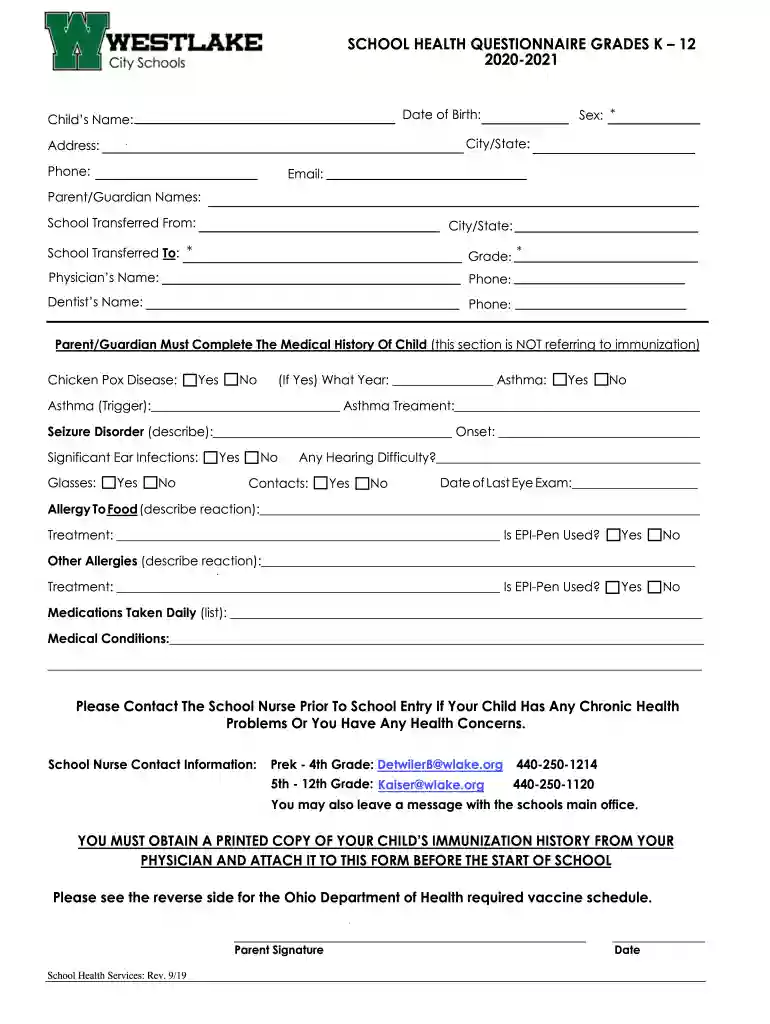
The "Pre-K Registration Packet" is a comprehensive set of documents required by educational institutions to enroll children in pre-kindergarten programs in the United States. This packet typically encompasses all the necessary forms and information that parents must provide to register their child successfully. The forms can include enrollment applications, health information, proof of residency, and other critical data needed by the school. Understanding the specific components of the packet and their purpose is essential for ensuring a smooth registration process for your child’s pre-kindergarten year.
Utilizing the Pre-K Registration Packet effectively involves several steps:
Review All Forms: Begin by thoroughly examining each document in the packet to understand what information is required. Look for any specific instructions related to the forms.
Gather Necessary Information: Collect the required information and documents, such as birth certificates, immunization records, and proof of residency, before filling out the forms.
Complete Forms Accurately: Fill out all necessary fields with accurate and up-to-date information. Ensure that each section of the form is completed as per the instructions outlined.
Verify Details: Double-check all the information provided to avoid any mistakes or omissions that could delay the registration process.
Submit the Packet: Submit the completed packet by the specified deadline using the school’s preferred submission method, whether online, by mail, or in person.
Securing a Pre-K Registration Packet involves:
Contacting Local Schools: Reach out to your local school district or specific pre-kindergarten program to request the registration packet. Most institutions have the packet available on their websites for easy access.
Visiting School Websites: Many schools offer online access to their registration packets. Visit the school’s official site and look for a section specifically dedicated to enrollment or registration forms.
School Administration Office: For those who prefer hard copies, visiting the school’s administrative office can provide you with a physical packet. Some schools offer this upon request or have set distribution days.
Identification Verification: Start with documents that verify your child’s and your own identity, such as birth certificates and IDs.
Health Documentation: Complete sections related to your child’s health, including immunization records and any required health assessments.
Residency Confirmation: Provide proof of residency, which can include utility bills or rental agreements.
Signatures and Authorizations: Ensure any required signatures are obtained, including parental consent and authorization for medical treatment.
Compilation and Review: Gather all completed forms, ensuring everything is signed and dated. Review the packet thoroughly before submission.
The primary users of the Pre-K Registration Packet are parents or guardians of children eligible for pre-kindergarten programs. Educational administrators also engage with these packets to evaluate and process enrollments. Additionally, health professionals may review health-related information within the packet. Understanding the role each user plays helps streamline communication and ensure that all relevant parties have access to necessary information.


The Pre-K Registration Packet includes several critical components:
Enrollment Application: Captures basic information about the child and family.
Health and Immunization Records: Ensures the child meets school health requirements and is up-to-date with mandatory vaccinations.
Proof of Residencies: Validates the family's eligibility to enroll in a specific school district.
Emergency Contacts: Lists important contacts for emergencies, providing names, phone numbers, and relationships to the child.
Consent and Authorization Forms: Secures necessary permissions relating to medical treatment and participation in school activities.
Each state in the U.S. may impose distinct requirements for Pre-K registration:
Vaccination Requirements: Some states have specific vaccines mandated by their Department of Health.
Age Criteria: Policies about cut-off dates for age eligibility can vary.
Residency Documentation: Specific states might require different forms of residency proof.
Understanding these nuances is crucial for compliance with local education regulations. Consulting local school district resources can provide clarity on state-specific mandates.
Several practical scenarios illustrate how the Pre-K Registration Packet is used:
First-Time Enrollment: Parents enrolling their child for the first time must ensure all documentation is complete and accurate, reflecting their child’s current health and residency status.
Updating Records: If a child’s medical or residency information changes, the registration packet must be updated accordingly and resubmitted to the school.
Moving Districts: Families relocating to a different district utilize the packet to re-enroll their child, ensuring they meet the new location’s requirements.
Each example underscores the packet’s importance in facilitating smooth transitions and ensuring children are adequately prepared for their educational journey.
We've got more versions of the Pre-K Registration Packet form. Select the right Pre-K Registration Packet version from the list and start editing it straight away!
At DocHub, your data security is our priority. We follow HIPAA, SOC2, GDPR, and other standards, so you can work on your documents with confidence.


