Definition & Meaning of the Form OCIP-S1
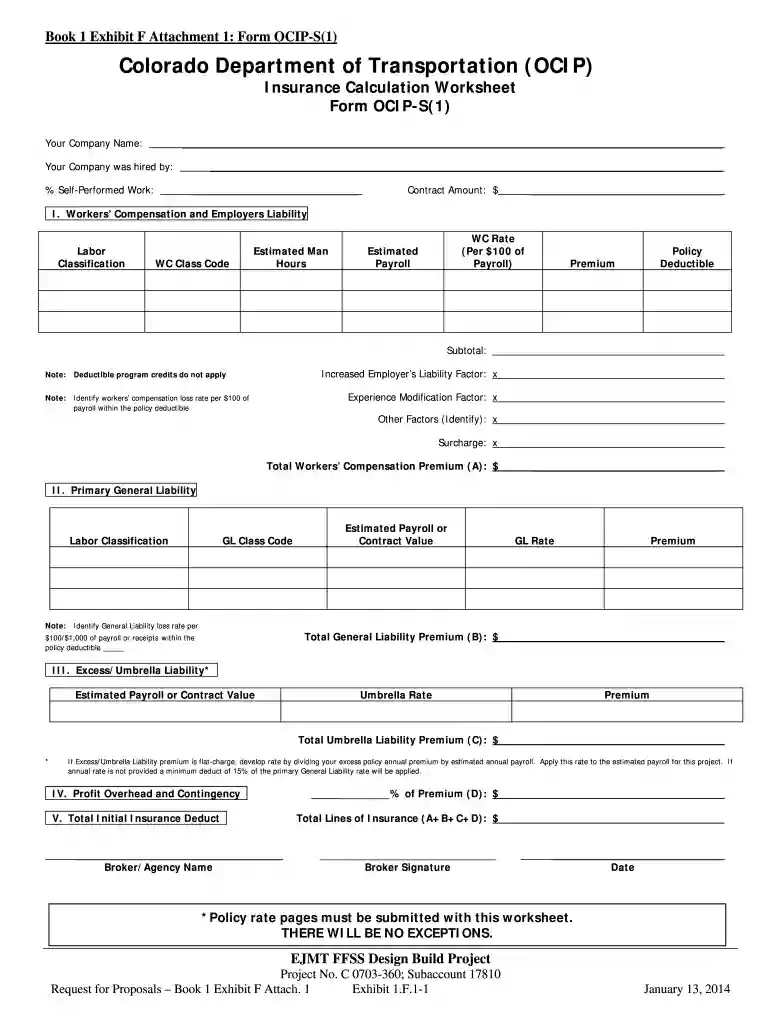
Form OCIP-S1, officially known as "Book 1 Exhibit F Attachment 1 bFormb OCIP-S1 - Colorado bb," is a specialized document utilized by the Colorado Department of Transportation. It serves a critical role in calculating insurance premiums associated with construction projects, specifically addressing workers' compensation, general liability, and excess or umbrella liability. This form is tailored for use in the EJMT FFSS Design Build Project, requiring detailed entries from contractors about their payroll estimates and associated insurance costs. The form ensures compliance with state insurance mandates and helps streamline the financial planning process for large-scale infrastructure projects.
How to Use Form OCIP-S1 Effectively
Understanding the Form Layout
- Section Breakdowns: Form OCIP-S1 is divided into several sections, each catering to different aspects of insurance premium calculation.
- Payroll Estimates: This section requires detailed input on the expected payroll over the project duration to calculate workers' compensation insurance.
- Insurance Rates: You must provide the current rates applicable to liability insurance, influenced by state and project-specific factors.
- Additional Costs: Factor in costs such as excess liability to ensure comprehensive coverage.
Practical Use Case
- Data Collection: Start by gathering all necessary payroll and insurance rate data. Ensure accuracy to prevent miscalculations or potential legal issues.
- Form Entry: Methodically fill each section based on your gathered data. Utilize any provided templates or guidelines to stay compliant.
Steps to Complete the Form OCIP-S1
- Prepare Necessary Information
- Gather payroll records, insurance rate documents, and any contract-specific requirements.
- Review Specific Sections
- Focus on key areas such as payroll estimates and current insurance rates.
- Accurate Data Entry
- Input each data point accurately. Double-check entries for any inconsistencies or errors.
- Consult Reference Materials
- Use guidelines provided by the Colorado Department of Transportation for clarity.
- Submit for Verification
- Before final submission, have the form verified by a financial or insurance expert to ensure compliance.
Important Terms Related to Form OCIP-S1
Key Terminologies
- Workers' Compensation Insurance: Covers employee injuries during work, pivotal for calculating the correct premium on OCIP-S1.
- General Liability Insurance: Protects against claims arising from business operations, another essential entry.
- Excess/Umbrella Liability: Provides additional coverage beyond standard policies, crucial in large projects like EJMT FFSS.
Why Form OCIP-S1 is Essential
Enhances Financial Planning
- Insurance Budgeting: Allows contractors to precisely budget their insurance expenditures and minimize financial surprises.
Ensures Legal Compliance
- Mandated Submission: Meeting state documentation requirements helps avoid penalties and maintain project eligibility.
Who Typically Uses Form OCIP-S1
- Contractors: Particularly those involved in infrastructure projects under the Colorado Department of Transportation.
- Insurance Analysts: To evaluate and optimize insurance costs and compliance within project budgets.
- Project Managers: To oversee the financial aspects and ensure all necessary forms are correctly completed and submitted.
Key Elements of the Form OCIP-S1
Crucial Components
- Detailed Payroll Section: Requires exhaustive input on projected payroll data for workers.
- Insurance Rate Inputs: Must reflect current liability rates and any project-specific influencing factors.
State-Specific Rules for Completing Form OCIP-S1
- Colorado Insurance Rates: Depending on prevailing state directives, adjust calculations for any updates in rates.
- Project-Specific Adjustments: Consider any special provisions applicable to large-scale projects like EJMT FFSS.
Through careful attention to detail and understanding these key elements, efficiently completing the OCIP-S1 form will ensure both compliance and optimal budgeting for insurance costs related to construction projects in Colorado.