







Definition & Purpose of Patient Forms
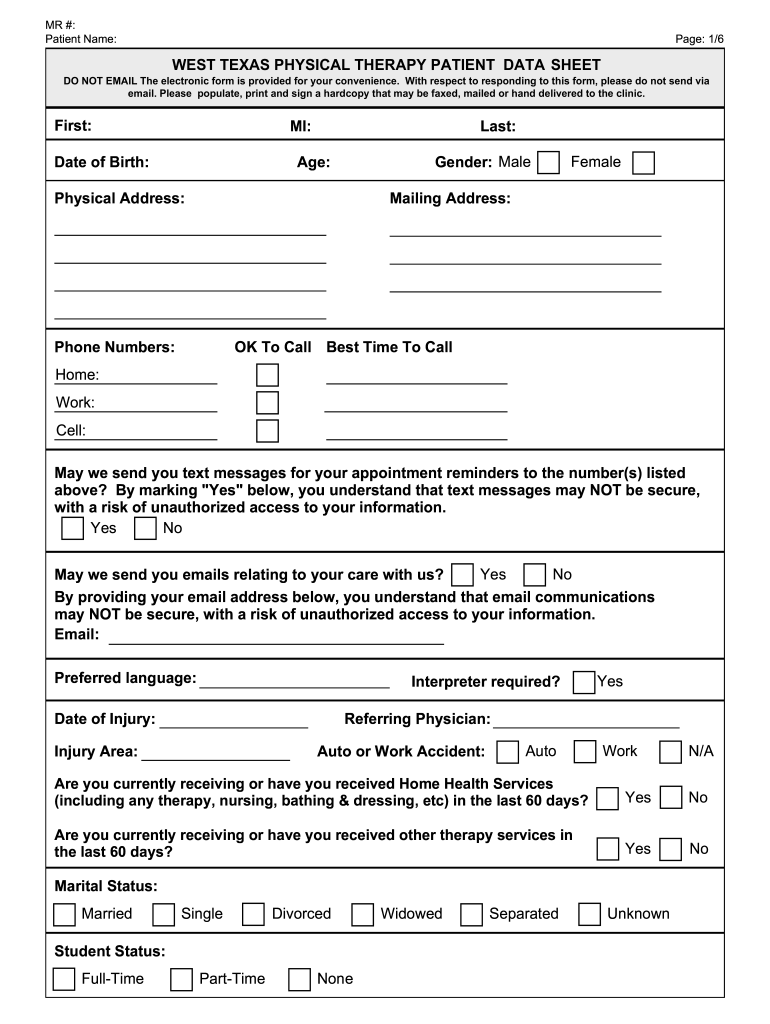
Patient forms at Texas Physical Therapy SpecialistsTexas serve as a crucial tool for gathering and organizing essential patient information. These forms are typically used to collect data such as personal information, insurance details, emergency contacts, and medical history. The primary purpose of these forms is to streamline the administrative process, ensuring that practitioners have access to all relevant details needed for effective treatment planning and billing. By accurately completing these forms, patients can help facilitate seamless communication between themselves and their healthcare providers, ensuring personalized and efficient care.
How to Use the Patient Forms
Using patient forms at Texas Physical Therapy SpecialistsTexas involves several key steps to ensure that all necessary information is accurately captured and processed. Initially, patients should carefully review each section of the form, providing complete and honest information. If completing the form digitally, users might find platforms like DocHub useful for editing and annotating directly on the document. Ensure that every mandatory field is filled out, as incomplete forms might lead to delays in receiving care. Finally, double-check for accuracy, and where applicable, provide consents for treatments and data usage. Submitting the completed form as per the clinic’s preferred method, whether digitally or on paper, ensures efficient processing.
How to Obtain the Patient Forms
Obtaining the patient forms for Texas Physical Therapy SpecialistsTexas can typically be done through several channels. The clinic's website often provides downloadable versions of the forms, making it easy for patients to access them online. Alternatively, forms can be obtained directly at the clinic during the first visit. Some clinics might also offer to mail the forms to patients prior to their appointment. To facilitate a seamless intake process, it's advisable for patients to acquire and complete these forms in advance of their appointment whenever possible.
Steps to Complete the Patient Forms
Completing patient forms for Texas Physical Therapy SpecialistsTexas involves a structured approach.
- Gather Required Information: Ensure all personal, insurance, and medical history details are readily available.
- Fill Out Personal Information: Provide full name, date of birth, contact details, and any demographic information requested.
- Provide Insurance Details: Include policy numbers, insurance company name, and any relevant group or membership numbers.
- Document Medical History: Accurately record previous treatments, existing conditions, and current medications.
- Consent and Signatures: Read consent sections carefully, sign where applicable, and provide contact details for emergency contacts if required.
- Finalize and Review: Double-check all sections for errors or missed fields before submitting.
For those using digital forms, leveraging platforms like DocHub can simplify the editing and signing process, providing a user-friendly interface to complete these steps efficiently.
Why You Need the Patient Forms
Patient forms are indispensable for both patients and healthcare providers at Texas Physical Therapy SpecialistsTexas. They provide a comprehensive overview of the patient's health and background, enabling practitioners to offer tailored treatment plans. Having accurate insurance information ensures that billing is processed correctly and that patients are aware of their coverage and responsibilities from the onset. Moreover, these forms help in maintaining legal compliance and protecting patient privacy, as they often include consent notices relating to data usage and treatment procedures.
Key Elements of the Patient Forms
Key elements of the patient forms include sections that focus on:
- Personal Identification: Full name, contact information, and social security number.
- Insurance Details: Provider information, policy numbers, and coverage specifics.
- Emergency Contacts: Names and phone numbers of primary contacts in case of emergencies.
- Medical History: Information on past and present medical conditions, treatments, surgeries, and allergies.
- Consent Sections: Authorizations for treatment and data processing.
Ensuring that these sections are thoroughly completed is critical, as they facilitate effective communication and care delivery.
Legal Use of the Patient Forms
Patient forms used at Texas Physical Therapy SpecialistsTexas must adhere to stringent legal and confidentiality guidelines to protect patient rights. They include consent sections where patients authorize the clinic to use their health information for treatment, payment, and healthcare operations. Compliance with regulations like HIPAA (Health Insurance Portability and Accountability Act) is mandatory. These forms also contain clauses that outline the responsibilities of both the patient and provider, ensuring transparency regarding privacy rights and the handling of sensitive information.
Digital vs. Paper Versions
There are notable differences between digital and paper versions of patient forms. Digital forms, often accessible via platforms like DocHub, offer ease of use with features such as automatic data saving, editing, and electronic signatures, thereby enhancing convenience and efficiency. They are considered environmentally friendly and reduce the chances of data entry errors as information can be directly integrated into digital systems. Paper forms, on the other hand, might still be preferred in certain settings or by individuals who are less tech-savvy. However, they require manual handling and storage, which could be less efficient in busy healthcare environments.
State-Specific Rules for Patient Forms
In Texas, where Texas Physical Therapy SpecialistsTexas operates, state-specific regulations mandate certain inclusions in patient forms. These often align with federal guidelines but may have additional requirements regarding insurance disclosure, consent for minors, and documentation of specific medical conditions prevalent in the region. Understanding these nuances is essential for compliance and ensuring that patient forms reflect both state and federal healthcare mandates. Clinics must stay updated on any legislative changes that could affect the content or distribution of these forms.




