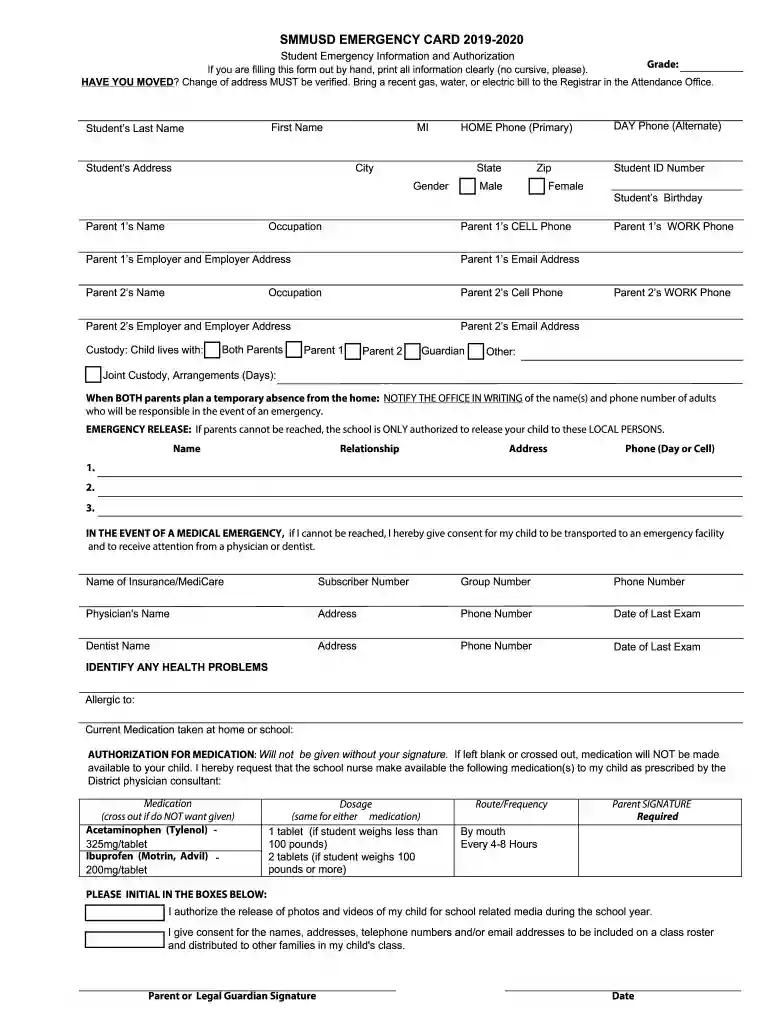
SOS - Emergency Medical Card - State of Michigan 2026

Get Form
SOS - Emergency Medical Card - State of Michigan Preview on Page 1

Here's how it works

01. Edit your form online
Type text, add images, blackout confidential details, add comments, highlights and more.

02. Sign it in a few clicks
Draw your signature, type it, upload its image, or use your mobile device as a signature pad.

03. Share your form with others
Send it via email, link, or fax. You can also download it, export it or print it out.

Definition and Purpose of the SOS - Emergency Medical Card - State of Michigan

The SOS - Emergency Medical Card - State of Michigan serves as a vital document designed to provide crucial medical information in emergencies. This card aims to communicate essential health details to medical personnel during critical situations when individuals may be unable to convey this information themselves. The card typically includes personal identification data, an outline of medical conditions, allergies, current medications, and emergency contact information. By facilitating quick access to critical medical details, it enhances care responsiveness and potentially improves medical outcomes in emergency scenarios.

Key Information Included on the Card

  • Personal Identification Information: Full name, date of birth, and any applicable identification numbers.
  • Medical Conditions: Lists of chronic illnesses or conditions that could impact emergency treatment, such as diabetes or epilepsy.
  • Allergies: Information about allergies, especially those that can cause severe reactions like anaphylaxis.
  • Current Medications: A detailed list of medications currently being taken, including dosages and purposes.
  • Emergency Contacts: Names and phone numbers of relatives or friends to be contacted in an emergency.

Steps to Complete the SOS - Emergency Medical Card - State of Michigan

Completing the SOS - Emergency Medical Card - State of Michigan involves a careful step-by-step process designed to ensure the accuracy and comprehensiveness of the information provided.

  1. Gather Personal and Medical Information: Collect all necessary details, including your personal identification, medical conditions, and current medications.
  2. Fill Out Personal Identification Details: Input your name, date of birth, and any state-issued identification numbers.
  3. Document Medical Conditions and Allergies: Clearly specify any conditions or allergies that may affect emergency medical procedures.
  4. List Current Medications: Provide detailed information about medications, with clear instructions regarding dosages and frequency.
  5. Add Emergency Contacts: Include multiple contacts who can provide additional information or make decisions if necessary.
  6. Review and Update Periodically: Regularly review the information on the card to ensure it remains current and reflective of any changes in medical conditions or medications.

Importance of Accurate and Up-to-Date Information

Maintaining accurate and current information on the SOS - Emergency Medical Card is crucial. Outdated or incorrect details can lead to inappropriate or delayed treatment in emergencies, potentially exacerbating medical conditions or leading to complications.

How to Obtain the SOS - Emergency Medical Card - State of Michigan

Obtaining the SOS - Emergency Medical Card is a streamlined process involving several methods to suit different needs and preferences.

  • Online Application Portal: Visit the official State of Michigan website to access and fill out an application form electronically.
  • In-Person at Local Offices: Obtain the card by visiting local government or health department offices where staff can assist with completing and issuing the card.
  • Mail Request: Send a request through the mail to receive a physical form, which can be filled out and returned for processing.

Each method ensures accessible options for all residents to acquire their emergency medical card conveniently.

Legal Use of the SOS - Emergency Medical Card - State of Michigan

The SOS - Emergency Medical Card holds legal significance as it contains personal health data that can be utilized by authorized medical personnel in emergencies. Possession of this card permits immediate access to vital medical information, potentially serving as a legal document that influences emergency medical treatment decisions.

Legal Considerations for Medical Data

  • Privacy Compliance: Ensure compliance with privacy laws like HIPAA, protecting sensitive health information from unauthorized access.
  • Authorization for Medical Personnel: Only authorized personnel can access and act upon the information contained within the card.

Who Typically Uses the SOS - Emergency Medical Card - State of Michigan

The SOS - Emergency Medical Card is particularly beneficial for individuals with severe medical conditions, the elderly, and those with cognitive impairments who may struggle to communicate their medical histories in emergencies. It is also a valuable tool for frequent travelers and individuals living alone, ensuring that their medical information is readily available when needed.


decoration image ratings of Dochub

Use Cases

  • Elderly Population: Safe preparation for emergencies, especially beneficial for those with complex medical histories.
  • Chronic Illness Patients: Quick access to medication and condition details that inform treatment.
  • Individuals with Allergies: Provides immediate information on potential allergic reactions, aiding faster and more precise intervention.

Key Elements of the SOS - Emergency Medical Card - State of Michigan

The SOS - Emergency Medical Card encompasses several critical components that collectively ensure comprehensive coverage of an individual's medical profile.

  • Detailed Medical History Section: Summarization of significant past medical events, surgeries, or treatments.
  • Contact Information for Healthcare Providers: Information on primary care physicians or specialists for additional insights during emergencies.
  • Insurer Information: Offers details relevant to health insurance, streamlining communication with healthcare services during billing and authorization processes.

Significance of Each Element

Each element of the card plays a critical role in painting a complete picture of the individual's health standing, thus enabling more informed and effective medical care during emergencies.

Important Terms Related to SOS - Emergency Medical Card

Understanding key terms associated with the SOS - Emergency Medical Card is essential for grasping its function and benefits.

  • Anaphylaxis: A severe, potentially life-threatening allergic reaction necessitating immediate medical attention.
  • Chronic Condition: A long-term health condition requiring ongoing management.
  • First Responder: Emergency personnel such as paramedics or firefighters first providing medical assistance during crises.

These terms aid in contextualizing the necessity and applicability of the information on the card.

State-Specific Rules for the SOS - Emergency Medical Card - State of Michigan

While the core components of the SOS - Emergency Medical Card are broadly applicable, specific guidelines within Michigan might govern its implementation.

  • State Health Department Regulations: Adhering to state-specific requirements ensures the legal validity and efficacy of the card within Michigan.

Knowledge of these localized rules ensures compliance and maximizes the utility of the emergency medical card for residents.

be ready to get more

Complete this form in 5 minutes or less

Get form

Got questions?

We have answers to the most popular questions from our customers. If you can't find an answer to your question, please contact us.
Contact us
Instructions and the online portal are available on our website at .michigan.gov/mmp. If you are a patient with a caregiver or choose to designate one, you must submit a paper application. You must submit, in one envelope, a complete MMMP Application Packet, which can be found on our website at .michigan.gov/mmp.
In the sunny state of California, the requirement for a DOT medical card applies to all commercial drivers, regardless of whether they operate within the state or across state lines. This means if youre driving a vehicle that requires a CDL, youll need to hold a valid DOT medical card.
State of Michigan law requires that any employee obtain and carry a medical certification, irrespective of whether driving is an Incidental or Primary Duty, if they operate a vehicle that: VEHICLES: Having a gross vehicle weight or weight rating (GVWR) of 10,001 pounds or more but less than 26,000 pounds.
List of the debilitating medical conditions that qualify for a marijuana card in Michigan Agitation of Alzheimers Disease. AIDS/HIV Positive. Amyotrophic Lateral Sclerosis (ALS) Arthritis. Autism. Cancer. Cerebral Palsy.
If you want to drive on public roads in Michigan, you must have a valid drivers license. Read this article to learn about the process and the documents you will need to renew, replace, or get your Michigan drivers license for the first time.

Security and compliance

At DocHub, your data security is our priority. We follow HIPAA, SOC2, GDPR, and other standards, so you can work on your documents with confidence.

Learn more
ccpa2
pci-dss
gdpr-compliance
hipaa
soc-compliance

People also ask

A medical examiners certification is needed if you operate a motor vehicle: With a gross vehicle weight (GVW), gross vehicle weight rating (GVWR), gross combination weight (GCW) or gross combination weight rating (GCWR) of 10,001 pounds or more. Designed to transport 16 or more passengers (including the driver).

Related links