







Definition and Meaning of the Judicial Appointment Questionnaire
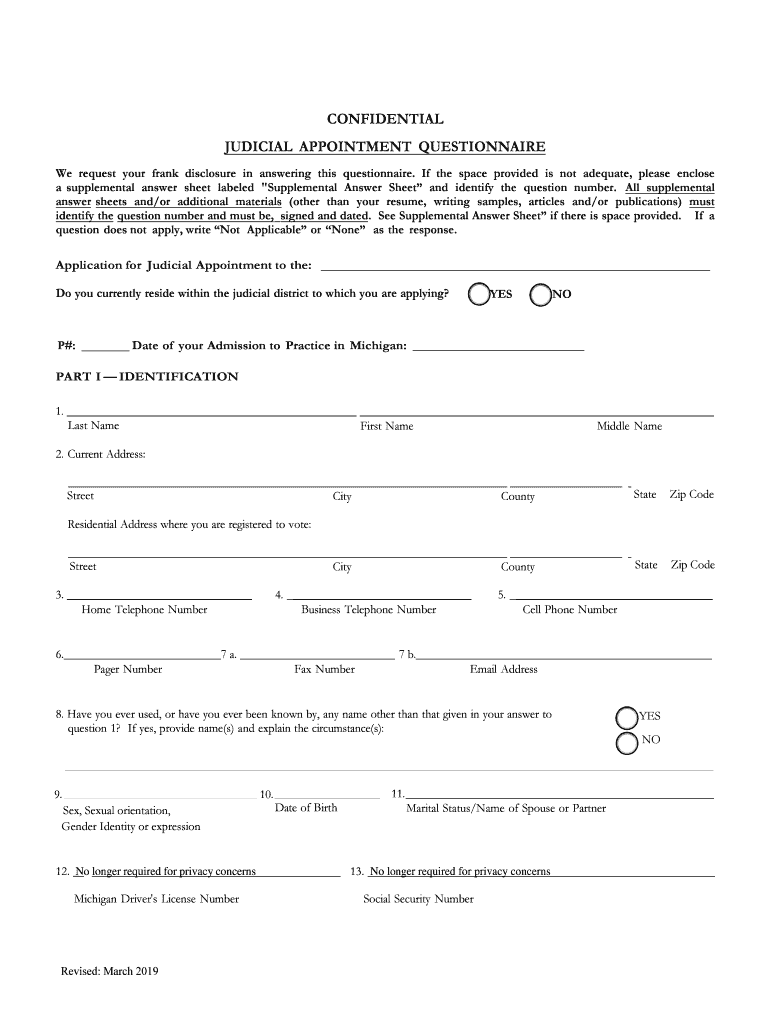
The Judicial Appointment Questionnaire - State Bar of Michigan is a comprehensive form used by candidates seeking judicial positions in Michigan. It serves as a critical tool in the selection process by collecting detailed information about applicants. This document is integral to evaluating a candidate's professional qualifications, ethical standards, and personal background. The questionnaire covers a wide range of topics, including professional experience, educational background, and potential conflicts of interest. It is designed to ensure that applicants meet the high standards required for judicial appointments in the state.
How to Use the Judicial Appointment Questionnaire
To use the Judicial Appointment Questionnaire effectively, applicants should begin by carefully reviewing each section of the form to understand what information is required. Here are the steps to guide the completion process:
-
Preparation: Gather all necessary information and documents before starting. This includes professional credentials, employment history, and any required disclosures.
-
Detailed Responses: Provide comprehensive and accurate information in all sections, including personal history and references.
-
Supporting Documents: Attach any additional documents needed to substantiate claims made in the questionnaire, such as academic records or past performance reviews.
-
Review and Edit: Thoroughly review the questionnaire for accuracy and completeness before submission.
-
Submission: Follow the specified method for submitting the form, which could include digital or physical submission options.
Steps to Complete the Judicial Appointment Questionnaire
Completing the form involves several key steps that ensure all relevant information is captured:
- Identify Section Requirements: Each section may have different requirements, so understanding these before starting is crucial for efficiency.
- Input Personal and Professional Information: Fill in details such as name, contact information, and current occupation.
- Disclosure Statements: Accurately detail any required disclosures, such as conflicts of interest or previous legal proceedings.
- Professional Experience: Document all relevant work experience in the legal field, focusing on roles that involved significant legal responsibilities.
- Finalize and Submit: Complete the form by ensuring all required fields are filled, and submit it via the prescribed method, whether online or in person.
Key Elements of the Judicial Appointment Questionnaire
The questionnaire contains several critical elements designed to paint a comprehensive picture of the applicant:
- Identification Info: Include basic personal details like full name and contact information.
- Residency and Educational Background: Verify eligibility through residency status and provide a detailed educational history.
- Employment History: Highlight relevant legal and judicial experiences that demonstrate qualifications for the position.
- Legal and Ethical Disclosures: Ensure transparency by disclosing any involvement in legal matters, both civil and criminal.
- Supportive Materials: Attach additional documents that support claims of experience and expertise.
Eligibility Criteria for Applicants
Eligibility to complete the Judicial Appointment Questionnaire may be limited to certain individuals:
- Legal Experience: A minimum number of years practicing law is typically required.
- Good Standing: Applicants must be in good standing with the bar and free from significant disciplinary issues.
- Residency Requirements: Proof of residency within Michigan is often necessary.
These criteria help maintain the integrity of the selection process by ensuring that only qualified candidates are considered.


Disclosure Requirements
Disclosure within the Judicial Appointment Questionnaire is essential for transparency:
- Financial Interests: Clearly outline any financial interests that could influence judicial decisions.
- Previous Legal Proceedings: Disclose past involvement in legal disputes or litigation.
- Potential Conflicts of Interest: Identify any relationships or circumstances that could affect impartiality.
Understanding and accurately fulfilling these disclosure requirements are crucial for the integrity of the application process.
Legal Use of the Judicial Appointment Questionnaire
The use of the Judicial Appointment Questionnaire carries legal weight, as it is a binding part of the application process:
- Truthfulness Agreement: By submitting the questionnaire, applicants attest to the accuracy and truthfulness of all provided information.
- Confidentiality Clauses: Information within the questionnaire may be subject to confidentiality agreements to protect both the applicant and the integrity of the process.
- Review Process: The responses are reviewed by relevant state bar and judicial committees to ensure compliance with legal standards and selection criteria.
State-Specific Rules for Michigan
Specific rules apply to the State of Michigan regarding the processing and acceptance of the Judicial Appointment Questionnaire:
- Michigan Bar Association Guidelines: All applicants must adhere to the rules and guidelines set forth by the Michigan Bar Association.
- Submission Deadlines: Applicants are required to adhere to strict deadlines for submission, which can impact eligibility if missed.
- Interview Preparation: Successful submission may lead to further steps, such as interviews or additional background checks, as required by Michigan's judicial selection committees.




