Definition & Meaning
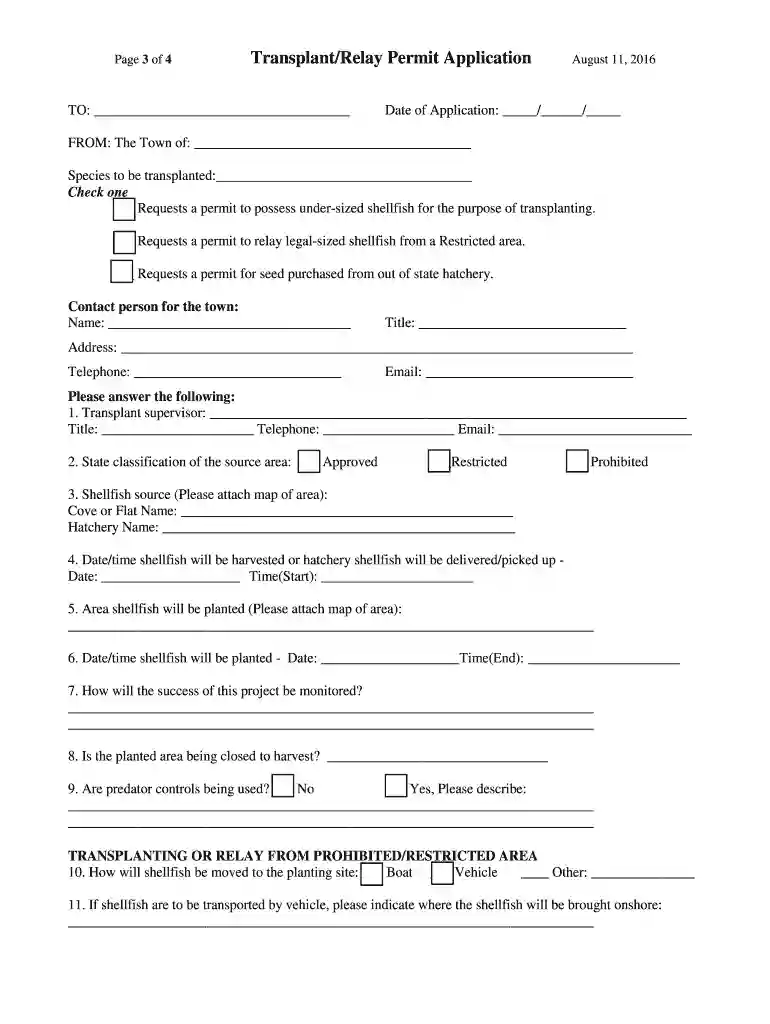
The "Page 1 4 Transplant Relay Permit Application August 11" pertains to a specific form used for shellfish transplanting and relay activities in the state of Maine. It is part of the regulatory framework managed by the Maine Department of Marine Resources, ensuring that shellfish farming and relay operations comply with state regulations. The permit application is essential for managing environmental impacts and protecting local marine ecosystems.
- Purpose: Allows applicants to legally transplant or relay shellfish, such as soft-shell clams, hard-shell clams, and European oysters.
- Scope: Pertains to transplanting shellfish from areas categorized as approved, restricted, or prohibited.
- Stakeholders: Used by individuals or entities involved in shellfish farming, requiring coordination with Marine Patrol and other designated officials.
How to Use the Page 1 4 Transplant Relay Permit Application August 11
Successfully utilizing the permit application involves several key steps to comply with the requirements of the Maine Department of Marine Resources.
- Download the Form: Obtain the permit application form from the official website or office of the Maine Department of Marine Resources.
- Complete Required Sections: Fill in personal and business information, specifying the types and quantities of shellfish involved.
- Submit Supporting Documents: Attach any necessary documentation, such as maps of the transplant area or plans outlining the relay process.
- Review and Sign: Ensure all information is accurate and the form is signed by the responsible parties.
- Submit the Application: Deliver the completed application to the department either online, by mail, or in person.
- Await Approval: Monitor application status and wait for approval or further instructions from the authorities.
Steps to Complete the Page 1 4 Transplant Relay Permit Application August 11
Precise completion of the permit application encompasses several stages, each emphasizing detail and compliance for successful approval.
Essential Steps:
- Identify the Shellfish Type: Clearly indicate the type of shellfish being transplanted, ensuring alignment with the permit's scope.
- Detail the Transplant Area: Describe the geographic location, including any relevant environmental considerations or existing conditions.
- Comply with Size Restrictions: Follow specified size guidelines for shellfish, if applicable, ensuring the sustainability of operations.
- Secure Official Supervision: Coordinate with designated officials for oversight of the transplant activities to adhere to regulatory frameworks.
- Notificate Authorities: Inform the Department of Marine Resources and Marine Patrol of the planned activities within the required notification timelines.
Important Terms Related to Page 1 4 Transplant Relay Permit Application August 11
Understanding related terminology is essential for fully navigating the permit application process.
- Transplanting: The act of moving shellfish from one location to another for growth or other purposes.
- Relay: A method of shellfish growing where organisms are moved to different waters temporarily.
- Approved Areas: Sections designated by authorities as safe for shellfish growing based on water quality.
- Restricted Areas: Locations with limitations on shellfish cultivation, typically due to intermediate water quality.
- Prohibited Areas: Zones where shellfish cultivation is not permitted due to poor water quality or environmental concerns.
Key Elements of the Page 1 4 Transplant Relay Permit Application August 11
Comprehensively completing the application form requires attention to several key components that make up the document.
- Applicant Information: Personal and business contact details of the individual or organization applying for the permit.
- Shellfish Details: Type, size, and quantity of shellfish to be transplanted are required for accurate processing.
- Transplant Site Information: Detailed description of the transplant location, including coordinates or landmark references.
- Authorization and Compliance: Signatures and declarations ensuring the applicant adheres to all relevant regulations and guidelines.
- Notifications: Details of intended communication methods with Marine Patrol to ensure compliance and collaboration.
State-Specific Rules for the Page 1 4 Transplant Relay Permit Application August 11
Maine's specific rules heavily influence the form’s application, dictating terms and conditions under which activities can proceed.
- Environmental Protections: Mandates that shellfish activities do not harm native ecosystems or water quality.
- Documentation Requirements: Detailed record-keeping of transplant operations to be submitted with the permit application.
- Coordination with Officials: Activities must be scheduled and supervised according to state policies for effective regulation compliance.
Required Documents
Properly assembling and submitting all necessary documents is crucial for the successful processing of the application.
- Transplant Plan: Comprehensive plans detailing procedures, timelines, and objectives of the shellfish transplant activities.
- Environmental Assessments: Reports or studies assessing potential environmental impacts conducted prior to activities.
- Certification of Compliance: Official documents confirming adherence to state-specific guidelines and requirements.
Form Submission Methods
Applicants can choose from various submission methods to facilitate convenience and ensure timely processing of their application.
- Online Submission: Digital platform provided by the Maine Department of Marine Resources for streamlined electronic application processes.
- Mail Submission: Physical delivery of completed application and documents to the department's designated mailing address.
- In-Person Submission: Direct handover of application materials at the department's office, potentially allowing for face-to-face clarification of any queries.