







Definition and Meaning of the 2008 CA JV-100 S
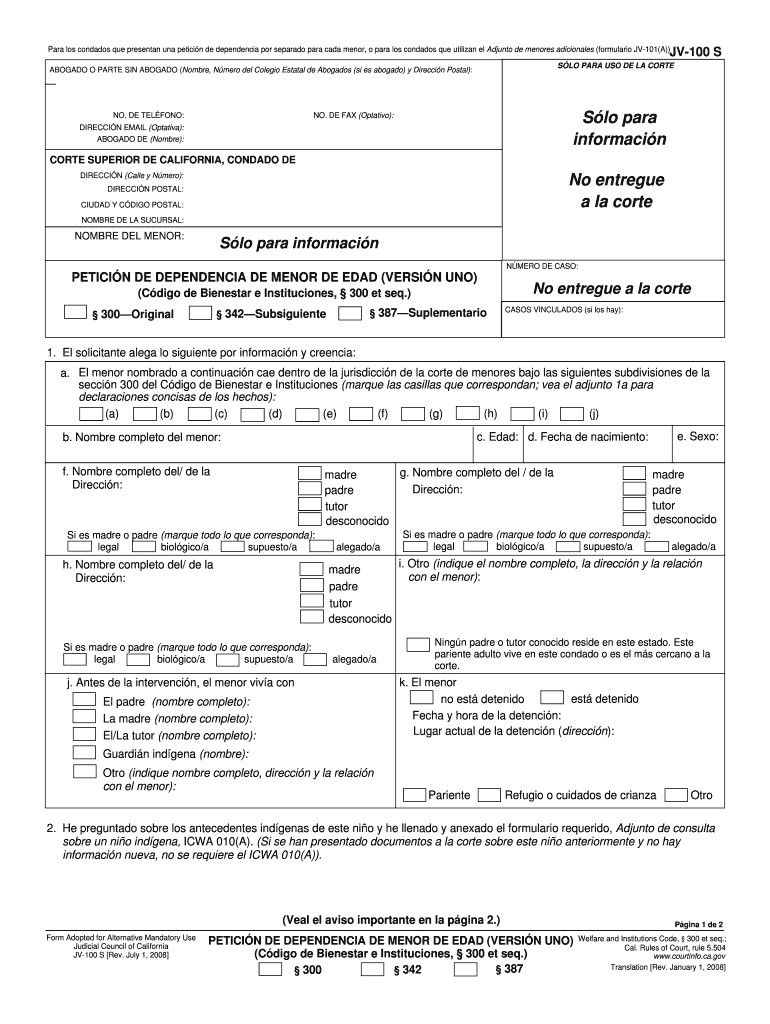
The 2008 CA JV-100 S is a legal form used within the California judicial system for the purpose of filing a dependency petition concerning minors. This document allows for the individual filing of requests for each child, ensuring that their specific circumstances are thoroughly addressed. It involves detailed information about the minor, their parents or guardians, and aims to validate the claims made within the petition to the court. The form cautions guardians about potential consequences, such as the loss of parental rights or financial responsibilities associated with the minor's care.
Steps to Complete the 2008 CA JV-100 S
-
Gather Necessary Information: Before filling out the form, ensure you have all relevant information about the child and their legal guardians. This includes names, addresses, and any pertinent background details.
-
Detailed Allegations: Clearly outline the allegations or concerns that necessitate the petition. The information should be accurate and comprehensive to support the court's decision-making process.
-
Fill in Personal Details: Enter all required personal details for the minor and their guardians. Accuracy is crucial to avoid any delays in processing.
-
Review Required Sections: Consult with any additional required sections or attachments that may need specific information or signatures.
-
Sign and Date: Ensure that all necessary parties have signed the document where required. Double-check the form for completeness before submitting.
How to Obtain the 2008 CA JV-100 S
-
Visit the Judicial Website: Check the California Courts' official website for downloadable forms. The JV-100 S is typically available as a PDF.
-
Court Clerk's Office: You can request the form in person at your local courthouse's clerk's office. They can provide guidance on filling out the form correctly.
-
Legal Aid Services: Contact a local legal aid service for assistance. They can often provide forms and any necessary help with completing them.
Who Typically Uses the 2008 CA JV-100 S
-
County Child Protective Services (CPS): They use this form to officially commence dependency proceedings for minors deemed in need of court intervention for their safety and welfare.
-
Guardians or Family Members: Relatives or legal guardians may file this form if they believe the minor is being neglected or abused and requires court protection.
-
Attorneys and Legal Counsel: Lawyers representing the interests of minors in dependency proceedings may use this form to initiate actions in court.


Legal Use of the 2008 CA JV-100 S
-
Dependency Proceedings: The primary legal use of this document is for dependency proceedings, where the court must determine whether a minor should be declared a dependent due to neglect or abuse.
-
Parental Rights: It's used to inform parents or guardians about the legal implications, including the potential for the loss of parental rights contingent upon the court's findings.
-
Court Orders: The form serves as a foundation for issuing court orders concerning custody, care, and control of the minor.
Key Elements of the 2008 CA JV-100 S
-
Child Information: Essential details about the child, including name, date of birth, and current residence.
-
Parental Details: Comprehensive information about parents or guardians, including contact details and any relevant parental history.
-
Allegations & Facts: Specific sections where detailed allegations must be listed, providing a basis for judicial evaluation.
-
Signature Areas: Designated spots for signatures from involved parties, attesting to the accuracy and truthfulness of the information.
State-Specific Rules for the 2008 CA JV-100 S
-
Compliance with California Laws: The form mandates adherence to state-specific regulations, particularly those concerning child welfare and dependency proceedings.
-
Filing Procedures: There are specific procedural considerations dictated by California law. This includes filing protocols, timelines, and submission routes.
-
Language Requirements: In certain jurisdictions within California, forms might need to be submitted in both English and Spanish, catering to a multilingual population.
Important Terms Related to the 2008 CA JV-100 S
-
Dependency Petition: A formal request filed with the court seeking determination of a child's dependency status.
-
Minor: Refers to the individual under 18 years for whom the petition is being filed.
-
Guardian ad Litem: A court-appointed advocate who represents the best interests of the minor in legal proceedings.
-
Parental Rights Termination: A potential outcome where a parent's legal rights and responsibilities concerning the child are permanently revoked.


