




01. Edit your form online
Type text, add images, blackout confidential details, add comments, highlights and more.

Type text, add images, blackout confidential details, add comments, highlights and more.

Draw your signature, type it, upload its image, or use your mobile device as a signature pad.

Send it via email, link, or fax. You can also download it, export it or print it out.
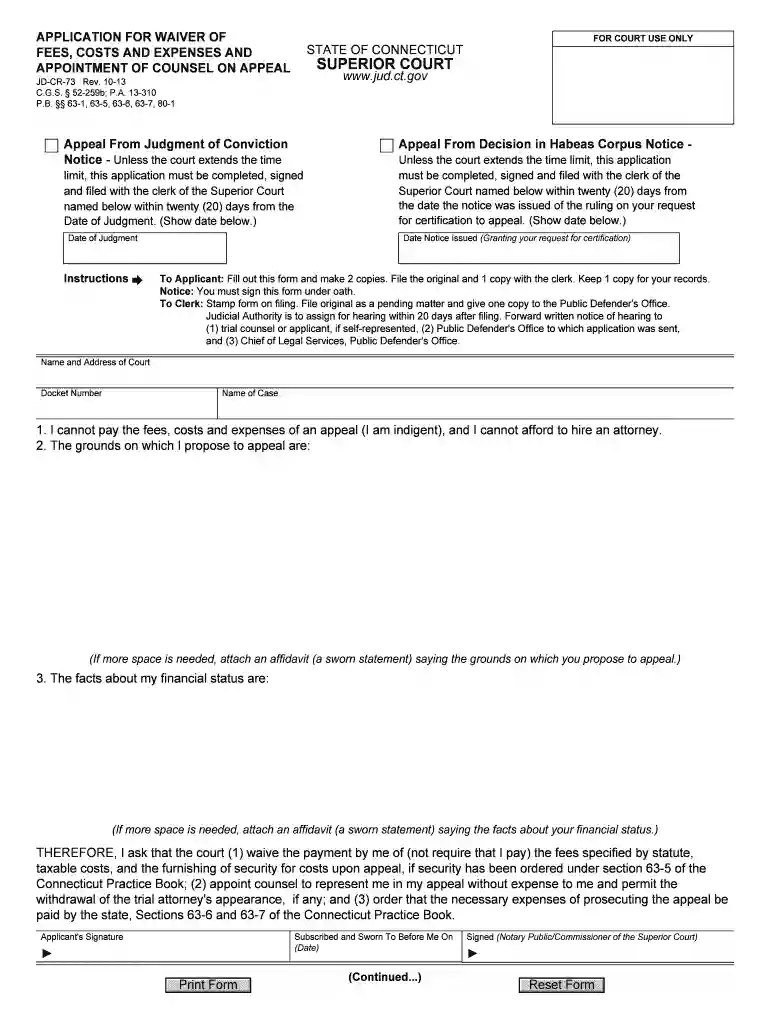
The Application for Waiver of Fees, Costs, and Expenses is a legal document used by individuals seeking a waiver for various costs associated with an appeal in the Superior Court of Connecticut. This form is critical for those who cannot afford court fees, ensuring that financial constraints do not hinder their access to justice. The application serves multiple purposes, including allowing individuals to request the appointment of counsel if they lack the funds for legal representation. This is particularly relevant in the United States, where the legal system provides mechanisms to ensure fairness and equity.
Obtaining the Application for Waiver of Fees, Costs, and Expenses is an accessible process. Individuals can download the form from official judicial websites or obtain a paper copy from the courthouse. Once acquired, the application must be filled out completely and accurately, as any errors can impact the approval process. It's essential to follow the outlined instructions carefully, providing all requested information to support the waiver request.
Eligibility for fee waivers typically hinges on the applicant's financial situation. Generally, individuals must demonstrate that their income falls within a specific range below the federal poverty line. Other criteria may include the number of dependents, monthly expenses, and any extenuating circumstances affecting one's financial condition. Understanding these parameters is crucial for applicants to gauge their eligibility and prepare the necessary documentation.


To complete the application, applicants should gather relevant documents, which may include:
These documents provide a clear picture of the applicant's financial status and are instrumental in the evaluation process.
Each state may have its nuances regarding fee waivers, although the fundamental principles remain consistent. In Connecticut, the courts assess applications based on established guidelines to determine if a waiver is warranted. It's essential for applicants to understand any state-specific forms or additional requirements that could affect the process.
Consider an individual facing a legal proceeding that requires an appeal in the Superior Court but lacks the financial means to cover associated fees. By applying for a waiver, they can pursue their appeal without the burden of financial strain. Moreover, if the court grants the request for legal representation, the applicant can access the necessary legal support to navigate the appeals process effectively.
Upon submitting the application, the court will review the information to decide whether to grant the waiver. The approval process can vary but typically takes several weeks. Applicants may receive notifications requesting additional information or clarification. Understanding that patience is essential during this time can ease the stress associated with waiting for a decision.
The Application for Waiver of Fees, Costs, and Expenses is a vital tool for ensuring access to the judicial system regardless of financial status. By meticulously completing the form, providing supporting documentation, and understanding state-specific requirements, individuals can effectively apply for fee waivers and continue with their legal proceedings without the burden of associated costs.
We've got more versions of the APPLICATION FOR WAIVER OF FEES, COSTS AND EXPENSES - jud ct form. Select the right APPLICATION FOR WAIVER OF FEES, COSTS AND EXPENSES - jud ct version from the list and start editing it straight away!
At DocHub, your data security is our priority. We follow HIPAA, SOC2, GDPR, and other standards, so you can work on your documents with confidence.
Feb 25, 2020 At the time of writing this letter, the world is facing an unprecedented health and economic crisis with the global impact of Coronavirus.
by C Rogus 2025 It can cost between $100 to nearly $350 to initiate a case in family court, as demonstrated by the following states fees to file a custody
Instructions to applicant (person filing). 1. Print or type all information requested. 2. Sign the Financial Affidavit section in front of.


