







Definition & Meaning
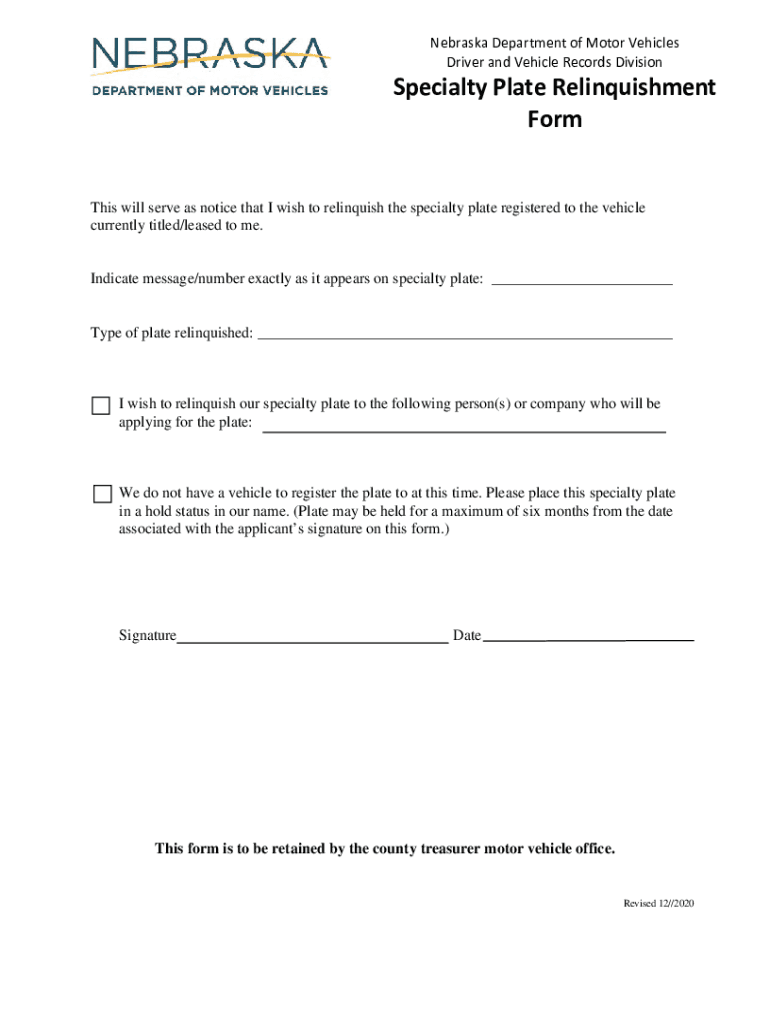
A relinquishment DMV form is a specific document used by individuals to formally surrender their specialty vehicle plates back to the Department of Motor Vehicles (DMV). This form is generally part of the vehicle registration process and helps update DMV records to reflect changes in ownership or usage of vehicle plates. This document is crucial for ensuring responsible management of vehicle registrations and maintaining accurate state records.
How to Use the Relinquishment DMV Form
Using the relinquishment DMV form involves several steps to ensure that the vehicle plates are surrendered correctly, and the process is documented properly:
- Obtain the Form: Start by acquiring the form from your state's DMV office or their official website.
- Provide Required Information: Fill in details such as the plate number, type of plate, and your personal information.
- State Specifics: Follow any additional state-specific instructions that may apply to completing the form correctly.
- Submission: Submit the completed form to the DMV in person, by mail, or online, following your state’s submission guidelines.
How to Obtain the Relinquishment DMV Form
The relinquishment DMV form can often be obtained through several channels:
- Online: Visit the official website of your state's DMV and download the form directly.
- In Person: Pick up a physical copy at your local DMV office.
- Mail: Request that the form be sent to you by contacting the DMV via phone or email if this service is provided.
Steps to Complete the Relinquishment DMV Form
Completing the form requires attention to detail to prevent processing delays:
- Fill Out Personal Information: Enter your name, address, and contact details.
- Enter Vehicle Details: Include the vehicle’s registration number and plate specifics.
- Specify Plate Action: Indicate whether the plates are being transferred to another person or held without a vehicle.
- Provide Authorization: Sign and date the form to authorize its processing.
Key Elements of the Relinquishment DMV Form
Several essential components must be completed accurately on the form:
- Plate Number: The unique identifier of the plates being relinquished.
- Type of Plate: Describes the plate category, such as commercial or personalized.
- Owner Information: Includes the current owner's contact and identification details.
- Transfer Information: Details of any recipient if transferring the plates to another person or entity.
State-Specific Rules for the Relinquishment DMV Form
Different states have varying regulations concerning the relinquishment of vehicle plates:
- Time Frame: Some states may require the relinquishment within a certain period after registration changes.
- Fees: There may be associated fees for processing the form, varying by state.
- Temporary Holds: Certain states allow plates to be held temporarily without a vehicle.
Examples of Using the Relinquishment DMV Form
Various scenarios necessitate the use of the DMV form:
- Selling a Vehicle: When selling a vehicle without transferring the plates to the new owner.
- Vehicle Decommissioning: If a vehicle is taken off the road permanently.
- Switching to a Different Plate Type: When changing from one specialty plate type to another that better suits personal needs.
Form Submission Methods (Online / Mail / In-Person)
There are several avenues for submitting the completed relinquishment DMV form:
- Online: Many DMVs offer online submission for faster processing.
- Mail: Sending the completed form via postal service to the designated DMV address.
- In Person: Submitting at a local DMV office for hands-on support and immediate acknowledgment.
Each submission method may have its own set of guidelines, so it is important to follow the instructions provided by the specific state’s DMV office.


