






Definition and Purpose of the EMS PCR Template PDF
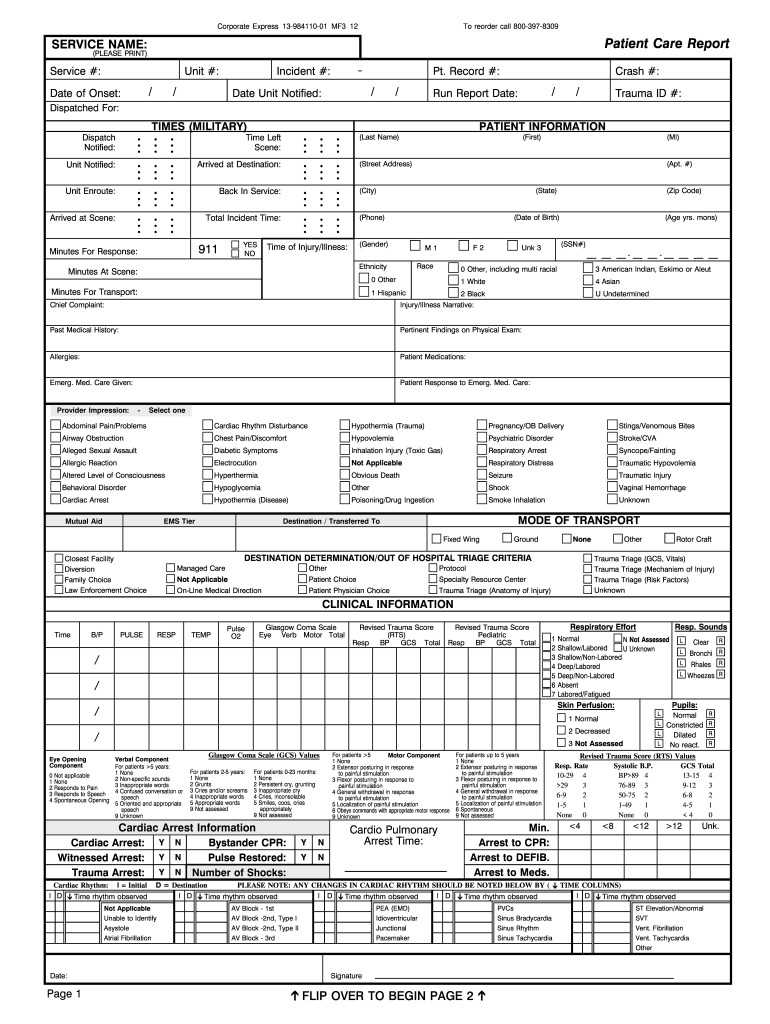
The EMS Patient Care Report (PCR) template PDF is an essential document utilized by emergency medical services to systematically record details of patient incidents. This form encompasses critical patient information, including identity, location, times of dispatch and transport, clinical observations, treatments administered, and billing data.
The significance of the EMS PCR template extends beyond mere record-keeping; it serves various vital purposes:
- Clinical Communication: Ensures seamless transfer of patient information between emergency responders, hospitals, and other healthcare providers, facilitating continuity of care.
- Data Collection: Acts as a meticulous data collection tool for healthcare analytics, improving care delivery, and resource allocation.
- Billing Documentation: Supports accurate and timely billing for services rendered, providing necessary information for insurance claims and reimbursements.
Medical personnel, including paramedics and EMTs, use this template to document the nature of injuries, medical history, response to care, and adherence to established protocols during emergency situations. The structured format of the EMS PCR template PDF aids in enhancing the clarity and efficiency of data recording during high-stress scenarios.
How to Use the EMS PCR Template PDF
Using the EMS PCR template PDF requires familiarity with its sections and an understanding of the relevant guidelines. Here’s a step-by-step approach for effective utilization:
-
Accessing the Template:
- Download the EMS PCR template PDF from a reliable source.
- Ensure you have a PDF reader installed on your device for easy access and editing.
-
Filling Out Patient Information:
- Enter specific patient details such as name, age, sex, and address. Include contact information and insurance details when applicable.
- Providing accurate demographic information is crucial for appropriate care and billing.
-
Documenting Incident Details:
- Record the time and location of the incident, including dispatch and arrival times.
- Detail the nature of the emergency, including incident specifics like mechanism of injury or chief complaints.
-
Clinical Findings:
- Utilize specific areas in the report to document vital signs, physical findings, and any interventions performed.
- Incorporate assessments based on relevant protocols, ensuring compliance with established practices.
-
Finalizing the Report:
- Review the completed document for accuracy and completeness.
- Obtain necessary signatures from involved parties, ensuring compliance with legal and regulatory requirements.
This systematic approach to using the EMS PCR template PDF enhances the quality of reports and promotes effective communication among healthcare providers.
Steps to Complete the EMS PCR Template PDF
Completing the EMS PCR template PDF is a structured process that ensures all necessary information is captured accurately. Here are the detailed steps:
-
Prepare Necessary Information:
- Gather all required details before starting. This includes patient information, incident specifics, and treatment protocols.
-
Fill in Patient Demographics:
- Enter pertinent patient information: personal details, medical history, and emergency contact numbers. Consider the importance of legibility and accuracy when inputting data.
-
Document Incident Timeline:
- Clearly outline the timeline of the incident, from dispatch to patient transport. Use precise timestamps to record events.
-
Capture Clinical Observations:
- Note down vital signs, observed symptoms, and any treatment administered, including medications. Highlight any changes in patient condition throughout the encounter.
-
Conclude with Summary and Signatures:
- Write a brief summary of the encounter and treatment provided.
- Collect signatures from all relevant personnel involved in the care, which may include EMTs and receiving facility staff.
Each step in this process is vital for creating a comprehensive and legally sound document that fulfills all requirements of emergency medical services documentation.
Important Terms Related to the EMS PCR Template PDF
Familiarity with key terminology associated with the EMS PCR template PDF is essential for proper documentation and communication among emergency responders. Important terms include:
- Patient Care Report (PCR): A formal document detailing the assessment, treatment, and follow-up care of a patient in the EMS system.
- SOAP Format: An acronym representing Subjective, Objective, Assessment, and Plan, a common method for structuring clinical reports.
- NEMSIS: The National Emergency Medical Services Information System, which sets the standard for data collection in EMS.
- Triage: The process of determining the priority of patients' treatment based on the severity of their condition.
- Sign-Off: The process of obtaining signatures from healthcare providers to validate the report and affirm the accuracy of the information documented.
Understanding these terms enhances clarity and efficiency during patient care and reporting, thereby improving overall service delivery.
Legal Use of the EMS PCR Template PDF
The EMS PCR template PDF is subject to numerous legal considerations when utilized for patient care documentation. Legal aspects include:
- Compliance with HIPAA: The handling of patient information must align with the Health Insurance Portability and Accountability Act (HIPAA) regulations to ensure patient confidentiality and data protection.
- Legally Binding Document: The filled-out EMS PCR is considered a legal document and can serve as evidence in legal proceedings, making accuracy paramount.
- Retention Policies: EMS agencies must adhere to state-specific guidelines on how long to retain patient care reports, which can range from a few years to indefinitely based on jurisdiction.
Understanding these legal implications is critical for EMS personnel to ensure compliance and protect both patients and providers in their documentation practices.