







Definition and Meaning
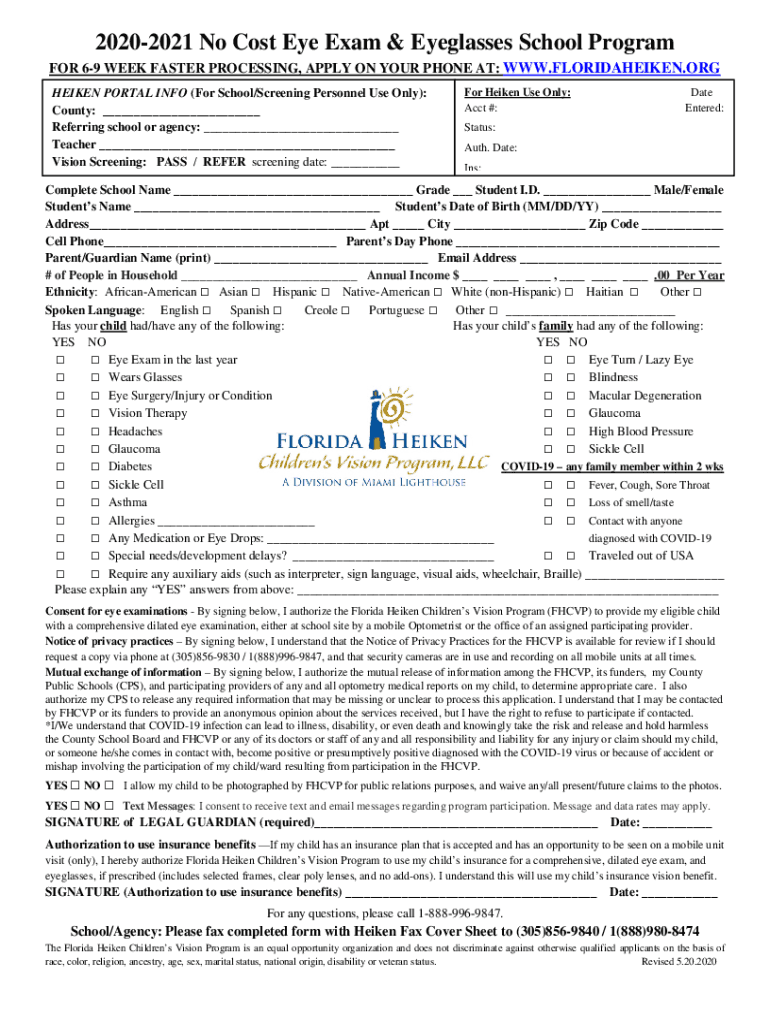
The "Get Free or Low-Cost Eye CareNational Eye Institute" form is designed to help individuals access affordable eye care services. It serves as an application and guide for those seeking financial assistance for eye exams and treatments. Primarily aimed at providing support to individuals with limited financial resources, the form is part of an initiative to improve eye health and prevent vision problems.
This tool aids applicants in understanding the available programs and helps streamline the process of applying for government-assisted or funded eye care services. By offering information on eligibility and necessary steps, the form ensures applicants can easily navigate the complexities of securing affordable eye care.
How to Use the Form
Utilizing the "Get Free or Low-Cost Eye CareNational Eye Institute" form involves several key steps. Importantly, begin by carefully reviewing all sections to understand the required information and the benefits offered. The form typically requires personal details, financial information, and any relevant medical history concerning eye care needs.
To ensure completeness, follow these steps:
-
Gather Necessary Documentation: Collect your identification documents, proof of income, and any previous medical records related to eye care.
-
Fill Out Personal Information: Complete sections pertaining to your name, address, contact details, and any previous interactions with eye care services.
-
Provide Financial Information: Include details about your current financial status. This may be necessary to determine eligibility for free or low-cost services.
-
Submit Medical History: If applicable, furnish any medical records that provide insight into your current eye health status.
-
Review and Submit: Before submission, double-check all entries for accuracy and completeness. Submit the completed form as instructed—typically online or via mail.
Eligibility Criteria
Eligibility for the "Get Free or Low-Cost Eye CareNational Eye Institute" form depends on several factors. Primarily, candidates must demonstrate a financial need, often verified through income thresholds or participation in other assistance programs.
-
Income Requirements: Applicants may need to provide proof of income to confirm eligibility for reduced-cost services.
-
Medical Necessity: The program often prioritizes individuals with specific conditions, such as severe vision impairments or diseases that could lead to blindness.
-
Demographic Focus: Some programs target specific age groups, such as children or seniors, to ensure those most at risk receive necessary care.


Steps to Complete the Form
Completing the "Get Free or Low-Cost Eye CareNational Eye Institute" form involves detailed input and verification. Here's a step-by-step guide to ease the process:
-
Download or Obtain the Form: Access the form through relevant government or institute websites or request a paper copy from a local health office.
-
Gather Necessary Documentation: Assemble all required documents, including income verification and medical records, to avoid delays.
-
Accurate Completion: Fill in all sections with precise information, paying particular attention to financial disclosures and health history specifics.
-
Verification and Signatures: Ensure all claimed information is verifiable and provide necessary signatures, both personal and medical authority if required.
-
Submission: Follow instructions for submission, whether it's online, by mail, or in-person at designated steps. Confirm receipt of the form by the governing body.
Key Elements of the Form
Several critical components define the New Eye Care form. Understanding these is essential for successful completion:
-
Applicant Information Section: Personal data about the individual seeking care.
-
Financial Disclosure Section: A detailed account of the applicant's financial status, indispensable for assessing aid eligibility.
-
Medical History and Current Need: Insight into the applicant's eye health status and any urgent requirements for care or treatment.
-
Consent and Legal Agreements: Sections detailing privacy agreements, consent for data use, and understanding of program terms.
State-Specific Rules
The implementation and benefits of the "Get Free or Low-Cost Eye CareNational Eye Institute" form can vary by state due to different regulatory environments and healthcare structures. Applicants should be aware of:
-
Local Variations: Each state may have unique income level thresholds or additional requirements for documentation.
-
State-Run Programs: Some states offer complementary programs alongside federal initiatives that could influence form application.
-
Regulations Impacting Application: Changes in state healthcare policies could affect eligibility and treatment availability under this program.
Examples of Using the Form
The "Get Free or Low-Cost Eye CareNational Eye Institute" form application is illustrated through several examples:
-
Low-Income Families: Families with children needing regular eye exams and eyewear can utilize this form to receive necessary care without straining their budget.
-
Seniors with Limited Income: Older individuals on fixed incomes can utilize the program to maintain their eye health, preventing more severe and costly problems.
-
Individuals with Medical Impairments: People facing severe vision problems but lacking comprehensive insurance can access essential eye care services and treatments.
Form Submission Methods
Submitting the form can be done through various channels, each suited to different accessibility needs:
-
Online Submission: Fast and efficient, allowing for real-time submission and confirmation.
-
Mail-in Options: Ideal for applicants without reliable internet access; requires suitable mailing addresses and allowance for delivery time.
-
In-person Drop-off: Suitable for those needing assistance or confirmation from a local health office, providing opportunities for direct clarification of doubts or questions about the form.




