







Definition & Meaning
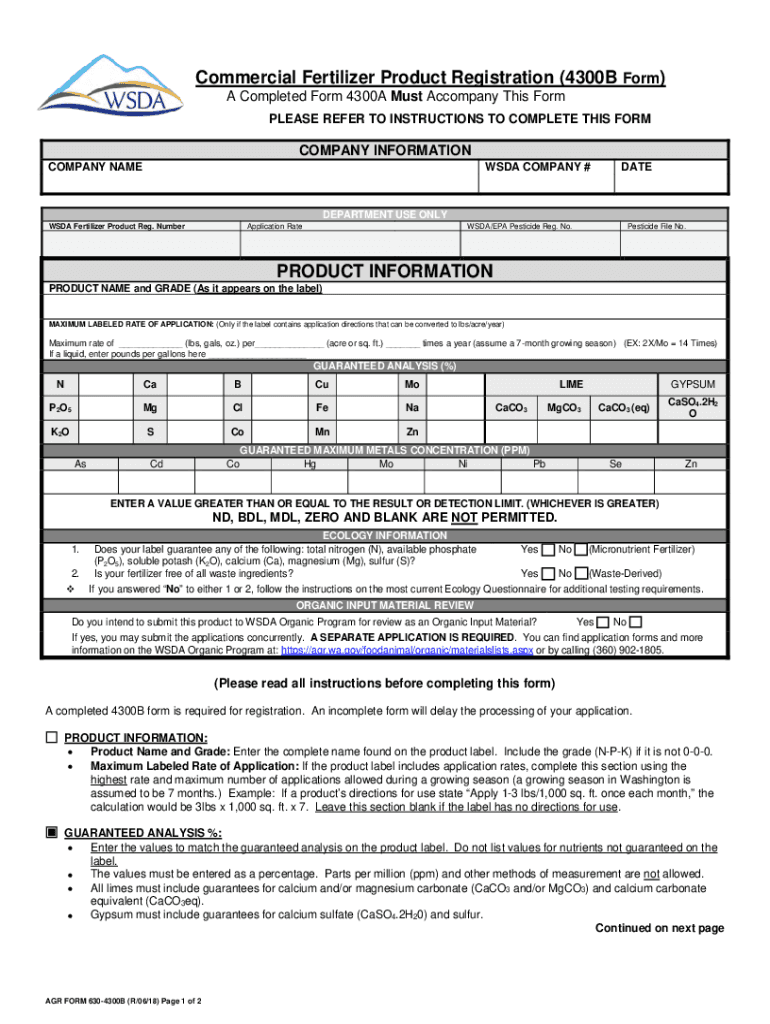
The Commercial Fertilizer Product Registration, specifically using Form 4300B, is a regulatory process required by the Washington State Department of Agriculture for registering commercial fertilizer products. This registration is essential for ensuring that all fertilizers sold or distributed comply with state laws regarding safety, content labeling, and usage instructions.
- Purpose: To ensure product safety and compliance with state regulations.
- Scope: Applies to all entities intending to sell or distribute fertilizers in Washington State.
This form ensures that accurate product information is available, supporting public safety and environmental protection.
Key Elements of the Commercial Fertilizer Product Registration
Company Information
The registration form requires detailed company information, including:
- Business Name: Legal name of the entity responsible for the product.
- Contact Information: Address, phone number, and email for correspondence.
This section ensures accountability and provides a point of contact for regulatory bodies.
Product Details
- Product Name: Unique identifier for the product being registered.
- Intended Use: Description of how the product should be used.
Guaranteed Analysis
- Nutrients: Percentages of nitrogen, phosphorus, and potassium.
- Metals: Heavy metal content to ensure safety.
Steps to Complete the Commercial Fertilizer Product Registration (4300B)
-
Gather Necessary Information: Before starting, ensure all company and product details are at hand.
-
Complete Form 4300A: This preliminary form must accompany the registration.
-
Accurate Documentation: Fill in details regarding nutrient analysis and intended use.
-
Submit to Washington State Department of Agriculture: Once completed, submit the form for approval.
Completing this form requires careful attention to detail to avoid delays in the registration process.
How to Obtain the Commercial Fertilizer Product Registration (4300B)
- Direct Download: Available from the Washington State Department of Agriculture's website.
- Request via Mail: Some businesses may prefer to obtain the form by requesting a physical copy.
Legal Use of the Commercial Fertilizer Product Registration
Using Form 4300B is legally mandated for any commercial entity distributing fertilizers in Washington. Non-compliance can result in penalties, including fines and distribution bans.
- Regulatory Compliance: All products must be registered to legally market or sell them.
- Public Assurance: Ensures that consumers receive safe, clearly labeled products.
State-Specific Rules for the Commercial Fertilizer Product Registration
Washington State Regulations
- Mandatory Registration: Exclusively required for the Washington State jurisdiction.
- Environmental Considerations: Focuses on ecological safety given Washington's unique environmental concerns.
Required Documents
- Form 4300A: Must be completed alongside the registration form.
- Product Labels: Final version of the product label that will be used in the market.
These documents are essential for completing the registration process effectively.
Important Terms Related to Commercial Fertilizer Product Registration
- Guaranteed Analysis: A statement of nutrient content that ensures product quality and safety compliance.
- Organic Input Material (OIM): Guidelines for products intended for organic farming or gardening.
Knowing these terms ensures clarity and comprehension during the application process.
Penalties for Non-Compliance
Failure to comply with the registration requirements can result in:
- Fines: Monetary penalties for operating outside of regulatory guidance.
- Product Holds: Prohibition from selling non-compliant products until registration is completed.
Awareness of these penalties underscores the importance of maintaining compliance.
Understanding and adhering to these detailed requirements for the Commercial Fertilizer Product Registration using Form 4300B is crucial for businesses intending to operate within Washington State. Each step in the process is designed to uphold safety, quality, and legal compliance, ensuring a trustworthy marketplace for consumers and businesses alike.


