







Definition & Meaning
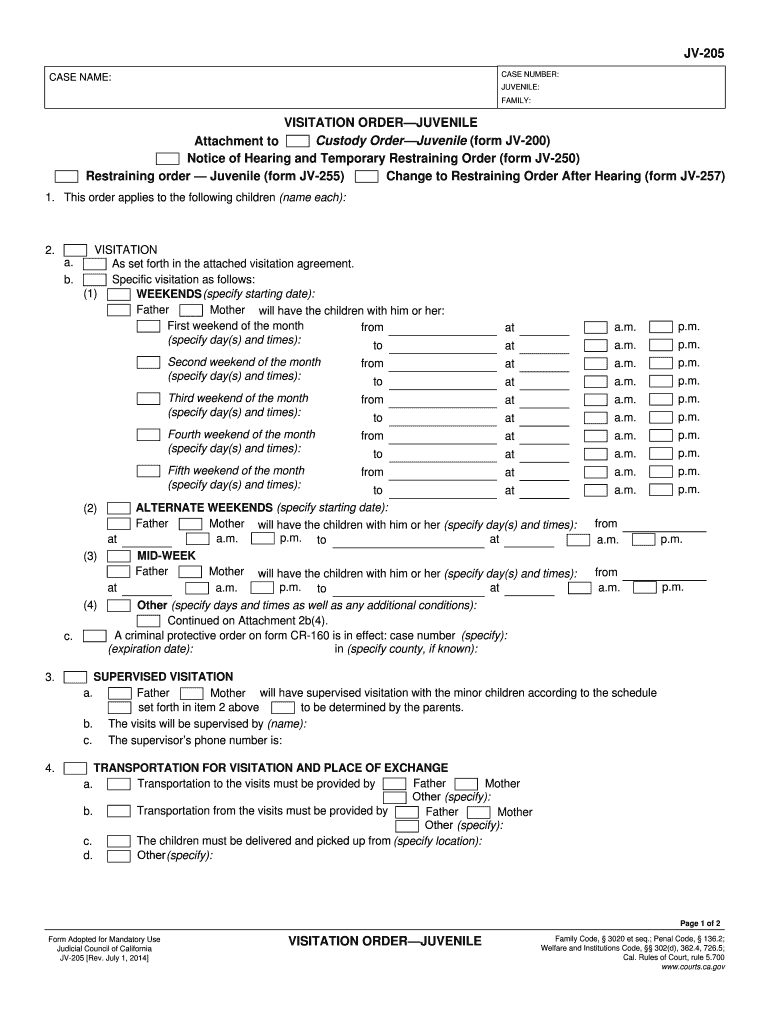
The "2014 JV Visitation Juvenile" refers to a specific legal form used within the United States juvenile court system, commonly known as document JV-205. This form outlines visitation rights and schedules for parents of minors involved in juvenile cases. It provides structured guidance on parental visitation while safeguarding the children's well-being. Key components often include visitation arrangements, transportation responsibilities, and instructions for enforcement of orders. The form is essential for establishing clear guidelines that parents and guardians must adhere to during visitation, ensuring compliance with judicial directives.
How to Use the 2014 JV Visitation Juvenile
Using the 2014 JV Visitation Juvenile form involves understanding its sections and completing it accurately based on the specifics of your case.
- Review Form Sections: Familiarize yourself with the various sections, including schedules, visitation rights, and enforcement instructions.
- Accurate Information: Provide complete and accurate details for all required fields, including personal information, case numbers, and proposed visitation plans.
- Compliance Guidelines: Follow any instructions regarding transportation responsibilities and law enforcement guidelines for order enforcement.
Real-world scenarios may involve coordinating with legal representatives or child welfare agents to ensure the form accurately reflects judicial orders and parental agreements.
Steps to Complete the 2014 JV Visitation Juvenile
Completing the 2014 JV Visitation Juvenile form requires careful attention to detail and adherence to procedural steps.
- Gather Information: Collect all necessary information, including personal data and court case numbers.
- Fill Out Sections: Enter details into the required sections, ensuring all visitation plans are clearly articulated.
- Consult Legal Counsel: If unsure about specifics, consult with a legal professional to avoid errors.
- Review and Sign: Double-check for accuracy, then sign the form where required.
- Submit to Court: File the form with the appropriate juvenile court as per local protocols.
Who Typically Uses the 2014 JV Visitation Juvenile
The 2014 JV Visitation Juvenile form is utilized by various entities within the juvenile justice system, including:
- Parents and Guardians: To understand and agree on visitation rights and responsibilities.
- Juvenile Courts: For issuing and enforcing visitation orders.
- Child Welfare Agencies: To ensure the child's safety during visitations.
- Legal Representatives: To advocate for their clients' visitation rights.
Each party involved must collaborate to ensure that the child's best interests are prioritized while fulfilling the legal requirements detailed in the form.


Important Terms Related to the 2014 JV Visitation Juvenile
Several key terms are associated with the 2014 JV Visitation Juvenile form:
- Visitation Rights: Legal permission granted to parents to visit their child.
- Enforcement: Mechanisms in place for ensuring compliance with visitation orders.
- Legal Custodian: The individual or entity with legal guardianship over the child.
- Parental Responsibilities: The obligations parents must fulfill during visitations, including transportation and supervision.
Understanding these terms is crucial for all parties involved to properly navigate and comply with the visitation guidelines.
Legal Use of the 2014 JV Visitation Juvenile
The 2014 JV Visitation Juvenile form serves several legal functions:
- Establishing Visitation Protocols: Outlines permissible visitation and schedules.
- Enforceability: Provides a legal framework for executing visitation orders.
- Conflict Resolution: Offers instructions for resolving disputes through legal channels.
The form is legally binding and must be adhered to as ordered by the juvenile court, ensuring that every aspect of the visitation process is conducted in accordance with the law.
Key Elements of the 2014 JV Visitation Juvenile
Several critical elements must be well-defined within the 2014 JV Visitation Juvenile form:
- Visitation Schedule: Specific days and times allotted for visits.
- Transportation Details: How the child will travel to and from visits.
- Safety Provisions: Measures to protect the child's welfare.
- Enforcement Instructions: Guidelines for law enforcement in case of conflicting orders.
These elements ensure that the child's and custodians' rights are observed and protected throughout the visitation process.
State-Specific Rules for the 2014 JV Visitation Juvenile
While the 2014 JV Visitation Juvenile is a standardized form, state-specific rules may apply. Different jurisdictions might have variations in:
- Submission Procedures: Local court requirements for filing.
- Visitation Terms: State laws defining visitation standards.
- Enforcement Mechanisms: How non-compliance is handled legally.
Understanding regional differences ensures that the form is utilized appropriately, complying with both state and federal regulations for juvenile cases.
By focusing on these critical aspects, individuals and legal guardians can ensure that they are fully compliant with judicial mandates and are helping facilitate a supportive environment for all involved.




