






Definition & Meaning
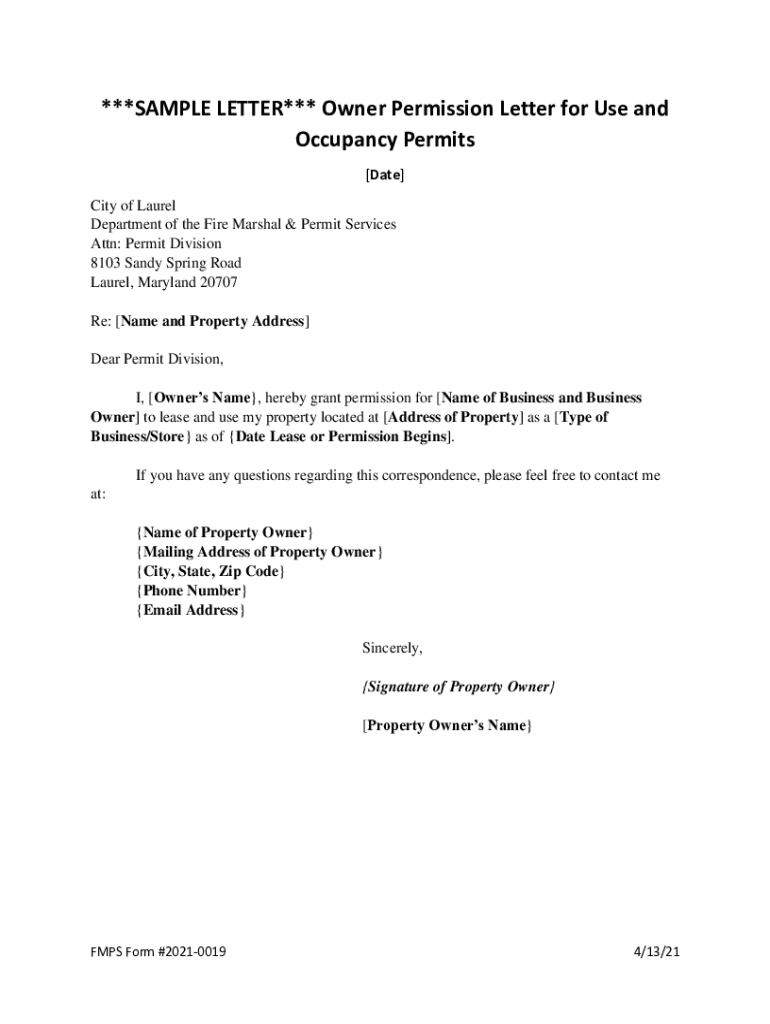
A letter of occupancy is a formal document granting permission from a property owner to a business or individual to occupy and use the specified property for certain purposes. In the context of the Office de Tourisme de Fuveau, it might refer to the authorization for tourism-related activities within a defined locale. It usually includes the names of the involved parties, address, type of business, and owner's contact information.
How to Use the Letter of Occupancy Sample - Office de Tourisme de Fuveau
To effectively utilize the letter of occupancy sample, the instructions and fields must be followed carefully. Begin by reviewing the document template to understand its structure and requirements. Key areas to focus on include:
- Identification of Parties: Ensure the names and details of both the property owner and the business tenant are included.
- Property Details: Clearly describe the property or area that the letter covers.
- Purpose of Occupancy: Specify the intended use, such as tourism activities, retail, or office space.
- Duration: Indicate the time frame of the occupancy, whether it's a fixed term or ongoing.
Steps to Complete the Letter of Occupancy Sample - Office de Tourisme de Fuveau
Completing the letter involves several detailed steps to ensure accuracy and compliance:
- Collect Required Information: Gather details about the property, the owner's contact information, and the business's nature.
- Fill Out Identification Sections: Accurately enter the names and addresses of both parties.
- Detail Property Attributes: Describe the specific location and any relevant features or conditions.
- Define Roles and Responsibilities: Clearly state who is responsible for what, such as maintenance or alterations to the property.
- Review & Approval: Have both parties review the letter to ensure accuracy, then sign it to formalize the agreement.
Why Use the Letter of Occupancy Sample - Office de Tourisme de Fuveau
The letter serves several key purposes:
- Legal Protection: Provides legal documentation of the agreement and responsibilities between property owner and tenant.
- Business Facilitation: Assists in demonstrating compliance with local regulations for tourism operations.
- Clarity: Outlines clear terms and conditions for use and occupancy, reducing potential disputes.
Key Elements of the Letter of Occupancy Sample - Office de Tourisme de Fuveau
Critical components include:
- Party Information: Names, addresses, and contact details for all involved parties.
- Property Description: Comprehensive details of the property in question.
- Occupancy Terms: The length and nature of the occupancy, including specific allowed activities.
- Signatures: Signatures of all parties to validate the agreement.
Legal Use of the Letter of Occupancy Sample - Office de Tourisme de Fuveau
In legal terms, the letter of occupancy acts as a binding document permissible in court as evidence of an agreement between the parties. It is crucial for adherence to local statutes governing property and business operations. Missteps in completing this document can result in legal disputes over unauthorized use or breach of contract.
Important Terms Related to the Letter of Occupancy Sample - Office de Tourisme de Fuveau
Understanding key terms is essential:
- Lessee/Lessor: Refers to the person or entity leasing or renting the property.
- Premises: The defined area covered by the occupancy agreement.
- Tenure: The duration for which the occupancy is valid.
- Covenants: Specific conditions agreed upon by both parties.
Who Typically Uses the Letter of Occupancy Sample - Office de Tourisme de Fuveau
The document is typically used by:
- Tourism Agencies: To formalize space usage agreements with local authorities.
- Business Owners: Particularly those in the retail or hospitality sectors, requiring formal permissions.
- Property Managers: Assisting in managing and leasing properties for business purposes.
Providing a comprehensive understanding and accurate completion of the letter of occupancy enhances legal security and operational clarity for business use.