







Definition and Meaning
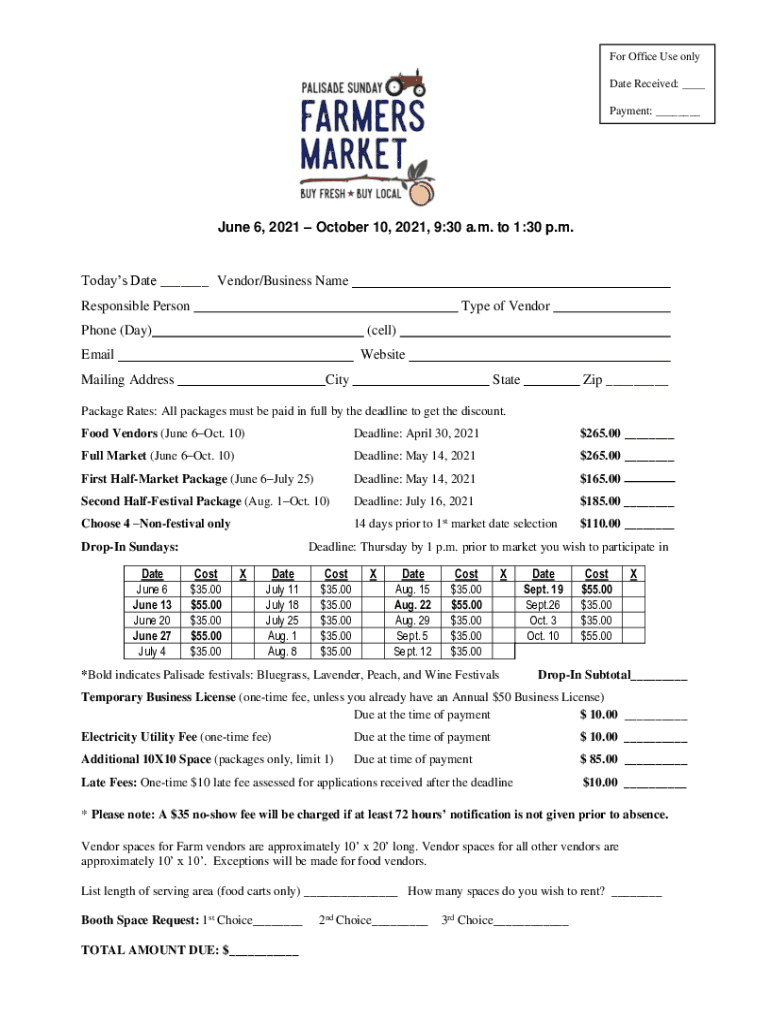
The Palisade Farmers Market application is a formal document designed for vendors interested in participating in the Palisade Sunday Farmers Market. It serves as an official request to become a vendor and includes essential details about participating requirements. This application outlines vendor eligibility criteria and specifies the types of products and services allowed at the market. It also includes provisions on setting up stalls and maintaining vendor standards, ensuring uniform quality and compliance with market regulations.
Steps to Complete the Palisade Farmers Market Application
- Read Eligibility Requirements: Understand the vendor types allowed at the market, such as farmers, artisans, and food vendors.
- Fill Out Vendor Information: Include personal details, business information, and product descriptions.
- Select Vendor Package: Choose from available packages that may include weekly or seasonal options, factoring in additional costs.
- Provide Necessary Documentation: Attach relevant documents, such as business licenses or health permits.
- Agree to Terms and Conditions: Read and agree to all market rules, including the hold harmless agreement.
- Submit the Application: Ensure timely submission to avoid late penalties.
Common Mistakes to Avoid
- Incomplete Information: Double-check all sections for complete and accurate details.
- Missing Documentation: Include all required permits and licenses to avoid delays.
- Ignoring Deadlines: Submit before the deadline to secure a spot and avoid late fees.
Key Elements of the Palisade Farmers Market Application
- Vendor Types and Eligibility Criteria: Defines who can apply, emphasizing local producers and artisans.
- Package Rates and Additional Fees: Details on costs and deadlines for payment, plus potential fees for additional utilities.
- Required Documents: Lists necessary paperwork like licensing and health permits.
- Hold Harmless Agreement: Legal clause protecting the market organizers from liability.
Important Terms Related to Palisade Farmers Market Application
- Vendor Package: Defines different levels of participation and associated costs.
- Hold Harmless Agreement: A legal term included in applications to release organizers from liability.
- Electricity Utility Fee: Additional cost for electricity usage at vendor stalls.
Application Process and Approval Time
- Application Submission: Submitted forms are reviewed by market organizers for completeness and adherence to criteria.
- Review Period: Typically takes several days to a few weeks; vendors are notified of approval or need for additional information.
- Approval Notification: Successful applicants receive confirmation and detailed setup instructions; others may be advised on necessary corrections.
Examples of Using the Palisade Farmers Market Application
- Local Farmers: Regular suppliers of organic produce using the application to secure weekly spots.
- Artisans: Craftspeople showcasing handmade goods apply to display and sell their creations.
- Food Vendors: Use the form to ensure compliance with health standards while selling prepared foods.
Case Study: Local Produce Grower
A local vegetable grower needed to expand market reach and completed the application with all necessary permits. Upon approval, they were able to consistently participate, leading to increased sales and brand recognition.
Required Documents
- Business License: Valid proof of business operations.
- Health Permits: For food vendors, necessary documentation to meet safety standards.
- Insurance Policy: Often required to protect vendors and patrons.
Vendor Package Options and Pricing
- Seasonal Packages: Offers cost savings for commitment to multiple markets.
- Weekly Rates: Flexible option for vendors unsure of extended participation.
- Drop-In Opportunities: Subject to availability and may incur premium fees.
Additional Fees
- Temporary Business License Fee: Required for new vendors.
- Electricity Charges: Additional fee based on usage at vendor stalls.
State-Specific Rules for the Palisade Farmers Market Application
While the application primarily follows local guidelines, certain aspects may be influenced by state laws relevant to business operations and health standards. Understanding state-specific agricultural and vendor laws ensures compliance across all markets.


