




01. Edit your form online
Type text, add images, blackout confidential details, add comments, highlights and more.

Type text, add images, blackout confidential details, add comments, highlights and more.

Draw your signature, type it, upload its image, or use your mobile device as a signature pad.

Send it via email, link, or fax. You can also download it, export it or print it out.
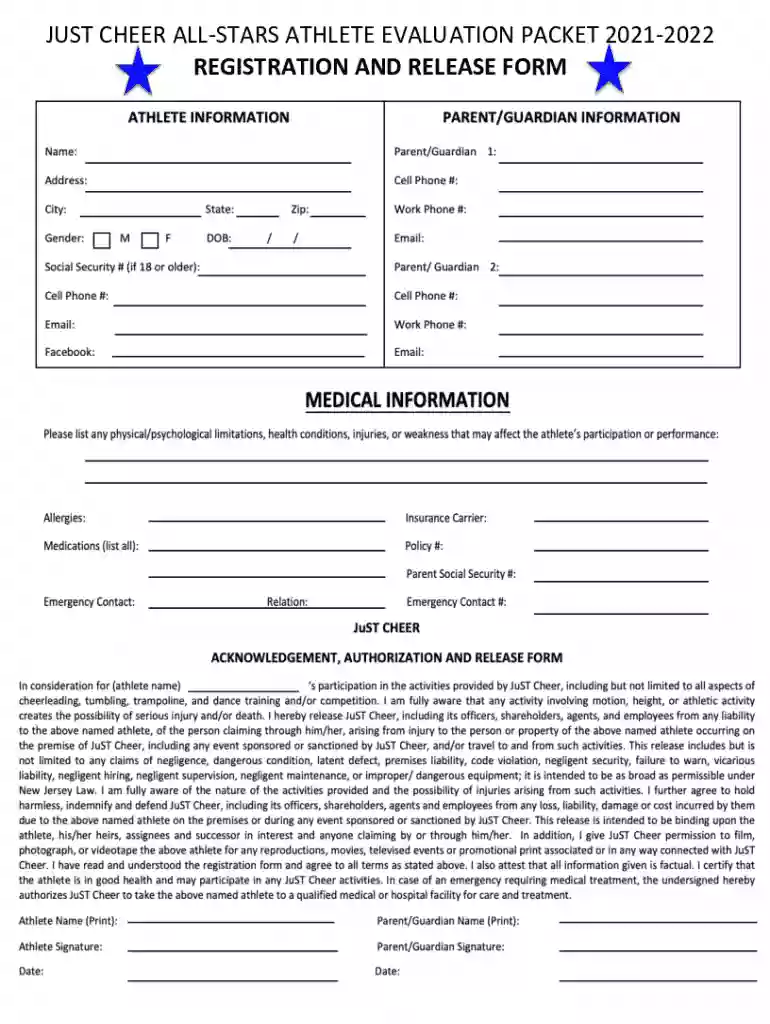
The Registration and Release Form is a vital document used to record individual details and consent for activities, which often involve physical or recreational participation. It serves dual purposes: enabling organizations to gather necessary participant information and securing legal permission from participants for their involvement. Typically, it includes sections for personal data, emergency contact details, and legal disclaimers concerning responsibilities and liabilities. This form is essential where there is an inherent risk, providing clarity on expectations and protections for all parties involved.
To effectively use a Registration and Release Form, start by understanding the specific activity or event it pertains to. Ensure the form covers all requisite details such as participant identification, contact information, and specifics of the activity. Participants should carefully read any release or waiver sections to fully grasp the legal terms they agree to. After completing the form, ensure both the participant and the organizer retain copies for future reference. This form is frequently used in sports, fitness activities, and community events, ensuring a smooth process and mutual understanding.
This step-by-step guide ensures thoroughness and compliance with required protocols when completing the form.
These elements work collectively to document essential data and stipulate the conditions under which activities occur, offering legal safeguards to both parties.
The Registration and Release Form is a legally binding agreement when signed by all parties, making it crucial for protecting the organization from potential legal actions. It clearly outlines the risk involved, with participants agreeing not to hold the organization responsible for outlined liabilities. In the U.S., such forms are generally upheld in courts provided they meet reasonable fairness standards and do not waive rights maliciously. They also need to be written in straightforward, accessible language without misleading clauses.
This form is prominently used by organizations conducting sports, recreation, and educational activities. Examples include:
Such usage assists these organizations in systematic participant handling and mitigating legal risks.


To obtain this form, identify the organization in charge of the event or activity. Often, forms are readily available on the organization's website for download or within registration packets provided. Alternatively, contact the organization directly to request a copy. Many entities also offer digital forms to streamline the process, allowing easy access and inclusion in digital platforms like DocHub for completion and signing.
State laws in the U.S. can influence the wording and enforceability of registration and release forms. Some states have specific standards that organizations must adhere to, ensuring the form is legally valid:
Given these differences, it's crucial for organizations to tailor their forms according to state standards to ensure compliance and protection.
Using digital versions of these forms through platforms like DocHub offers notable benefits:
On the other hand, paper versions are still useful in settings without reliable digital access or for participants preferring traditional forms. Both versions have their unique advantages, and choice often depends on specific organizational needs and participant capabilities.
We've got more versions of the REGISTRATION AND RELEASE FORM form. Select the right REGISTRATION AND RELEASE FORM version from the list and start editing it straight away!
At DocHub, your data security is our priority. We follow HIPAA, SOC2, GDPR, and other standards, so you can work on your documents with confidence.
All minors participating in your program must submit a completed release form signed by their parent or legal guardian. These forms must be kept in your recordsRead more
All visitors to such facilities must be registered, and approved, prior to arrival. To register a visitor, please complete the form below.
A Notice of Transfer and Release of Liability (NRL) means you are no longer legally responsible for violations after the vehicles date of sale.


