




01. Edit your nj first aid squad online
Type text, add images, blackout confidential details, add comments, highlights and more.

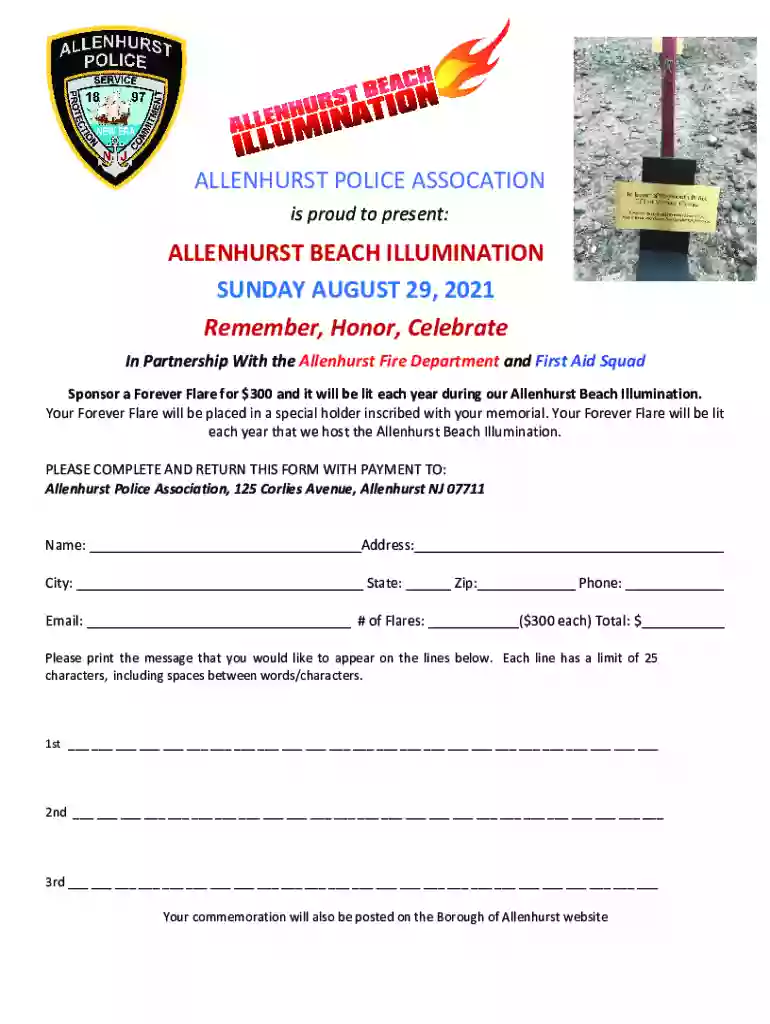
Type text, add images, blackout confidential details, add comments, highlights and more.

Draw your signature, type it, upload its image, or use your mobile device as a signature pad.

Send it via email, link, or fax. You can also download it, export it or print it out.
The New Jersey Police Honor is a recognition program designed to celebrate the achievements and dedication of law enforcement officers across the state. It serves as a platform to acknowledge outstanding acts of bravery, community service, and professional excellence within the police force. By publicly honoring these accomplishments, the program aims to boost morale, foster community relations, and underscore the importance of police work in maintaining public safety.
Engaging with the New Jersey Police Honor involves multiple steps, primarily aimed at nominating deserving officers and participating in related ceremonies. Organizations or individuals can propose candidates for recognition by following the established procedure, ensuring that every nomination is well-documented and supported by evidence of merit.
Securing recognition through the New Jersey Police Honor requires meeting specific criteria set by the reviewing committee. Candidates are evaluated based on their contributions, the significance of their actions, and the impact on their community.
Completing a nomination for the New Jersey Police Honor involves a structured approach to ensure accuracy and completeness in submissions. Following these steps increases the chances of the nomination advancing through the committee review process.
Honoring police officers through programs such as the New Jersey Police Honor plays a critical role in acknowledging the challenges and risks officers face daily. It highlights their dedication and the positive outcomes of their work, fostering a greater sense of appreciation within the community.
The New Jersey Police Honor is typically utilized by police departments, government officials, and law enforcement advocacy groups. These entities work together to identify outstanding officers deserving of recognition.


The New Jersey Police Honor program encompasses several elements that ensure a fair and comprehensive recognition process. Understanding these components is key to effectively nominating and selecting candidates.
Real-world examples illustrate the positive outcomes facilitated by the New Jersey Police Honor program. Highlighting these scenarios can serve as inspiration and provide context for potential nominees.
These examples demonstrate the breadth of the program and its capacity to honor various facets of law enforcement contributions.
We've got more versions of the nj first aid squad form. Select the right nj first aid squad version from the list and start editing it straight away!
| Versions | Form popularity | Fillable & printable |
|---|---|---|
| 2021 | 4.8 Satisfied (80 Votes) |
At DocHub, your data security is our priority. We follow HIPAA, SOC2, GDPR, and other standards, so you can work on your documents with confidence.
May 13, 2026 National Police Week is observed this year from May 10 through May 16, with Peace Officers Memorial Day commemorated on May 15.
The Camden County College Police Academy was established in 1988 and is certified by the New Jersey Police Training Commission to offer basic police officerRead more


