







Definition and Meaning of DSS 2926
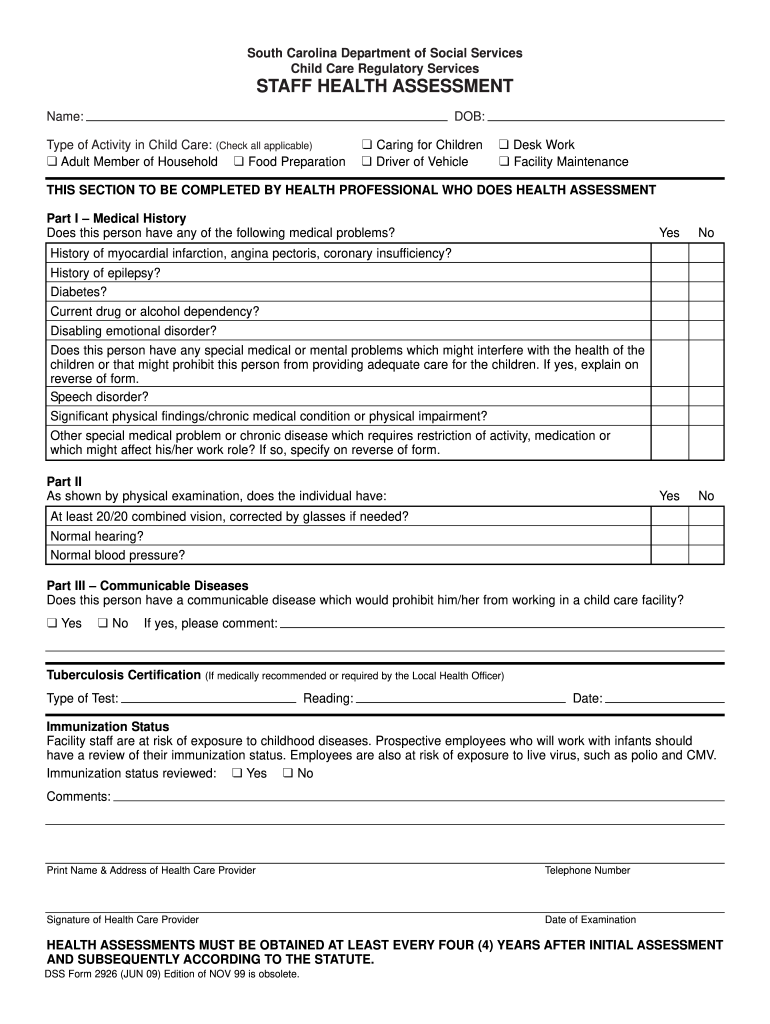
The DSS 2926 form, often referred to as the South Carolina Health Assessment Form, is essential for staff working in child care facilities in South Carolina. This official document ensures that individuals responsible for the welfare of children are medically fit to perform their duties. The form encompasses various sections that capture critical health information, including medical histories, physical examination results, and the statuses of communicable diseases. By requiring this documentation, the South Carolina Department of Social Services (DSS) aims to safeguard children's health and well-being in care environments.
Understanding the DSS 2926 is vital for childcare facilities, as it promotes compliance with state regulations and enhances safety standards. By accurately completing the form, providers can demonstrate their commitment to maintaining a healthy workforce, ultimately benefiting the children in their care.
Steps to Complete the DSS 2926 Form
Completing the DSS 2926 form requires careful attention to various sections designed to gather relevant health information. Below, detailed steps to guide individuals through the completion process are outlined:
-
Personal Information Section:
- Provide full name, date of birth, and current address of the staff member.
- Include contact information and social security number as required.
-
Medical History:
- Answer questions regarding past and present medical conditions.
- Include any known allergies, medications currently taken, and any history of significant illnesses.
-
Physical Examination Results:
- A licensed medical professional must complete this section.
- The examination should cover general health parameters, including height, weight, vision, and hearing assessments.
-
Communicable Disease Status:
- Record any past exposure to communicable diseases, such as tuberculosis or chickenpox.
- Indicate if the individual has been vaccinated against pertinent illnesses.
-
Signatures and Dates:
- Ensure that both the staff member and the examining healthcare provider sign and date the form to validate its completion.
Completing the DSS 2926 accurately is critical to ensure compliance with state care regulations, and it should be reviewed for completion before submission.
Important Terms Related to DSS 2926
Understanding key terminology regarding the DSS 2926 form helps clarify its significance and characteristics in relation to child care health assessments. Important terms include:
-
Medical History: A record of an individual's past health conditions, treatments, and family health history impacting current health status.
-
Physical Examination: A comprehensive health assessment performed by a qualified healthcare professional, documenting essential health information.
-
Communicable Diseases: Illnesses that can easily spread among individuals, necessitating health assessments to prevent outbreaks in child care settings.
-
Child Care Facilities: Establishments that provide supervised care for children, including daycares, preschools, and after-school programs.
-
Health Assessment: An evaluation process that determines an individual's physical, mental, and emotional well-being, particularly in a child care context.
Having a solid understanding of these terms is crucial for effectively navigating the DSS 2926 form and ensuring compliance with related health and safety regulations.
State-Specific Rules for the DSS 2926
Each state has specific rules governing the use and requirements of health assessment forms like the DSS 2926. In South Carolina, these regulations are set forth by the DSS to ensure that all child care staff meet essential health standards. Key elements of state-specific rules include:
-
Frequency of Health Assessments: The DSS mandates that health assessments be conducted every four years for staff working in childcare facilities to ensure ongoing compliance with health standards.
-
Submission Requirements: Completed DSS 2926 forms must be submitted to the relevant licensing authority upon employment and whenever the individual’s health status changes significantly.
-
Maintaining Confidentiality: All health information collected through the DSS 2926 form must remain confidential, adhering to state and federal privacy laws, including HIPAA.
-
Compliance Penalties: Failure to comply with state health assessment requirements can lead to penalties, including fines or suspension of childcare facility licenses.
Understanding these state-specific rules ensures that child care providers remain compliant and prioritize the health and safety of both their staff and the children in their care.
Examples of Using the DSS 2926 Form
The DSS 2926 form serves various practical purposes within child care facilities. Notable examples include:
-
Employee Health Verification: Before hiring new staff, child care facilities will request a completed DSS 2926 form to confirm that potential employees have no disqualifying health issues.
-
Ongoing Staff Assessments: Facilities use the DSS 2926 to conduct periodic health assessments, ensuring that staff members maintain health standards necessary for working in environments with children.
-
Regulatory Compliance: The DSS 2926 form acts as documentation that child care facilities are adhering to state regulations regarding staff health, providing evidence during inspections or audits.
-
Healthcare Provider Communication: Child care facilities can use the information gathered on the DSS 2926 form to communicate effectively with healthcare providers regarding any potential health risks posed by staff members.
Understanding these examples underscores the form's relevance in promoting a safe and healthy environment in child care settings.




