
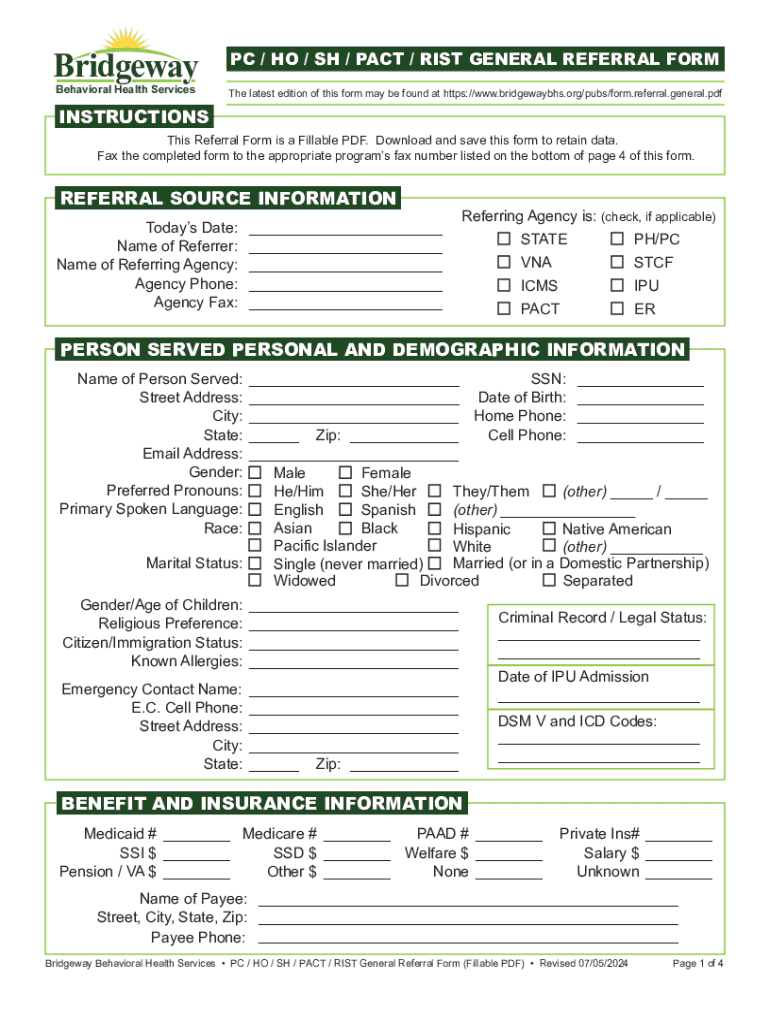







Definition and Meaning of the Rist General Referral Form
The Rist General Referral Form serves as a standardized tool for facilitating referrals to behavioral health services. Designed primarily for mental health programs, this form assists healthcare providers in gathering essential information about patients. The form encompasses various sections, each targeting a specific aspect of the referral process. By providing a structured approach, it ensures comprehensive data collection, enabling appropriate placement for individuals seeking assistance.
How to Use the Rist General Referral Form
Using the Rist General Referral Form involves a series of organized steps, each focusing on specific information that contributes to the referral process. Healthcare professionals must accurately complete each section, ensuring all relevant details are included.
-
Begin with Personal Details: Start by entering basic personal and demographic details of the individual being referred. This includes name, age, contact information, and any pertinent demographic data.
-
Include Referral Source Information: Specify the source of the referral, noting down the referring practitioner's details and their relationship to the individual. This helps in establishing the context and urgency of the referral.
-
Outline Presenting Problems: Clearly describe the main issues or symptoms prompting the referral. This section guides the receiving institution in understanding the patient's immediate needs.
-
Detail Insurance Information: Include any available insurance and benefit details to facilitate financial planning for service provision.
-
Specify Program-Specific Requirements: Highlight the particular program expectations or needs that the individual requires, ensuring better service alignment.
-
Review Before Submission: Verify that each section is filled out correctly and any mandatory fields are completed. This step is crucial for form acceptance and ensures that no critical information is left out.
How to Obtain the Rist General Referral Form
Obtaining a Rist General Referral Form can be accomplished through various channels, ensuring accessibility for professionals in need of this resource.
-
Online Access: Many health service providers offer digital access to the form on their websites for ease of download and distribution.
-
Direct Request: Contacting the referral program directly can provide personalized assistance and the latest version of the form.
-
Third-party Document Management Platforms: Platforms like DocHub allow users to access and customize the form, providing tools for digital entry and editing.
Steps to Complete the Rist General Referral Form
Completing the Rist General Referral Form involves a methodical approach to ensure all necessary information is captured concisely and accurately.
-
Personal Information Section: Fill out the individual's name, date of birth, and contact information.
-
Referral Source Details: Enter details about the healthcare provider or institution referring the individual.
-
Benefit Information: Include insurance provider names and policy numbers to streamline administrative processing.
-
Program Needs and Presenting Problems: Delve into the specifics of the individual’s conditions and the particular program that may be most beneficial.
-
Community Treatment Plans: Elaborate on any ongoing or community-based treatments relevant to the referral.
-
Submit or Fax the Document: Ensure all sections are complete before sending the form to the appropriate program’s contact number.
Who Typically Uses the Rist General Referral Form
The Rist General Referral Form is a crucial tool used by various professionals in the healthcare and behavioral science fields.
-
Mental Health Professionals: Psychologists, psychiatrists, and counselors often utilize this form to refer patients to specialized programs.
-
General Practitioners: Physicians who identify mental health needs in their patients may initiate referrals using this form.
-
Hospitals and Clinics: These institutions use referral forms to coordinate care and facilitate transitions between providers and services.
-
Social Workers: Often involved in case management, they use the form to ensure individuals receive appropriate and timely care.


Key Elements of the Rist General Referral Form
The Rist General Referral Form is meticulously structured to encompass several essential components that provide a comprehensive view of the patient’s needs.
-
Patient and Demographic Information: Includes personal details as well as specific demographic data relevant to care considerations.
-
Referral Details: Captures the referring party’s identification and their relationship to the patient.
-
Insurance Information: Ensures that financial planning and coverage details are addressed at the outset.
-
Current Medications and Psychiatric Background: Highlights existing treatments and mental health history, which are vital for continuity of care.
-
Specific Program Needs: Aligns patient needs with available services, ensuring proper placement within behavioral health programs.
Legal Use of the Rist General Referral Form
The legal framework around the Rist General Referral Form ensures compliance with healthcare regulations, emphasizing confidentiality and accurate information handling.
-
HIPAA Compliance: As the form contains sensitive patient information, it must adhere to regulations protecting individual privacy.
-
Accuracy and Completeness: Legal stipulations require that all information provided in the form should be truthful and complete to avoid any discrepancies in treatment planning.
-
Authorization for Release of Information: Typically, patient consent is needed for information sharing, safeguarding individual rights while facilitating care coordination.
Form Submission Methods: Online, Mail, or In-Person
Submitting the Rist General Referral Form can be accomplished through several convenient methods.
-
Online Submission: Many institutions support electronic submissions, using secured portals that ensure confidentiality.
-
Mail Submission: Some prefer mailing a hard copy to the intended recipient, particularly if digital facilities are unavailable.
-
In-Person Delivery: This method may be suitable for institutions located within close proximity or where digital submission is not preferred.
Each submission method has its merits, and the choice may depend on the urgency of the referral, availability of digital resources, and personal preference of the referring entity.




