
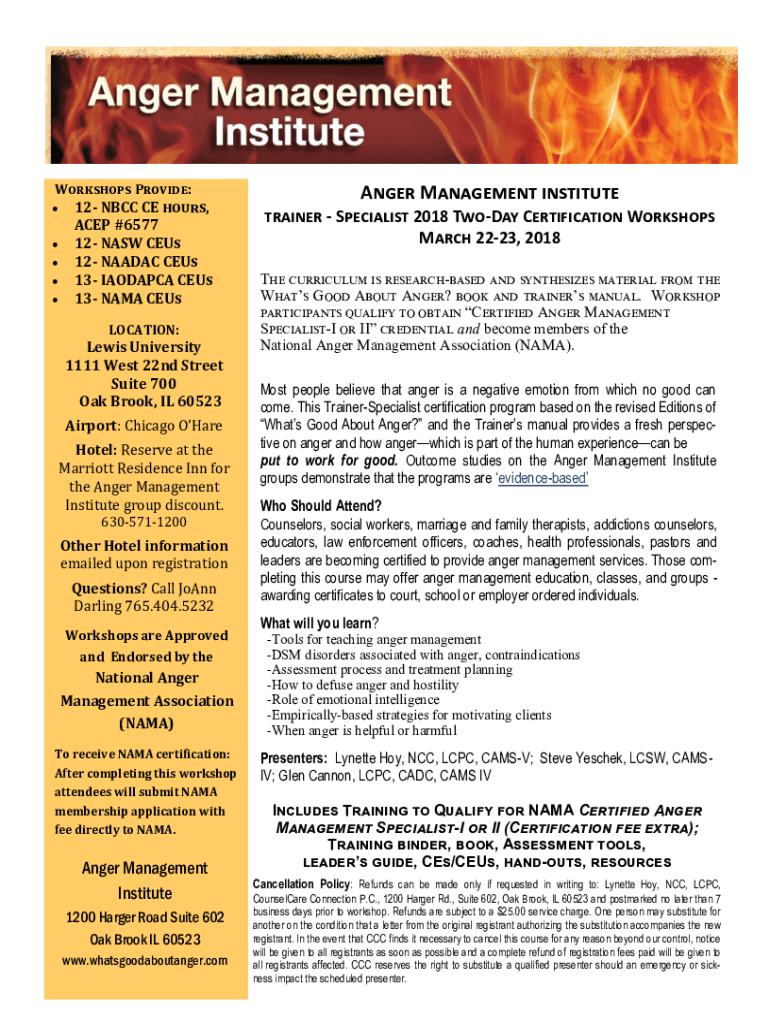







Definition & Meaning
Illinois social worker continuing education courses (CE courses) are designed to provide ongoing professional development and education for social workers licensed in the state of Illinois. These courses aim to enhance the knowledge and skills necessary for the practice of social work, ensuring social workers remain informed about current trends, methodologies, and regulations within the field. Continuing education is often required to maintain licensure and ensure that social workers can provide the highest quality of care and support to clients.
Steps to Complete the Illinois Social Worker Continuing Education Courses
-
Identify CE Requirements: Verify the specific continuing education requirements mandated by the Illinois Department of Financial and Professional Regulation (IDFPR) for social workers. This typically includes a certain number of credit hours over a specified period.
-
Select Approved Courses: Choose from a list of approved continuing education providers that offer courses relevant to social work practice. Ensure that the courses meet the criteria set by the state for topics such as ethics, clinical practice, and cultural competence.
-
Enroll in Courses: Register for selected courses through the provider’s website. Courses might be available in various formats, such as online, in-person, or virtual webinars, allowing flexibility in how social workers complete education credits.
-
Complete Coursework: Attend and actively participate in the courses, completing any required assignments, assessments, or evaluations. Some courses may require participation in interactive components or case studies.
-
Obtain Certification: After successful completion, receive a certificate documenting the earned continuing education credits. This certification is essential for renewing your license and providing proof of compliance.
-
Submit Proof to IDFPR: Keep detailed records of completed courses and submit proof of completion to the IDFPR as part of your license renewal process.
Important Terms Related to Illinois Social Worker Continuing Education Courses
-
CEU (Continuing Education Unit): A unit of credit equal to ten hours of participation in an approved continuing education program.
-
License Renewal: The process by which social workers must apply to continue their professional practice legally, often requiring completed CEUs as part of the renewal application.
-
Ethical Practice: Education focused on maintaining ethical standards, including understanding and applying the code of ethics as outlined by regulatory bodies.
-
Cultural Competence: Training aimed at improving social workers’ ability to interact effectively with individuals from diverse backgrounds.
State-Specific Rules for the Illinois Social Worker Continuing Education Courses
-
Illinois requires social workers to complete a specific number of CEUs to renew their licenses, typically including credits in ethics and clinical practice.
-
Courses must be approved by recognized bodies such as the National Association of Social Workers (NASW) or the Association of Social Work Boards (ASWB).
-
Certain courses or credit areas, like ethics or domestic violence, may be mandatory, and failure to complete them could result in non-renewal of licensure.
Examples of Using the Illinois Social Worker Continuing Education Courses
-
Case Study Analysis: Courses may include the analysis of hypothetical cases where social workers apply theoretical knowledge and ethical considerations in practice scenarios.
-
Workshops on New Legislation and Policies: Attending workshops that discuss recent changes in social work legislation or health policies can provide practical knowledge applicable in everyday work settings.
Eligibility Criteria
-
Licensed Social Workers: The courses are primarily for individuals holding a valid social work license in Illinois, including Licensed Clinical Social Workers (LCSWs) and Licensed Social Workers (LSWs).
-
Current Practice: Social workers currently practicing must meet ongoing CE requirements to maintain their licenses, which often vary depending on the level and scope of their practice.


Form Submission Methods (Online / Mail / In-Person)
-
Online Submission: Social workers can submit proof of completed continuing education courses via the IDFPR’s online portal, simplifying the documentation and renewal process.
-
Mail: If preferred, documents can be mailed to the IDFPR, though this method may take longer to process.
-
In-Person: For immediate processing, social workers may choose to submit their documents in person at designated IDFPR offices, allowing for direct consultation if needed.
Key Elements of the Illinois Social Worker Continuing Education Courses
-
Courses should cover essential areas of practice, including clinical approaches, social justice, policy changes, and therapeutic techniques, ensuring social workers meet the required competencies.
-
Interactive components, such as role-playing exercises and peer discussions, often form a critical part of the learning experience, enhancing practical application skills.
Each social worker must stay informed of any changes to the continuing education requirements to remain in compliance with state laws and regulations, ensuring the delivery of high-quality services to their clients.




