







Definition and Purpose of a Food Code Variance Request
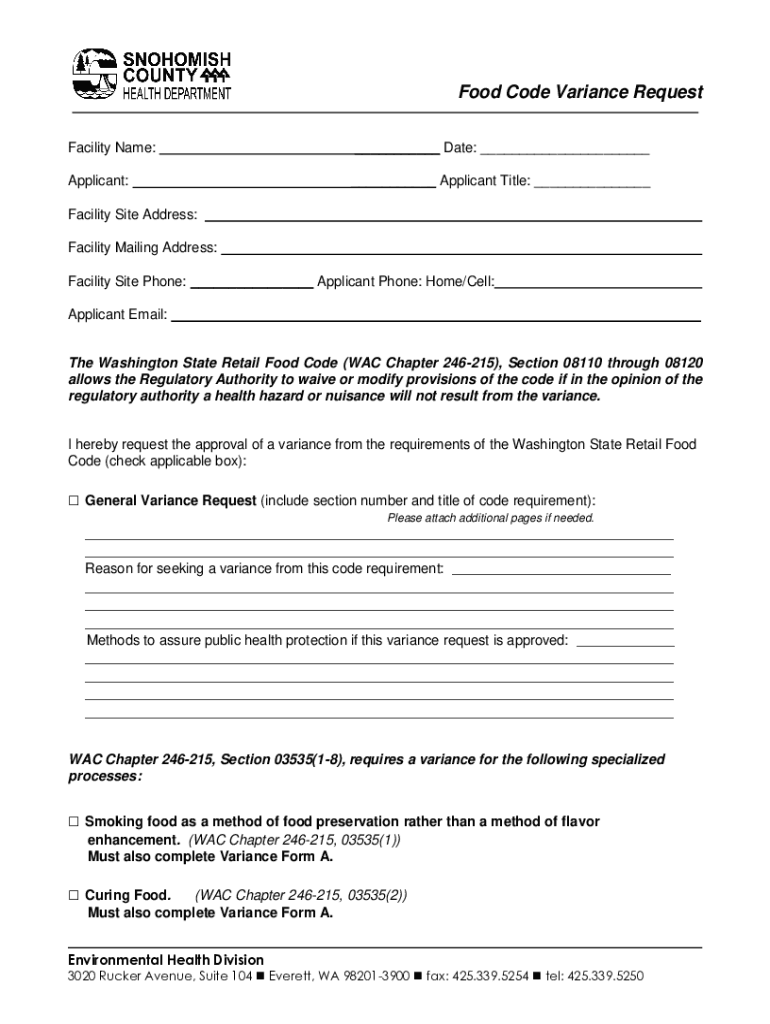
A Food Code Variance Request is a formal application submitted by food service facilities seeking to modify or waive specific provisions of the Washington State Retail Food Code. This document allows facilities to implement alternative processes while ensuring public health protection. A variance may be necessary for specialized food handling methods or unique operational needs that do not align with existing regulations. By submitting a variance request, a facility demonstrates its commitment to maintaining safety standards while pursuing innovative or operationally specific practices.
How to Use the Food Code Variance Request
Using the Food Code Variance Request form involves filling out comprehensive details about the facility and the requested variance. Facility operators should clearly articulate the reasons for the variance and describe the alternative methods they will employ to ensure public health is not compromised. By aligning their submission with regulatory guidelines, applicants increase their chances of obtaining approval. It's essential to provide detailed explanations and supporting evidence to justify the request thoroughly. Facilities should also be ready to comply with any conditions imposed by the regulatory authority upon approval.
How to Obtain the Food Code Variance Request Form
The Food Code Variance Request form can be obtained from the Washington State Department of Health website or local health departments. Applicants must ensure they download the most current version of the form, as regulations and requirements can be updated. Facilities can also contact their local health department for guidance and additional resources related to the variance request process. It's advisable to review all instructions and guidelines provided within or alongside the form to avoid delays or rejections due to incomplete or incorrect submissions.
Steps to Complete the Food Code Variance Request
-
Gather Essential Information: Before filling out the form, collect all necessary facility and operational details, including your business license number and any previous variance requests.
-
Identify the Specific Code Provision: Clearly specify the particular food code provision you seek to modify or waive.
-
Justification and Rationale: Provide a detailed explanation for the requested variance, highlighting the necessity and benefits.
-
Outline Alternative Procedures: Describe the alternative processes and methods that will be implemented to ensure continued protection of public health.
-
Submit Supporting Documentation: Include any scientific research, expert consultation evidence, or other documentation that bolsters your request.
-
Review and Submit: Double-check your application for completeness and accuracy before submission. Follow the submission instructions provided by the health department.
Who Typically Uses the Food Code Variance Request
The Food Code Variance Request is primarily used by food service establishments within Washington State that encounter unique operational challenges or wish to adopt innovative food processing methods not explicitly covered under current food safety regulations. Businesses like restaurants, catering services, or food processing facilities frequently require variances to implement specialized cooking methods, fermentation processes, or other techniques that deviate from standard guidelines. These requests are often made by the management or the owner of the establishment, sometimes with the assistance of food safety consultants or legal advisors.


Key Elements of the Food Code Variance Request
- Facility Identification: Includes the name, address, and contact details of the facility.
- Variance Requested: Details the specific food code provisions the applicant seeks to modify or waive.
- Rationale and Justification: Comprehensive explanation of why the variance is needed.
- Alternative Procedures and Methods: The alternative approach proposed to ensure public health safety.
- Supporting Documentation: Any relevant documentation that supports the variance request, such as scientific studies or expert opinions.
Legal Use and Compliance Requirements
Submitting a Food Code Variance Request is a legal process governed by state health regulations. Facilities must comply with these processes to ensure the lawful operation of their business when diverging from typical food safety standards. Compliance with conditions stipulated by the health authority upon granting the variance is mandatory. Facilities must maintain documentation and records of these alternative procedures as evidence of adherence to the approved variance.
State-Specific Rules for the Food Code Variance Request
While the general process for requesting a food code variance may be similar across various jurisdictions, specific rules, and conditions often vary by state. In Washington State, facilities need to adhere to particular state-level health regulations, which may include detailed risk assessments and mandatory inspections. Applicants should consult state-specific guidelines and work closely with local health authorities to ensure their variance requests meet all necessary legal and safety requirements. State health departments often update these guidelines, making it critical for applicants to access the most recent information and adjust their procedures accordingly.


