




01. Edit your form online
Type text, add images, blackout confidential details, add comments, highlights and more.

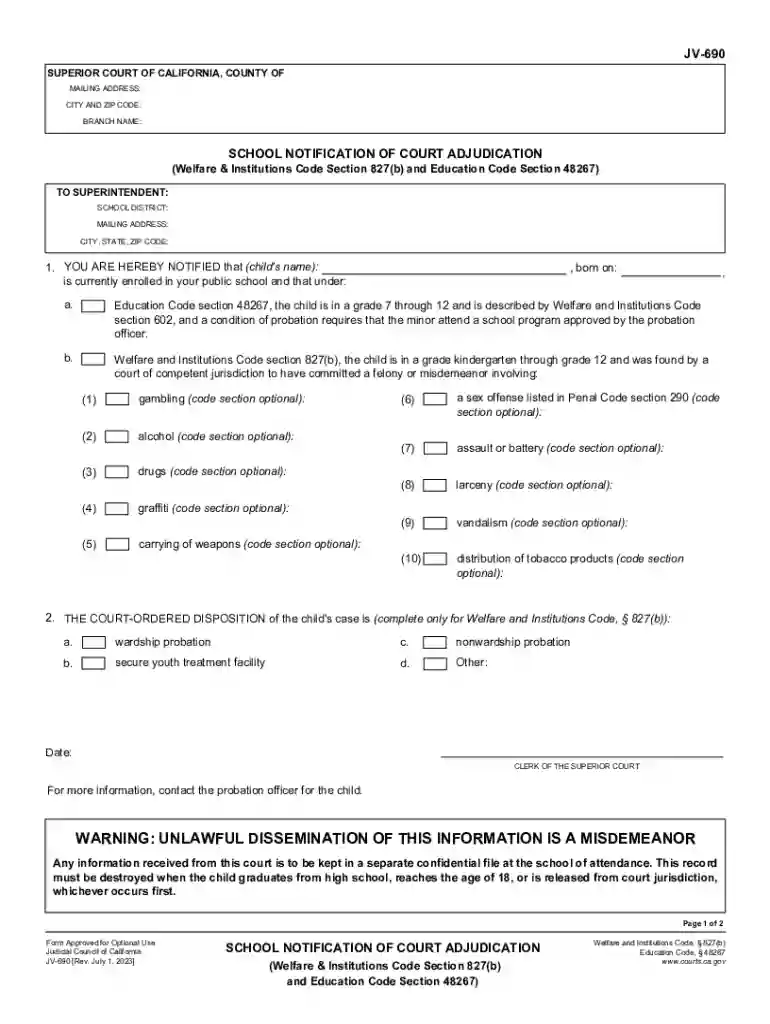
Type text, add images, blackout confidential details, add comments, highlights and more.

Draw your signature, type it, upload its image, or use your mobile device as a signature pad.

Send it via email, link, or fax. You can also download it, export it or print it out.
California Courts Forms are standardized legal documents issued by the courts in California for a variety of legal proceedings. These forms serve multiple purposes, including providing official documentation for court orders, petitions, and notifications. They streamline the judicial process by ensuring consistency in the presentation of information and compliance with state-specific legal requirements.
Forms can cover a broad range of legal scenarios, such as family law matters, probate issues, civil litigation, and post-conviction relief. Each form is designed to capture specific information relevant to its purpose, such as party details, the nature of the legal matter, and any court-ordered actions. Understanding the specific function of each form is crucial for proper legal documentation and compliance.
Using California Courts Forms involves a few sequential steps to ensure accuracy and compliance. First, determine the specific type of form needed for your legal situation. This may require reviewing the form's instructions or consulting legal guidance to ensure it aligns with your case requirements.
Once you have identified the appropriate form, download or obtain a physical copy from the court's website or courthouse. Carefully complete all sections of the form with accurate information. Pay close attention to any fields marked as mandatory, as incomplete forms may be rejected by the court.
It's important to use the form according to its intended legal context. For example, if a form is required for a civil lawsuit, ensure that it is filled out with details specific to that case, such as the parties involved and the relief sought.
Gather Necessary Information: Before filling out the form, collect all relevant data, including names, addresses, case numbers, and any additional documentation required.
Download the Form: Find the official version of the form from the California Courts website or obtain a physical copy from the courthouse.
Read Instructions Carefully: Each form includes instructions that outline how it should be completed. Reviewing these instructions thoroughly can prevent errors.
Complete the Form: Fill in all required sections accurately. Use clear and legible handwriting if filling it out manually, or type the information if submitting digitally.
Review for Accuracy: Double-check all entries to ensure the data is correct and complete. Mistakes can lead to processing delays or rejections.
Submit the Form: File the completed form with the appropriate court. Depending on the form, this may be done via mail, in person, or through an electronic filing system.
California Courts Forms are used by a wide array of individuals and entities involved in the legal process. Common users include:
Attorneys and Legal Professionals: Often assist clients in completing and filing forms related to various legal proceedings.
Individuals Involved in Legal Proceedings: Participants in cases such as divorce, child custody, or probate may need to complete specific forms to meet court requirements.
Businesses and Organizations: May need to interact with legal forms for issues such as business litigation, contracts, or employee disputes.
Government Agencies: Use specific forms for compliance and enforcement actions related to state and federal regulations.


Each California Courts Form consists of several key components designed to capture essential legal information:
Form Title and Number: Identifies the form type and its specific use within the legal system.
Parties Involved: Sections typically include spaces for names, addresses, and roles of all parties relevant to the form.
Case Details: Includes information such as the case number, court location, and related proceedings.
Declaration or Certification: Many forms require a signed statement affirming the truthfulness and accuracy of the information provided.
Instructions Section: Guides users on how to correctly complete and file the form.
Legal use of California Courts Forms extends to various proceedings including, but not limited to:
Family Law Cases: Such as divorce filings, custody arrangements, and domestic violence restraining orders.
Civil Litigation: For initiating lawsuits, responding to complaints, or petitioning for relief.
Probate Matters: Including wills, trusts, and the administration of estates.
Criminal Cases: Incorporating motions, appeals, or notifications related to sentencing and penal code compliance.
Legal practitioners must ensure each form is completed in accordance with the applicable laws and regulations to avoid any potential legal ramifications or procedural dismissals.
California Courts Forms must adhere to state-specific rules that guide their use and submission. Key requirements include:
Specific Language: Forms often include language mandated by California statutes to ensure legal compliance.
Filing Procedures: Each form has designated procedures for submission, which may vary by jurisdiction within the state.
Document Format: The format of California Courts Forms is standardized, and deviations can render them unacceptable.
Signature Requirements: Certain forms require signatures to be notarized or witnessed to validate their authenticity.
Failure to comply with these state-specific rules can result in a form's rejection or delay in legal proceedings.
Understanding the terminology used in California Courts Forms is essential for proper comprehension and use. Common terms include:
Petitioner/Respondent: Refers to the parties initiating or responding to a legal action.
Motion: A formal request for a court to issue a specific order or ruling.
Declaration under Penalty of Perjury: A statement attesting that the information provided is true, subject to legal penalties if falsified.
Ex Parte: Legal action taken without the presence of or notice to other parties. Often used in urgent situations.
These terms are used consistently across various forms, creating a standardized language that facilitates legal processes within California's judicial system.
We've got more versions of the California Courts Forms form. Select the right California Courts Forms version from the list and start editing it straight away!
At DocHub, your data security is our priority. We follow HIPAA, SOC2, GDPR, and other standards, so you can work on your documents with confidence.
Find Your Court Forms Rules. Californians looking for information on case types can find step-by-step instructions, court forms, and other resources on the
Statement of Agreement or Nonagreement. Form ADR-102 Request for Trial. Birth, Marriage, Death. Form CR-101 Plea Form, CR-102 Domestic Violence Plea Form


