




01. Edit your aed checklist online
Type text, add images, blackout confidential details, add comments, highlights and more.

Type text, add images, blackout confidential details, add comments, highlights and more.

Draw your signature, type it, upload its image, or use your mobile device as a signature pad.

Send aed monthly inspection log via email, link, or fax. You can also download it, export it or print it out.
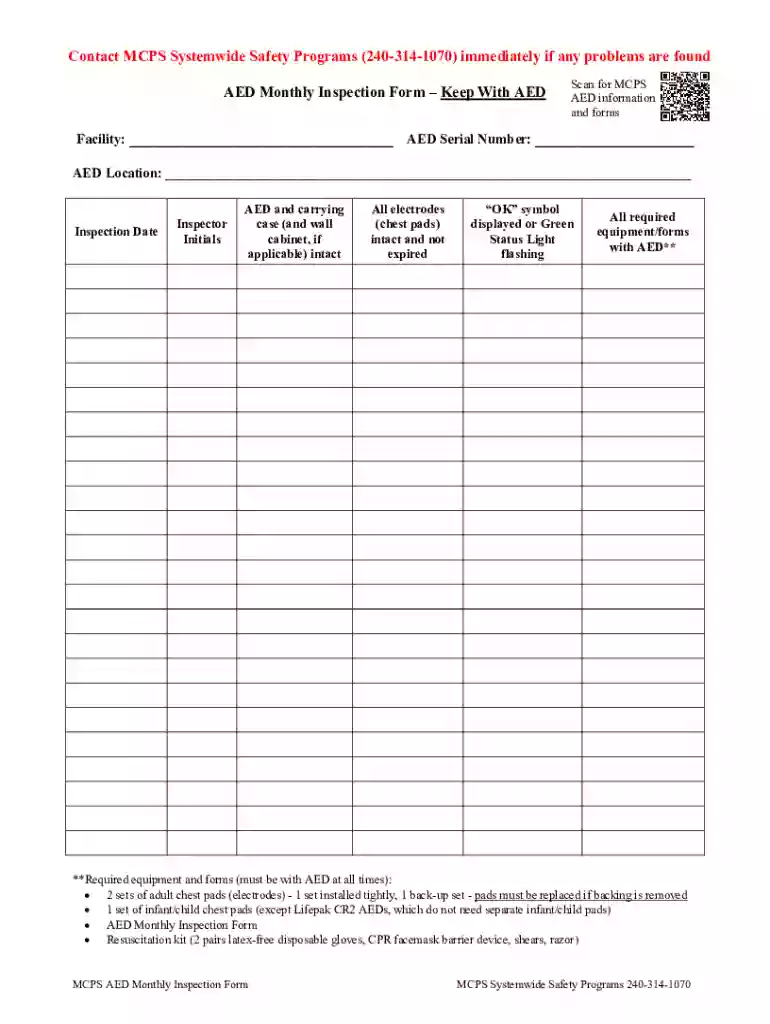
The AED inspection checklist PDF is a crucial document designed to ensure that Automated External Defibrillators (AEDs) are maintained in optimal condition for emergency use. This checklist outlines specific components and functionalities of the AED that should be inspected regularly, typically on a monthly or weekly basis, to ensure readiness in the event of a cardiac emergency. Compliance with the checklist assists in identifying any maintenance needs or equipment failures before they can impede the device's functionality.
Key elements of the checklist generally include:
These elements are critical not only for the functionality of the AED but also for ensuring user confidence in the device when it is needed most.
Using the AED inspection checklist PDF involves several key steps to guarantee that each aspect is comprehensively reviewed. Here’s how to execute this effectively:
Using this method, organizations can effectively monitor their AEDs, ensuring they remain functional and compliant with local regulations.
Completing the AED inspection checklist PDF is a straightforward process, but it must be done thoroughly to ensure the device is operational. The following steps detail this process:
Preparation:
Perform the Inspection:
Record Inspection Results:
Store the Checklist Safely:
Review and Update:
By following these steps, users can guarantee the AED remains an effective tool during critical moments.
Understanding specific terminology associated with the AED inspection checklist PDF enhances clarity in communication and compliance. Key terms include:
By being familiar with these terms, users can more effectively utilize the AED inspection checklist PDF and communicate any issues regarding the AEDs.
The legal implications of using the AED inspection checklist PDF are significant for organizations required to maintain AEDs. Adhering to a structured inspection routine can have several legal benefits, including:
Organizations should consult legal counsel to ensure their practices align with local laws governing AED use and maintenance to avoid potential liability and enhance public safety.
The AED inspection checklist PDF includes several core components that must be routinely reviewed. Key elements typically found in the checklist include:
Reviewing these elements provides a comprehensive assurance of the AED’s operational status, contributing to the device's readiness during emergencies.
Practical applications of the AED inspection checklist PDF can greatly impact its effectiveness in real-world scenarios. Consider these examples:
These use cases underscore the checklist's versatility and importance across various settings, ensuring AEDs are reliable when needed.
We've got more versions of the aed checklist form. Select the right aed checklist version from the list and start editing it straight away!
At DocHub, your data security is our priority. We follow HIPAA, SOC2, GDPR, and other standards, so you can work on your documents with confidence.
AEDs must be inspected monthly by AED Coordinators, or their designees, using this checklist or an equivalent checklist. Use one checklist for each AED.Read more
Check the AED cabinet. Check the AED for damage, cracks, foreign substances. Check AED response kit. It should contain scissors, gloves, shaving razor, gauze


