
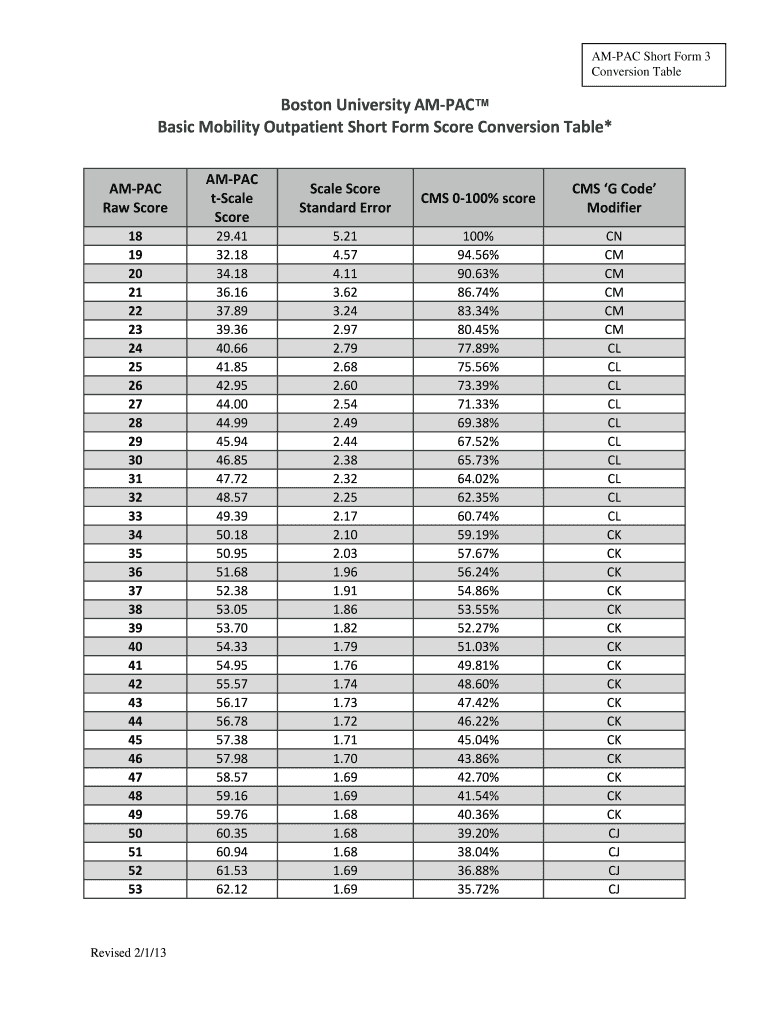







Definition and Meaning of the Short Form AM-PAC
The short form AM-PAC, or Activity Measure for Post-Acute Care, is a standardized tool designed to assess a patient’s basic mobility in various healthcare settings, particularly outpatient facilities. The primary purpose of this form is to evaluate patients' capabilities and limitations concerning their mobility, which can help healthcare providers tailor rehabilitation programs effectively.
The AM-PAC short form is typically used to gauge performance in essential daily tasks, reflecting the patient's capability in moving around, transferring between different positions, and overall mobility in a variety of settings. It is important for tracking progress in rehabilitation and assisting with treatment planning.
Key Elements of the Short Form AM-PAC
Understanding the key elements of the AM-PAC short form is crucial for accurate usage and interpretation. The elements include:
- Raw Scores: Each mobility task in the AM-PAC is assigned a raw score based on performance, which provides a benchmark for assessment.
- T-Scale Scores: These scores standardize raw scores to allow for comparisons across various populations.
- CMS Percentage Scores: These scores indicate how a patient is performing in relation to Medicare’s quality benchmarks.
- G Code Modifiers: These are used to document patients' functional status according to specific coding needed for Medicare billing.
These components facilitate a comprehensive evaluation of mobility, enabling practitioners to create informed care plans.
How to Use the Short Form AM-PAC
Using the short form AM-PAC involves several structured steps to ensure accurate data collection and analysis:
- Administer the Form: A trained healthcare professional should explain the purpose of the AM-PAC to the patient, ensuring they understand the tasks involved.
- Guide the Patient: Each of the questions or tasks should be presented in a clear, easy-to-understand manner. In some cases, demonstration of tasks may assist the patient’s understanding.
- Score the Responses: Based on the performance on each task, scores should be recorded according to the pre-established scoring criteria.
- Analyze the Data: Once scores are tallied, they should be interpreted using the scoring guidelines, which provide insights into the patient’s mobility capabilities.
- Follow-up: Use the findings from the AM-PAC to guide further treatment sessions and adjust rehabilitation goals as necessary.
Steps to Complete the Short Form AM-PAC
Completing the short form AM-PAC requires a systematic approach to ensure thorough data collection. Here is a step-by-step guide for healthcare professionals:
- Preparation: Familiarize yourself with the form and the scoring criteria before administration to ensure a smooth process.
- Patient Interaction: Create a comfortable environment for the patient, as their performance might be affected by anxiety or discomfort.
- Task Administration: Present each mobility task individually, allowing the patient to demonstrate their capabilities one step at a time.
- Scoring: As the patient completes each task, assign scores based on their performance and level of independence.
- Documentation: Record the scores meticulously, using appropriate abbreviations and noting any relevant observations that may affect the interpretation of the data.
This structured process ensures that the short form AM-PAC is completed accurately, yielding reliable results that can be used in the patient’s ongoing care.
Examples of Using the Short Form AM-PAC
Practical applications of the short form AM-PAC demonstrate its relevance in clinical settings. Here are a few examples:
- Outpatient Rehabilitation: A physical therapist uses the short form AM-PAC to assess a stroke survivor's mobility as part of their rehabilitation program. The results help in determining which areas need more focus in therapy.
- Discharge Planning: Before discharging a patient from a rehabilitation facility, the short form AM-PAC is utilized to evaluate mobility and ensure safety when transitioning back home.
- Insurance Assessments: Healthcare providers may use the AM-PAC in documentation for insurance purposes, utilizing the standardized scores to support claims for continued care or equipment provision.
These scenarios highlight the short form AM-PAC's efficacy in assessing mobility, ensuring patient safety, and facilitating comprehensive care plans.
Legal Use of the Short Form AM-PAC
Understanding the legal framework surrounding the use of the AM-PAC is critical for compliance with healthcare regulations.
- Patient Privacy: The AM-PAC must be administered in accordance with HIPAA guidelines to protect patient confidentiality and data.
- Compliance with Medicare: The proper utilization of the AM-PAC, including accurate scoring and documentation, is essential for billing and reimbursement under Medicare regulations.
- Clinical Guidelines: Use of the AM-PAC should adhere to established clinical guidelines and protocols, ensuring that it is applied appropriately within both outpatient and inpatient settings.
Ensuring the legal use of the short form AM-PAC not only protects patient rights but also minimizes risks associated with healthcare delivery and payment processes.
Software Compatibility with the Short Form AM-PAC
Several software applications enhance the utilization of the short form AM-PAC in clinical practice, enabling better data management and analysis.
- Clinical Documentation Systems: Many electronic health record (EHR) platforms allow integration of the AM-PAC scoring, facilitating real-time recording of scores during patient visits.
- Rehabilitation Tools: Specialized rehabilitation software may feature direct entry points for AM-PAC scores, enabling therapists to access patient mobility data seamlessly.
- Billing and Coding Software: Applications like TurboTax and QuickBooks can include AM-PAC scores for billing, as they assist in documenting patient care for insurance claims.
Leveraging software compatibility can significantly improve workflow efficiency and data accuracy within healthcare practices.




