
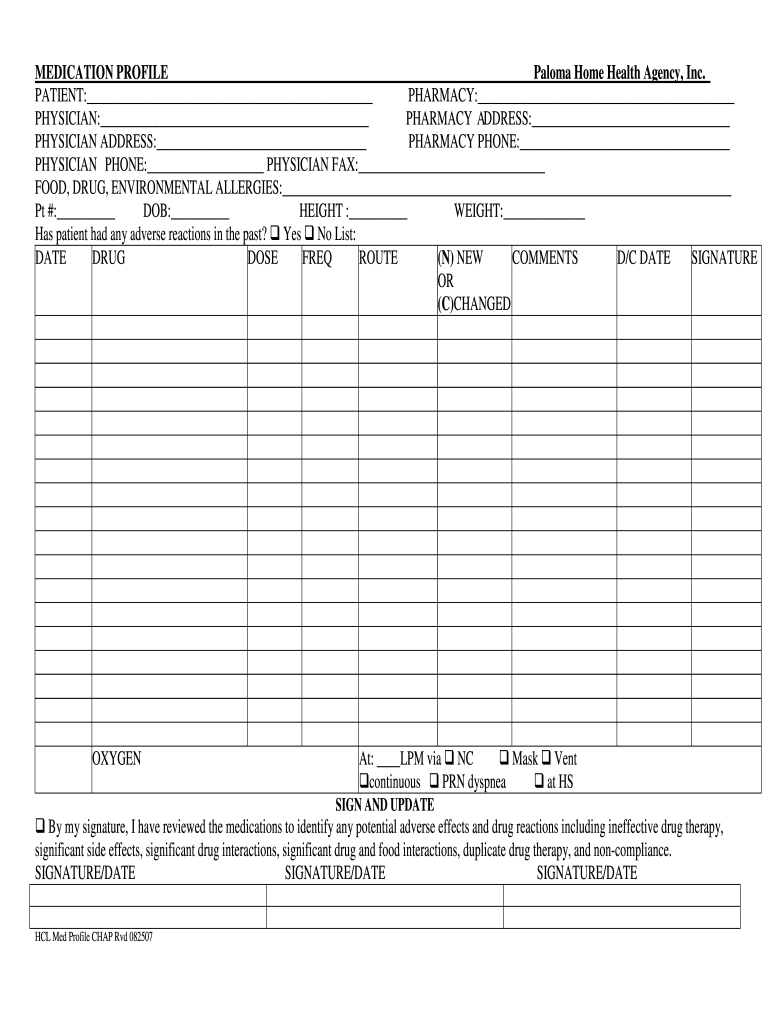







Overview of the Medication Profile Template
A medication profile template serves as a critical tool in healthcare settings, offering essential details related to a patient's medications, allergies, and overall treatment plan. This structured outline enables healthcare providers to manage medications effectively and improve patient safety and adherence.
Key Components of a Medication Profile
-
Patient Information: This section includes essential data about the patient, such as name, date of birth, contact details, and insurance information. Accurate patient identification helps prevent medication errors and ensures that the right medications are administered.
-
Physician and Pharmacy Details: Documenting the prescribing physician and the preferred pharmacy is crucial for communication and medication management. This helps in coordinating care among healthcare providers and ensuring that prescriptions are filled correctly.
-
Medication List: This comprehensive list outlines all medications the patient is currently taking, including prescription drugs, over-the-counter medications, and supplements. Each entry typically includes:
- Medication name
- Dosage and administration route
- Frequency of administration
- Prescribing physician
-
Allergies and Adverse Reactions: This critical section documents any known allergies and previous adverse reactions to medications. Understanding a patient's allergy history aids providers in avoiding potentially dangerous prescriptions and ensures patient safety.
-
Oxygen Therapy Specifications: When applicable, detailing the patient's oxygen therapy helps in managing conditions requiring supplemental oxygen. This section outlines the type of oxygen delivery system, prescribed flow rate, and patient-specific settings.
Creating a Patient Medication Profile
A patient medication profile can be constructed using the following steps:
-
Data Collection: Gather thorough information from the patient, including their complete medication history and any known allergies.
-
Profile Compilation: Input the collected information into the medication profile template. Ensure accuracy and completeness to avoid medication errors.
-
Review and Update: Regularly review the profile during healthcare visits to ensure all entries are current and make updates as necessary.
-
Verification: Prior to prescribing new medications, verify the existing medication profile to evaluate for possible drug interactions, duplications, or contraindications.
-
Documentation: Ensure that all changes and reviews are documented appropriately, maintaining a comprehensive record of the patient’s medication management.
Uses of the Medication Profile Template
-
Clinical Decision-Making: Healthcare providers utilize the medication profile to make informed decisions regarding treatment plans, ensuring safe and effective medication management.
-
Compliance Monitoring: By detailing prescribed medications and their dosages, the profile aids in monitoring patient adherence to treatment regimens.
-
Interdisciplinary Communication: The medication profile promotes clear communication among healthcare team members, ensuring all providers have access to up-to-date medication information.
Examples of Medication Profiles
Medication Profile Example
A typical medication profile might include:
- Patient Name: John Doe
- Date of Birth: 01/01/1980
- Physician: Dr. Smith
- Pharmacy: ABC Pharmacy
- Current Medications:
- Lipitor: 20 mg, once daily
- Aspirin: 81 mg, once daily
- Allergies: Penicillin, recorded anaphylaxis
Sample Patient Drug Profile PDF
A patient might receive a medication profile in a PDF format for easy access and sharing with other healthcare providers. This ensures that all parties involved in the patient's care have consistent information to refer to during treatment.
Managing and Updating Medication Profiles
To effectively manage a medication profile, healthcare providers should:
-
Schedule Regular Reviews: Regular follow-ups and medication reviews are essential for maintaining up-to-date profiles.
-
Utilize Technology: Employ electronic health record systems that allow for easy updates, sharing, and retrieval of medication profiles.
-
Educate Patients: Encourage patients to keep an updated list of their medications and to bring it to every healthcare appointment.
Conclusion
The medication profile template is not only a lifesaving tool but also a pivotal component of quality patient care. By integrating comprehensive medication management practices within healthcare settings, patients can receive safer, more effective treatment, ultimately leading to improved health outcomes. By leveraging technology and promoting education, healthcare providers can enhance the utility of medication profiles, leading to more informed clinical decisions and better patient engagement.




