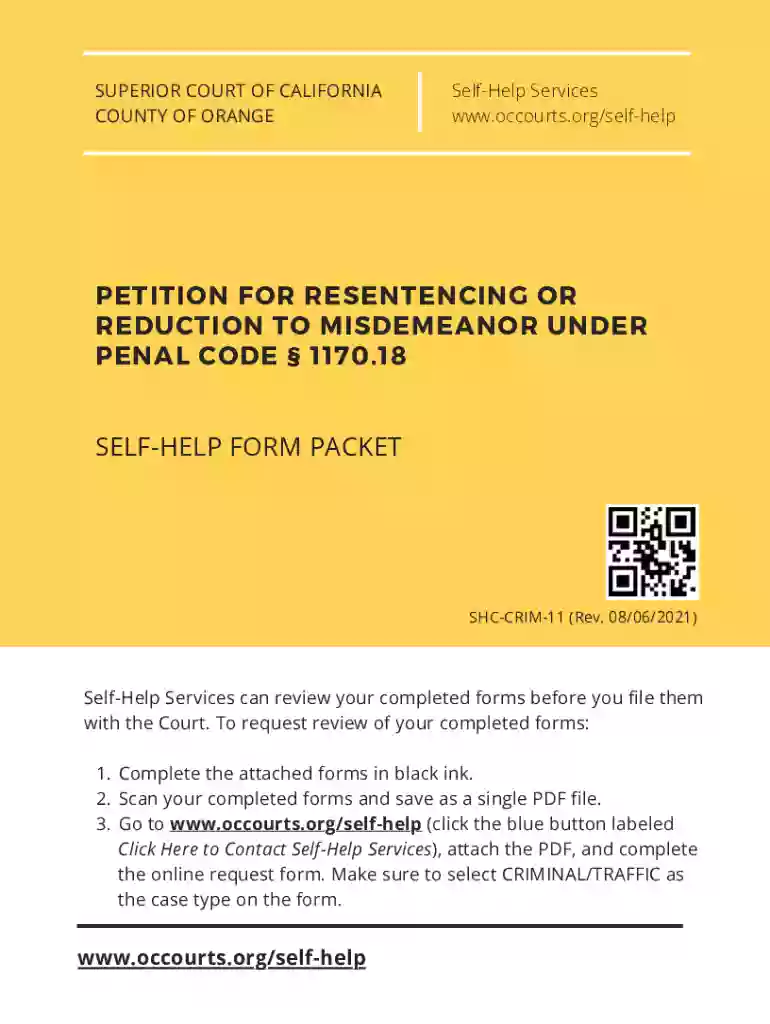
Definition and Meaning of PETITION FOR RESENTENCING OR
The PETITION FOR RESENTENCING OR is a legal document utilized in the context of seeking a reduction of a felony conviction to a misdemeanor under specific provisions such as California's Penal Code § 1170.18. This process allows individuals who have completed their prison terms and demonstrate rehabilitation to petition the court for a reconsideration of their sentencing. The implications of successfully obtaining a resentencing can significantly affect an individual's life, impacting areas like employment opportunities, housing options, and overall social reintegration.
Purpose of the Petition
- Legal Remedy: It serves as a legal remedy for individuals hoping to modify their felony convictions.
- Rehabilitation Recognition: The petition acknowledges the strides individuals have taken towards rehabilitation and reintegrating into society.
- Reducing Consequences: The petition aims to alleviate the collateral consequences associated with felony convictions, thus enhancing the individual’s quality of life.
Steps to Complete the PETITION FOR RESENTENCING OR
Completing the PETITION FOR RESENTENCING OR entails a series of methodical steps that must be carefully followed to ensure compliance with legal requirements and to enhance the chances of a favorable outcome.
Step-by-Step Completion Process
- Review Eligibility: Before filing, determine if you meet the eligibility criteria under Penal Code § 1170.18. This typically includes having completed your sentence and not being currently convicted of certain disqualifying offenses.
- Obtain the Form: The petition form can generally be found through the court’s website or legal aid resources.
- Fill Out the Necessary Information: Include personal details such as name, case number, and any supporting documents that may strengthen your petition.
- Submit the Petition: Depending on the local court's procedures, submissions may be made online, by mailing in the documents, or in person at the courthouse.
- Await a Hearing Date: Once submitted, the court will schedule a hearing where you will have the opportunity to present your case.
Important Considerations
- Supporting Evidence: Collect additional documentation that can corroborate your rehabilitation efforts, such as employment records, recommendation letters, or proof of community service.
- Legal Assistance: Consider consulting with a legal professional to help navigate the process, particularly if there are complexities in your case.
Required Documents for the PETITION FOR RESENTENCING OR
Filing a PETITION FOR RESENTENCING OR requires specific documents that substantiate your request and support your case for resentencing.
Essential Documents
- Completed Petition Form: This is the primary document providing the court with your request for resentencing.
- Proof of Completion of Sentence: Documentation that demonstrates you have completed all terms of your sentence, including any parole requirements.
- Record of Rehabilitation: Any evidence showing positive steps taken towards rehabilitation, such as certificates from programs completed, employment records, or letters from employers or community leaders.
- Case Number: Providing your case number is essential for the court to locate your conviction easily.
Additional Documentation
- Personal Statement: A narrative that details your journey, the challenges you have faced post-conviction, and your goals moving forward can add a personal touch to your petition.
- Character References: Letters from individuals who can vouch for your character can be impactful, especially from those in the community or professionals familiar with your rehabilitation efforts.
Important Terms Related to PETITION FOR RESENTENCING OR
Understanding key terms associated with the PETITION FOR RESENTENCING OR is crucial for effectively navigating the legal process.
Key Terms
- Felony: A serious crime typically punishable by imprisonment for more than one year.
- Misdemeanor: A less severe offense, often resulting in fines or shorter imprisonment.
- Penal Code § 1170.18: The specific legal statute in California which outlines the provisions for reducing felony convictions to misdemeanors based on rehabilitation.
- Rehabilitation: The process of reintegrating individuals into society, often focusing on the prevention of recidivism.
Contextual Importance
- Legal Framework: Familiarity with these terms can help petitioners understand the legal framework surrounding their applications and prepare them for court proceedings.
- Navigating the Process: Knowing these definitions can ease the process of filling out the PETITION FOR RESENTENCING OR, leading to more effective communication with legal representatives or court personnel.
Typical User Profile
- Ex-Offenders: Individuals who have served their time and demonstrate a commitment to reintegrating into society through rehabilitation.
- Those Seeking Employment: Ex-convicts facing difficulties in gaining employment due to felony records may use this petition to improve job prospects.
- Individuals Affected by Stigma: Those who want to alleviate the social stigma associated with felony convictions and pursue opportunities impacted by their criminal past.
Additional Users
- Legal Representatives: Attorneys or advocates may assist clients in filing petitions to navigate the complex legal processes involved with resentencing effectively.
- Community Support Organizations: Groups working with formerly incarcerated individuals may provide resources and guidance on how to initiate the petition process.
Legal Use of the PETITION FOR RESENTENCING OR
The legal foundation surrounding the PETITION FOR RESENTENCING OR is crucial for ensuring proper adherence to procedures and understanding its implications.
Legal Considerations
- Compliance with Laws: The petition must conform to specific state laws and regulations, particularly those outlined in California's Penal Code.
- Court’s Discretion: While the petition requests a resentencing, the court retains discretion in approving or denying the request based on the evidence presented.
- Potential Outcomes: Depending on the court's findings, outcomes may range from granted resentencing to continued felony status, impacting the individual’s future.
Importance of Legal Counsel
- Navigating Complexities: Engaging with an experienced attorney can provide insights into legal nuances and help present a stronger case to the court.
- Understanding Your Rights: Legal professionals can clarify individuals' rights during the resentencing process and ensure proper representation.
By following these detailed guidelines and ensuring compliance with the specific legal standards, individuals can effectively utilize the PETITION FOR RESENTENCING OR to pursue a more favorable outcome regarding their felony convictions.