Definition and Meaning of the AMVIC Inspection Form
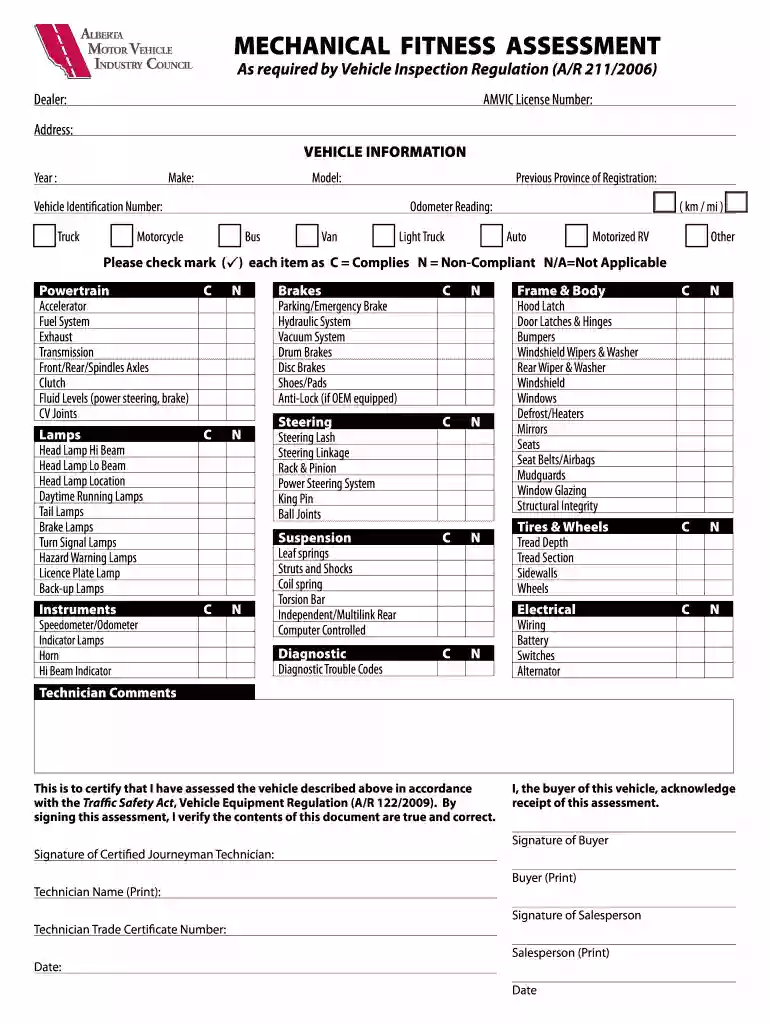
The AMVIC inspection form is an official document used in Alberta, Canada, particularly for vehicle inspections. It serves as a Mechanical Fitness Assessment required under the Vehicle Inspection Regulation (A/R 211/2006). This form details the compliance checks on various vehicle components, including but not limited to the powertrain, brakes, steering, suspension, and electrical systems. It is vital for ensuring that vehicles on the road meet safety and operational standards.
Key Components
- Vehicle Information: Essential details such as the vehicle's make, model, year, and VIN (vehicle identification number).
- Compliance Status: Sections indicating whether each component complies with regulatory standards, marked as Complies, Non-Compliant, or Not Applicable.
- Technician Comments: Space for inspectors to document findings, recommendations, and any specific issues noted during the inspection.
- Signatures: Required signatures of both the inspecting technician and the buyer, indicating agreement with the inspection results.
The AMVIC inspection form is crucial for protecting public safety by ensuring that all vehicles conform to the necessary safety and environmental regulations.
Steps to Complete the AMVIC Inspection Form
Completing the AMVIC inspection form requires careful attention to detail to ensure compliance with regulations. Here are the key steps to effectively fill out the form:
- Gather Vehicle Information: Start by collecting all necessary vehicle details, including make, model, year, and VIN.
- Conduct the Inspection: As a licensed technician, perform a comprehensive inspection of the vehicle's key systems (brakes, tires, lights, etc.) and document findings directly on the form.
- Assess Compliance: As you check each component, determine its compliance status. Mark the appropriate section (Complies, Non-Compliant, Not Applicable) accordingly.
- Document Findings: Utilize the technician comments section to note any issues that arise during the inspection, along with recommended actions for any non-compliant components.
- Obtain Signatures: After completion, ensure both the technician conducting the inspection and the vehicle owner sign the form to validate the findings.
- Distribute Copies: Provide necessary copies of the completed inspection form to the vehicle owner and retain a copy for your records.
This structured approach ensures clarity and reliability in the inspection process, which is critical for vehicle safety.
Legal Use of the AMVIC Inspection Form
The AMVIC inspection form has specific legal considerations governing its usage, primarily within the Canadian province of Alberta. Understanding these legal parameters is crucial for compliance and accountability.
- Compliance with Regulations: The form must be completed by a certified mechanic or inspection facility. This stipulation ensures that inspections are conducted in accordance with provincial vehicle safety standards.
- Documentation in Disputes: In the event of a dispute regarding a vehicle's condition, the AMVIC inspection form provides a legally binding account of the vehicle's status at the time of inspection. This can protect both the seller and buyer in case of future issues.
- Required for Vehicle Sale: When a vehicle is sold, particularly if it is a used vehicle, an AMVIC inspection form may be a requirement to demonstrate that it meets safety standards.
The legal implications of the AMVIC inspection form underscore its importance in maintaining safety standards across the province.
Key Elements of the AMVIC Inspection Form
Understanding the essential components of the AMVIC inspection form is vital for ensuring its effective use. Here are the key elements:
- Identification Section: This includes fields for vehicle details such as the owner’s name, address, and contact information, as well as the vehicle's make and model.
- Inspection Results: The core of the form, detailing each inspected component with corresponding compliance checks.
- Technician’s Signature and License Number: An essential verification that the inspection was performed by an authorized individual.
- Owner’s Signature: Confirms that the vehicle owner acknowledges the findings of the inspection.
- Date of Inspection: Important for record-keeping and compliance validation.
These elements help ensure clarity and accountability throughout the inspection process.
Who Typically Uses the AMVIC Inspection Form?
Various individuals and organizations rely on the AMVIC inspection form as a critical part of vehicle management and safety enforcement. Key users include:
- Vehicle Inspection Facilities: Licensed facilities conduct inspections to ensure vehicles comply with provincial regulations.
- Auto Mechanics: Mechanics must fill out the form after diagnosing and repairing issues to document compliance status for their customers.
- Vehicle Owners: Car owners use the AMVIC inspection form to ensure their vehicles meet safety standards, particularly before resale.
- Buyers and Sellers: Individuals involved in buying or selling used vehicles use the form as a reference point to understand the vehicle’s condition.
This diverse group illustrates the broad applicability of the AMVIC inspection form within the automotive industry.

Importance of the AMVIC Inspection Checklist
The AMVIC inspection checklist is an integral part of ensuring vehicle compliance with safety standards. The checklist enables systematic evaluation and documentation of vital vehicle components.
Benefits of the Checklist
- Standardization: Establishes a uniform approach to inspections, ensuring that all vehicles are assessed against the same regulatory benchmarks.
- Thoroughness: Guides inspectors through a comprehensive evaluation process, reducing the risk of overlooking critical safety features.
- Documentation Aid: Provides a clear record of what has been inspected, facilitating easier communication of issues to vehicle owners.
- Regulatory Compliance: Helps ensure that all components meet the required safety standards as mandated by law.
The checklist format not only streamlines the inspection process but also enhances the quality of vehicle safety evaluations.
Examples of Using the AMVIC Inspection Form in Practice
Practical scenarios illustrate how the AMVIC inspection form is utilized in real-world settings, demonstrating its importance in maintaining vehicle safety.
- Used Car Sale: A seller wishes to sell a used vehicle. They take the vehicle to a licensed inspection facility, complete the AMVIC inspection form, and present it to potential buyers to demonstrate compliance and safety.
- Vehicle Fleet Maintenance: A company that operates a fleet of vehicles utilizes the AMVIC inspection form routinely to check and document the mechanical fitness of each vehicle, ensuring that they are compliant with safety regulations before being used on public roads.
- Insurance Verification: An insurance company may require an AMVIC inspection form as part of the process for insuring a vehicle. This ensures that the insured vehicle is safe and in good condition.
These examples emphasize the form's role in various contexts, highlighting its relevance to safety, legality, and business operations.